Geosite
Marine fossil site at Cuevas Labradas
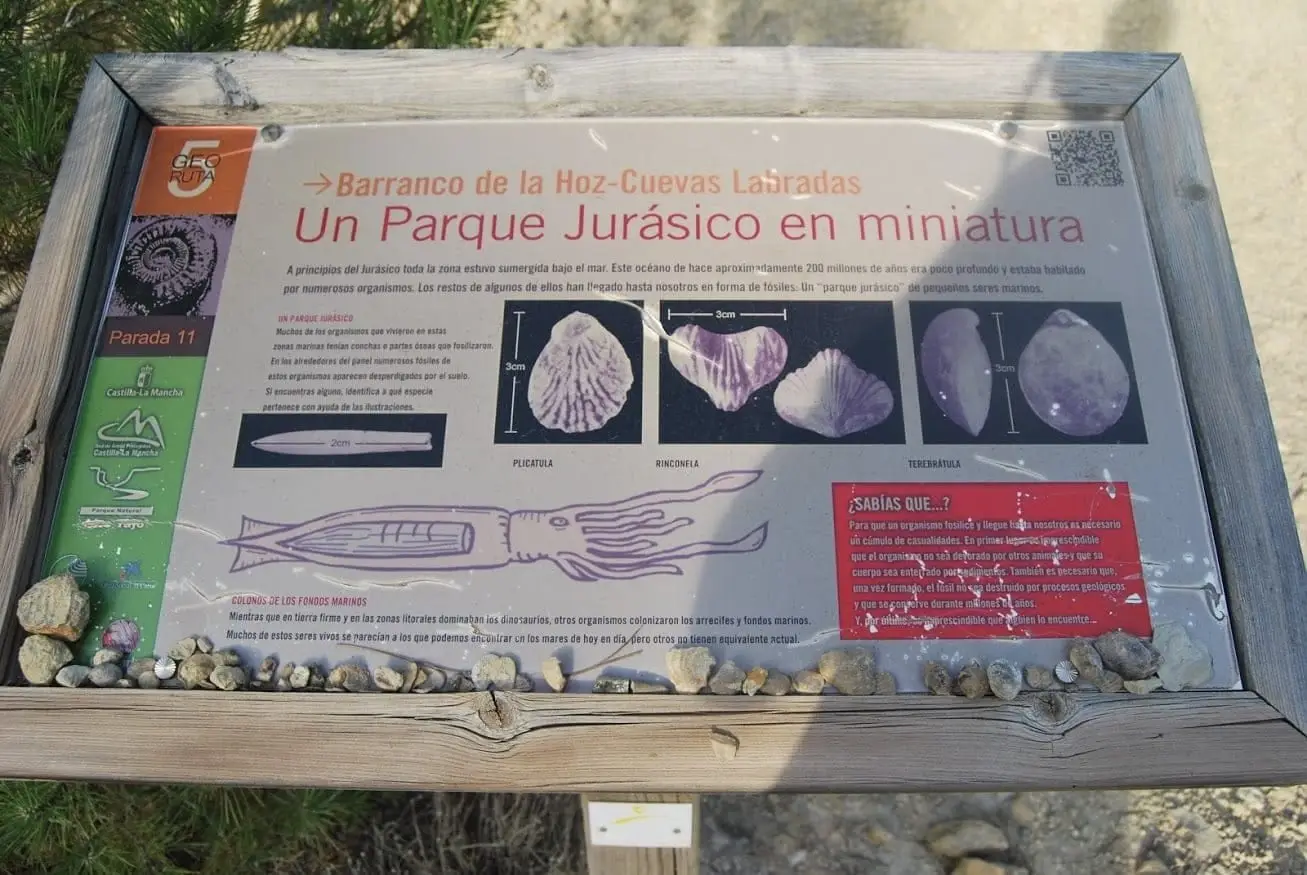
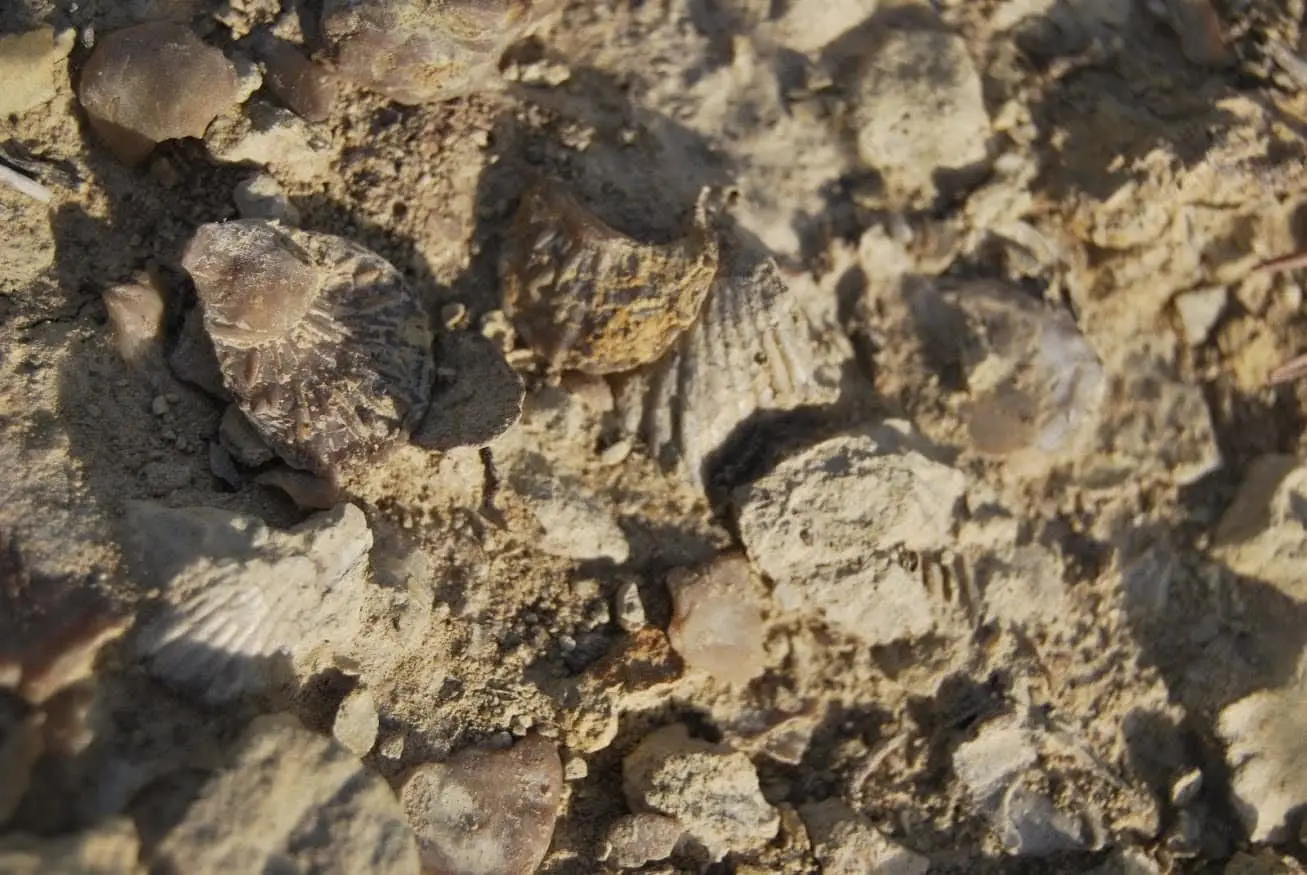
Near Cuevas Labradas there is a small site where Jurassic marine invertebrate fossils are easy to find: brachiopods such as terebratulids and rhynchonellids, and bivalves such as plicatulids, relatives of scallops. They show that these rocks formed in a warm, shallow sea rich in nutrients.
This place across time
Which eras you can read here
A single place can preserve traces from different eras. These layers connect what you see with the stories in the atlas.
- Jurassic fossils
- Brachiopods
- Bivalves
- Warm sea
- Do not collect
A seabed in the mountains
What look like simple stones on the ground are, in many cases, fossil shells. Among the most abundant are brachiopods, such as terebratulids and rhynchonellids, and bivalves like plicátulas. All lived on the bed of a warm, shallow sea, filtering water to feed.
Look, photograph and leave them
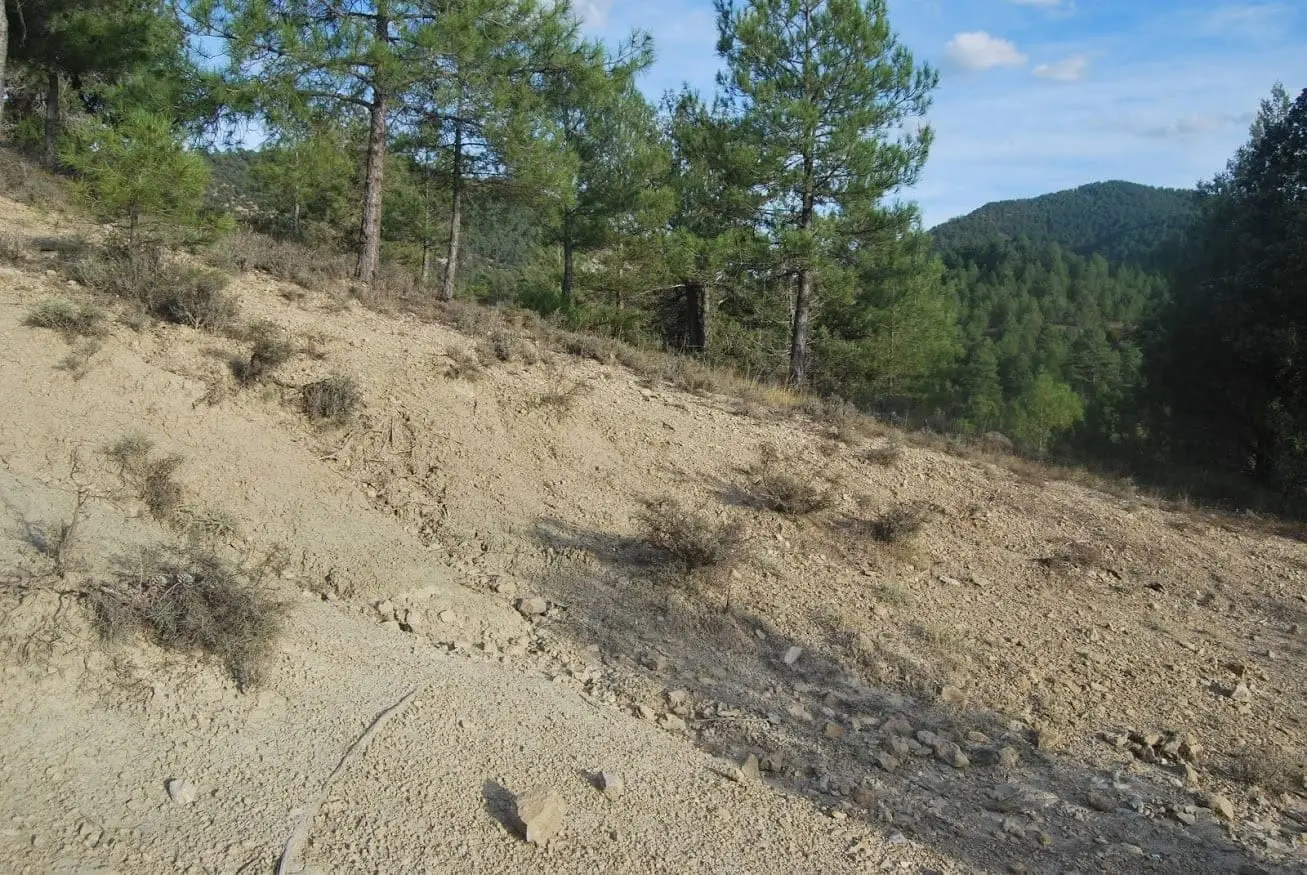
The site is part of the Geopark’s heritage. Observe the fossils and photograph them, but do not take them: that way those who come after will be able to see them. It pairs well with a visit to the folds of Cuevas Labradas.
Photo: El Observario
Location
This entry does not yet have a verified cartographic location.