Alto Tajo · 17 places
Canyons and gorges of the Alto Tajo
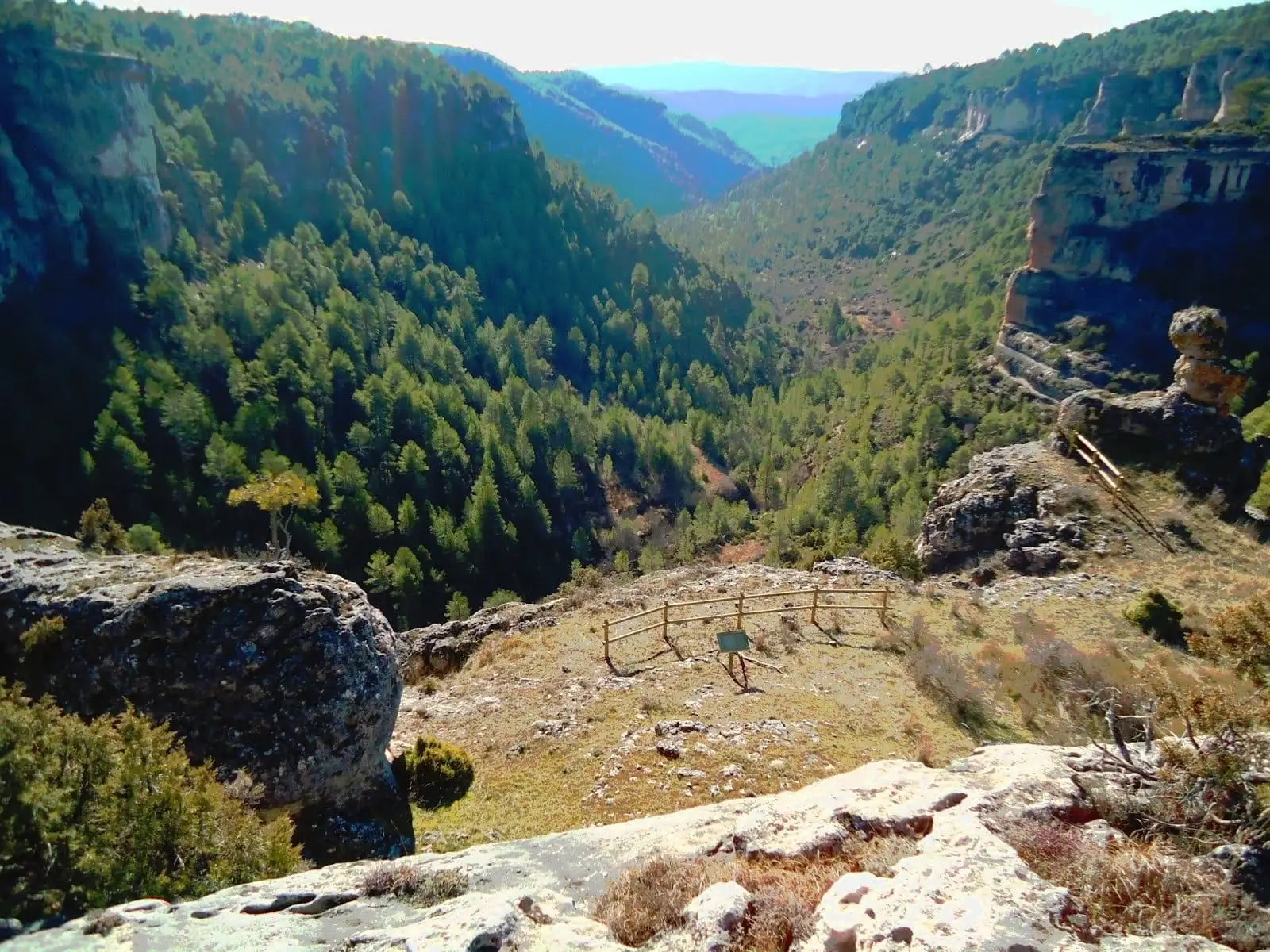
Canyons and gorges define the hallmark landscape of the Alto Tajo: deep chasms carved by the Tagus and its tributaries into grey limestone or vibrant red sandstone (rodeno). Famous examples include the Barranco de la Hoz, the Arandilla gorge, and the Hundido de Armallones, explored on foot or from dizzying cliff viewpoints.
The Alto Tajo boasts two main canyon landscapes: limestone gorges, steep and grey, such as those along the Tagus itself or the Hundido de Armallones; and rodeno sandstone gorges, fiery red and bristling with towers and needles, such as the Barranco de la Hoz or the Arandilla valley.
Life on the cliff faces
These precipices provide sanctuary for cliff-nesting birds of prey, while riverside gallery forests offer shade and coolness along the valley floors even in August.
Practical advice
Spring and autumn offer ideal temperatures. In summer, walk during the early morning hours. After heavy downpours, canyon beds may carry runoff or mud.
Traces to explore further
These locations connect this theme with local stories across the territory. Choose a trace and visit its guide to follow the narrative:
- Barranco de la Hoz: A classic gateway to the red rodeno canyon.
- Hundido de Armallones: A walking excursion starting from Ocentejo.
- Hoz de Beteta: A spectacular canyon in the Serranía de Cuenca sector.
This landscape through layers of time
The places in this theme preserve traces of these eras. A single place can appear in several.
All places (17)
Barranco de la Hoz Somera (Serranía de Cuenca)
Carrascosa de la Sierra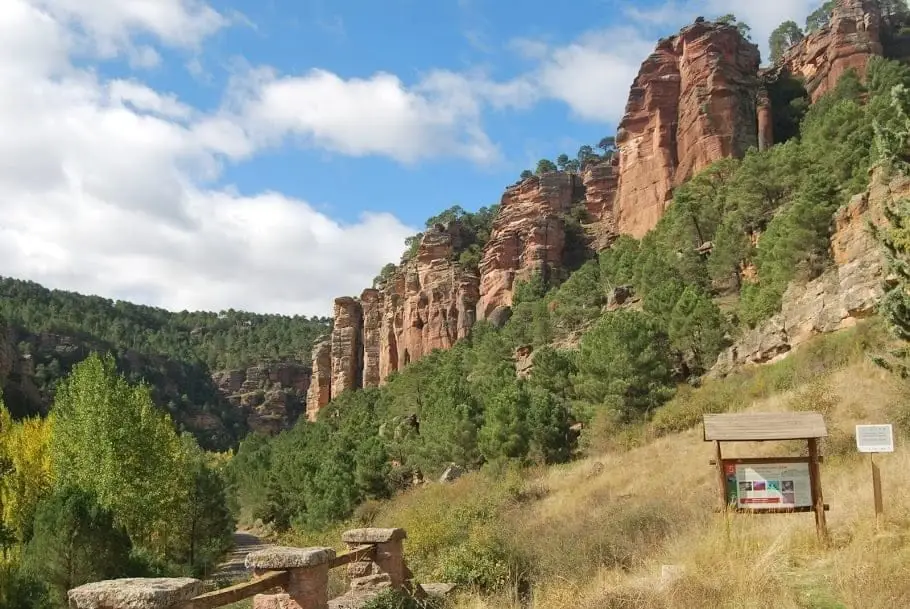
Barranco de la Hoz: the red canyon of the Gallo River
Corduente, Ventosa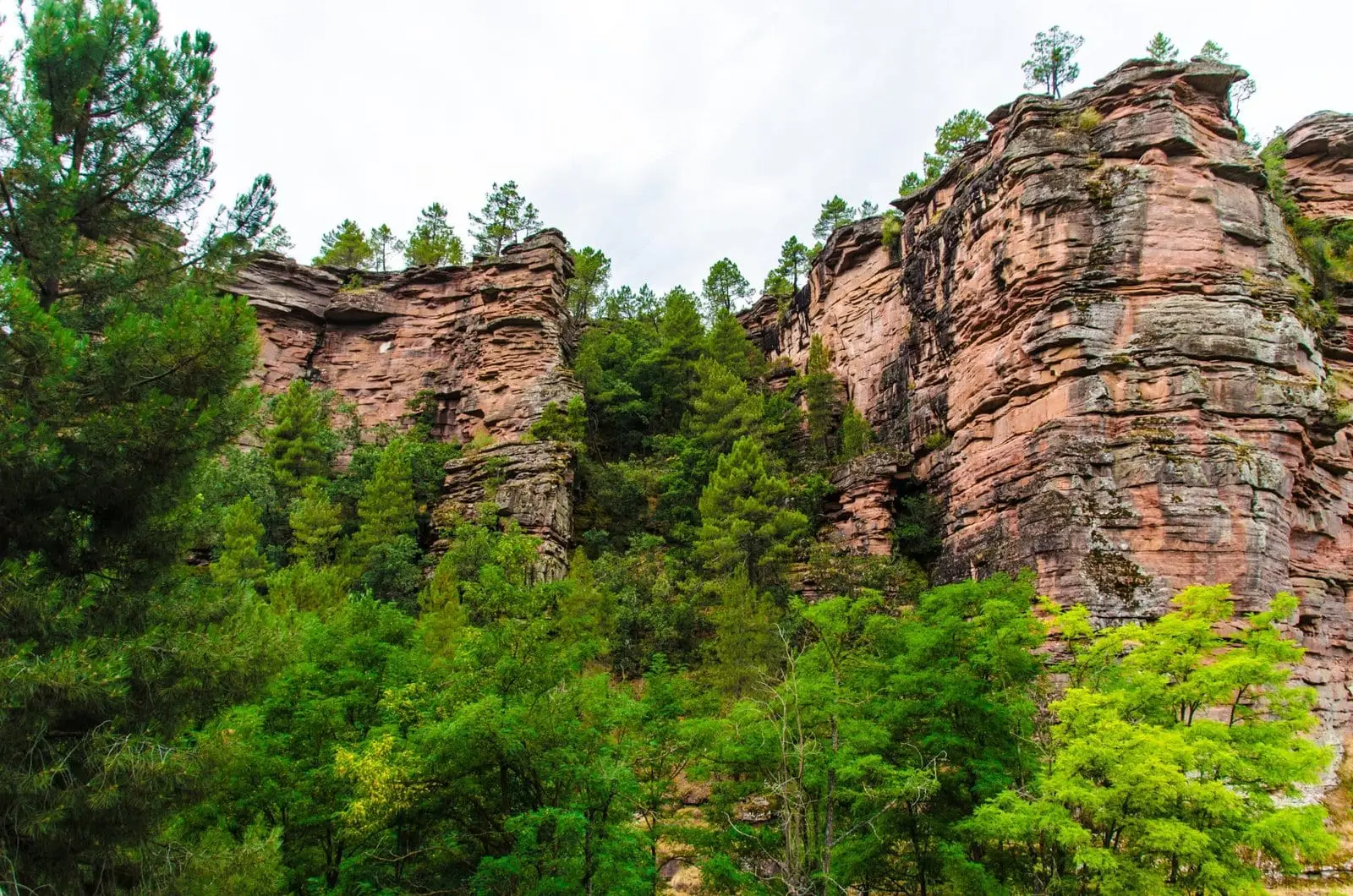
Barranco del Arandilla (Cobeta): a singular rodeno sandstone canyon
Cobeta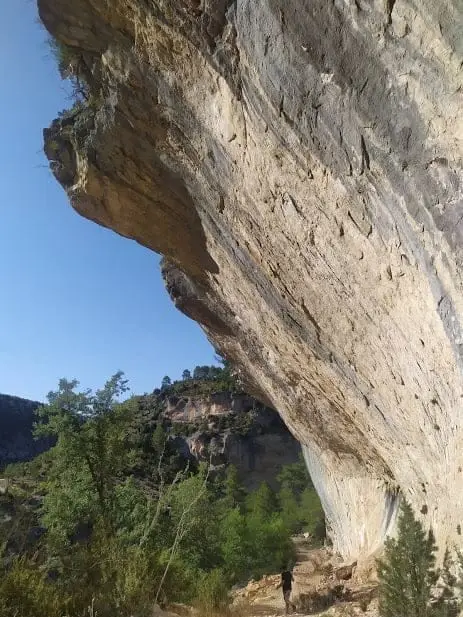
Barranco del Horcajo: a canyon with yew and linden woodland
Masegosa, Peralejos de las Truchas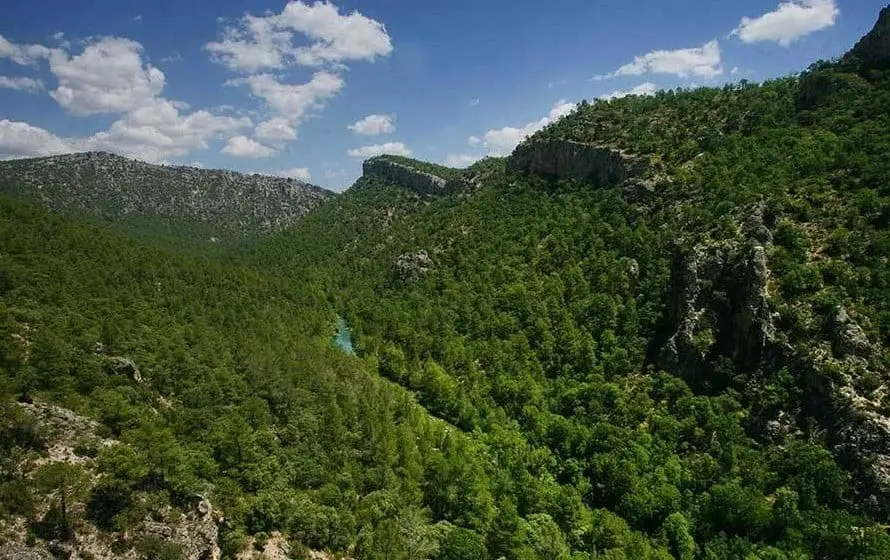
Hundido de Armallones: the rock collapse that dammed the Tagus
Armallones, Ocentejo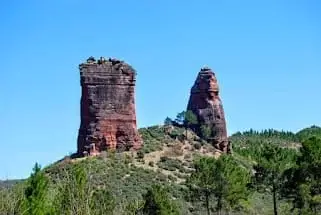
Valle de los Milagros: red sandstone towers in Riba de Saelices
Riba de Saelices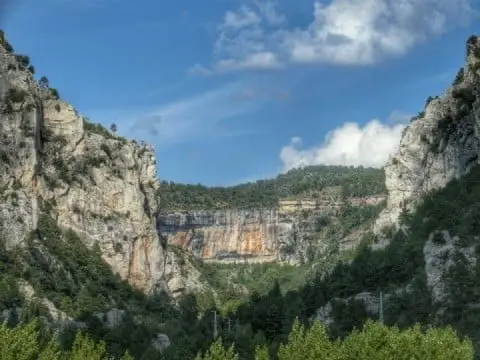
Hoz de Beteta: the Guadiela canyon in the Serranía de Cuenca
Beteta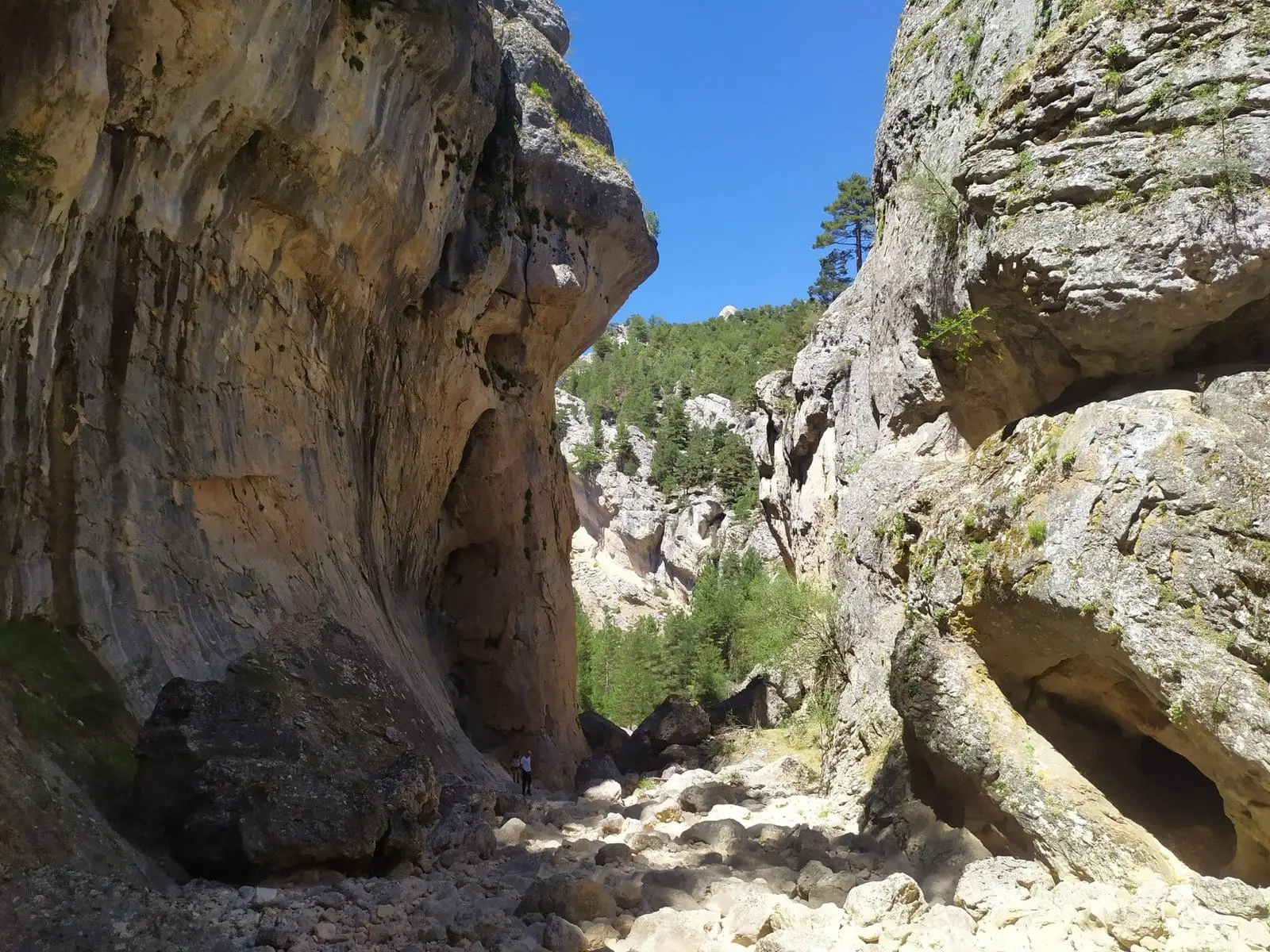
Rambla Malilla (Checa): the gorge running down to the Tajillo
Checa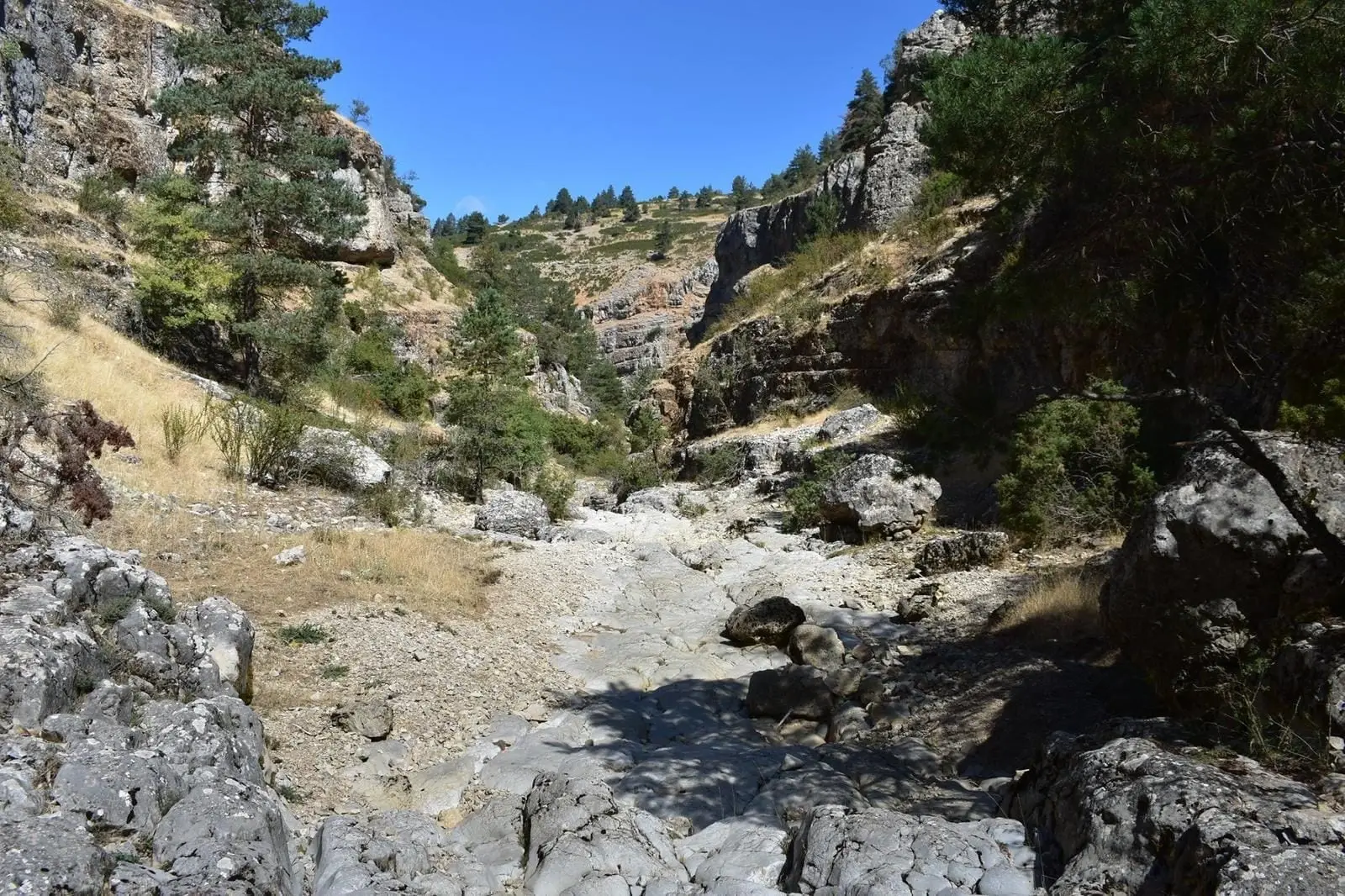
Rambla de las Sarguillas: River Nature Reserve
Checa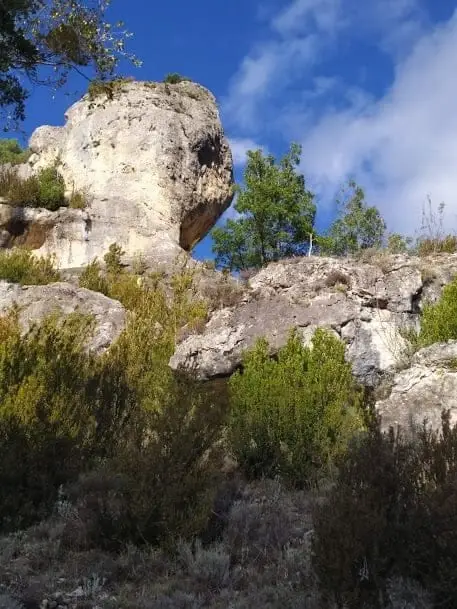
Barranco del Ciño Negro (Zaorejas)
Zaorejas
Barranco del Hocino: the yew grove that burned in 2005
Riba de Saelices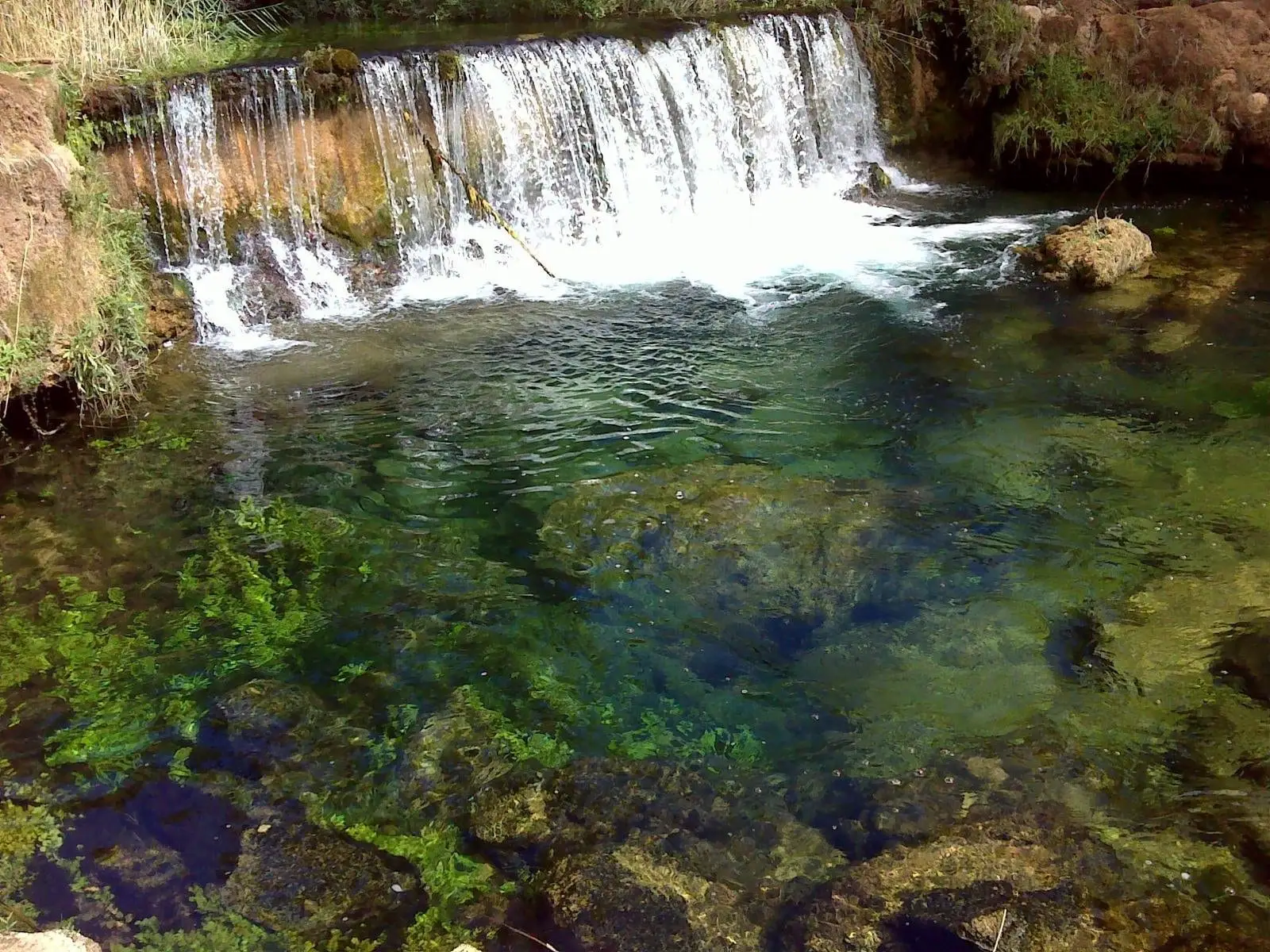
Hoz del Río Ablanquejo: a wild, pathless canyon
Ablanque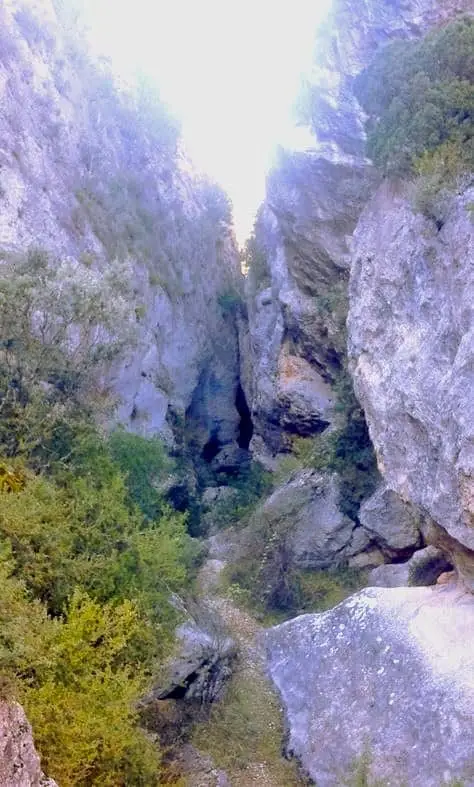
Barranco de la Hoz de Oter and the El Barrancazo gorge
Oter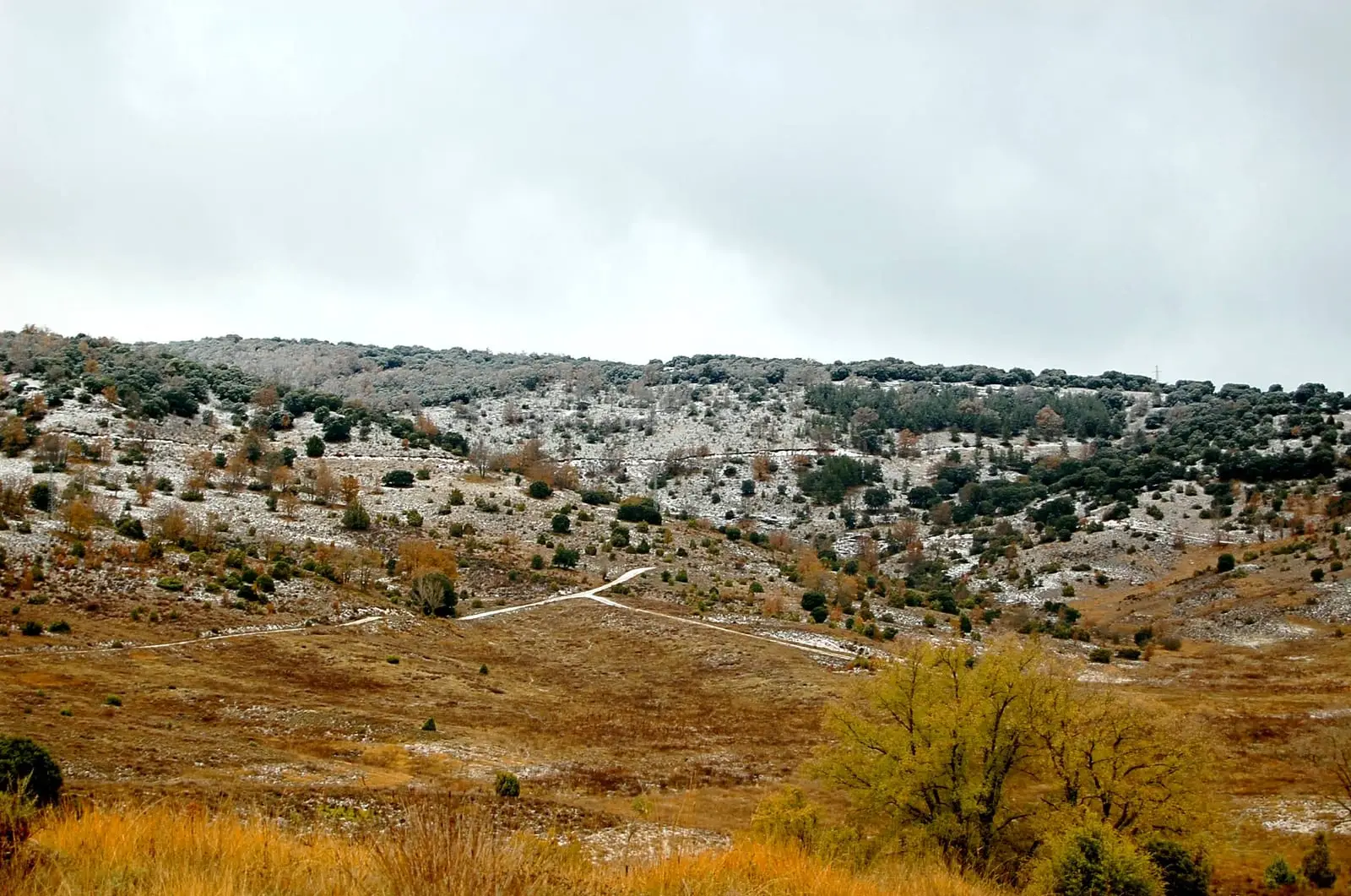
Tajuña Valley in Torrecuadrada: Protected Karstic Canyons
TorrecuadradillaPozo Galeano (Villel de Mesa): gorge and waterfall of the Mesa River
Villel de MesaLos Artesones valley (Ablanque): pine woods and sandstone along the Ablanquejo
AblanqueTajuña gorges: 11 km of river between Anguita and Luzón
AnguitaFrequently asked questions
What is the difference between a hoz and a barranco?
Locally they are used almost interchangeably. A hoz usually refers to a narrow, entrenched river gorge between vertical rock walls; a barranco is a broader term for a deep mountain ravine.
Why are some canyons strikingly red?
Because they are cut through Triassic sandstone and conglomerates rich in iron oxide, known as rodeno. The pale grey or whitish cliffs consist of limestone or dolomite.