The Alto Tajo month by month
The Alto Tajo in March: march mushrooms, snowmelt and returning birds
March is the month of march mushrooms and running water in the Alto Tajo. Rivers run high, waterfalls and travertine tufa barriers are at their most vigorous, and the first summer migrants arrive, such as the Egyptian vulture. Weather is variable: mild, spring-like afternoons alternate with frosts and late snowfall.
- March mushroom season
- Swollen rivers
- Egyptian vulture returns
- Waterfalls at peak flow
- Changeable weather
- Avg. max (°C)
- 12 °C
- Avg. min (°C)
- 2 °C
- Rainfall (mm)
- 72 mm
- Frost days
- 9
Average of 110 atlas villages (ERA5, 2015–2024). The coldest in march is Masegosa (0 °C average minimum) and the mildest, Trillo (15 °C average maximum).
Water
One of the best moments of the year to witness waterfalls, tufa barriers, and karst resurgences carrying substantial water. The Tagus and its tributaries (Gallo, Cabrillas, Hoz Seca) flow with strength and distinctive greenish hues.
Mushrooms
Peak season for march mushrooms in pine woodlands. Toward the end of the month, early morels (Morchella) may appear along stream banks and disturbed ground. Remember: never consume wild mushrooms without expert identification.
Wildlife
Egyptian vultures, the smallest of our local vulture species, return from wintering grounds in Africa. Raptor courtship displays begin along canyon walls, while deer continue casting their antlers.
Practical tips
Check the weather forecast the evening before: March can bring snow one day and twenty degrees the next. Some unpaved forest tracks become muddy following rains.
The night sky in march
The spring equinox arrives along with spring skies: Leo, Ursa Major overhead, and the distant galaxy fields of Virgo, ideal for telescope viewing on moonless nights.
Traces of time in this season
The season changes how you see these places. Their stories belong to other scales of time: from the formation of the landscape to the work and lives of those who inhabited it.
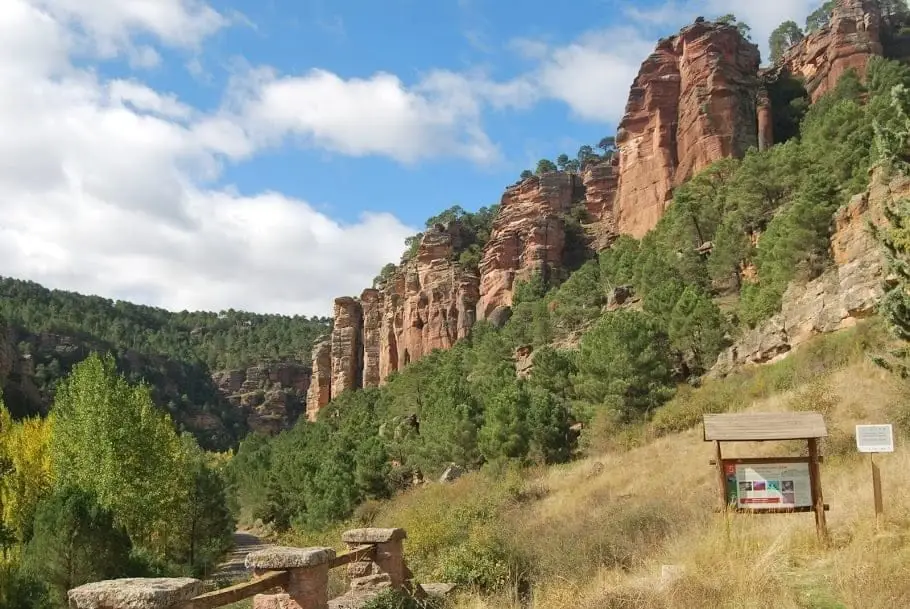
Barranco de la Hoz: the red canyon of the Gallo River
Corduente, Ventosa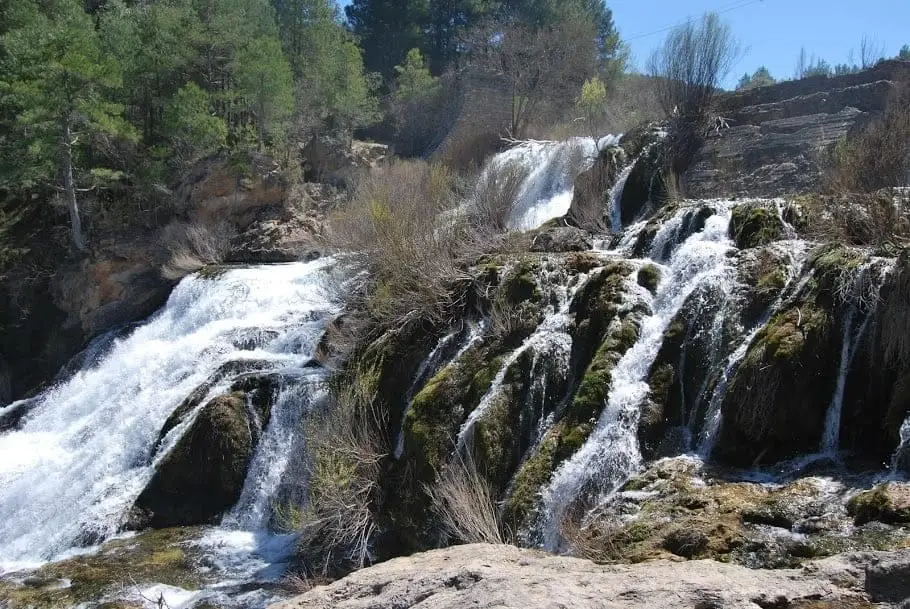
Salto de Poveda: The Largest Waterfall in Alto Tajo
Poveda de la Sierra, Taravilla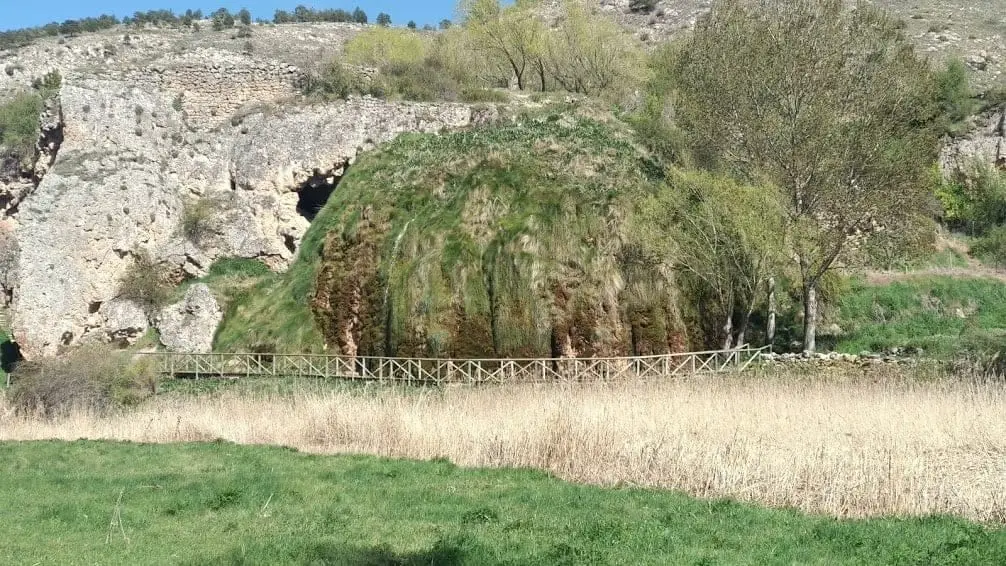
The Aguaspeña of Checa: a living rock growing 4 cm a year
ChecaContinue reading: Before us.
To visit: River flow depends on rainfall. After high water, keep away from riverbanks and check the condition of footbridges.
Check the conditions on each guide or start with the getting started guide.
Preguntas frecuentes
Is March a good time to see waterfalls in the Alto Tajo?
Yes. Between March and May, Alto Tajo rivers carry the highest flows of the year due to rain and snowmelt, and waterfalls show far more volume than in summer.
When do Egyptian vultures arrive?
Egyptian vultures return from their African winter quarters starting in March and remain in the region through the end of summer.