Heritage · Alustante
Church of the Asunción (Alustante): Gothic by Basque stonemasons
The church of the Asunción in Alustante is a large Gothic hall church from the first third of the 16th century, built by Basque stonemasons led by Juan de Legazpia. It has three naves divided by large columns with ribbed vaults, a tower renovated after the Carlist Wars with a spiral stair lacking a central core, and a Bartolomé Sánchez organ.
Lands and landscapes
From here, follow the memory of the territory
These readings connect Church of the Asunción (Alustante): Gothic by Basque stonemasons with the history, work, and villages around it.
- Municipality
- Alustante
- Province
- Guadalajara
- Altitude
- 1,399 m
- Gothic hall church
- 16th century
- Juan de Legazpia
- Coreless spiral stair
A grand church for a highland village
In the centre of Alustante, one of the highest villages in the Señorío, stands a church of striking proportions. It is a Gothic hall church (iglesia columnaria) built during the first third of the 16th century by a team of Basque stonemasons under master builder Juan de Legazpia.
Architectural features
It comprises three naves divided by massive cylindrical columns, spanned across three bays covered by ribbed stone vaults. To the left of the facade rises the bell tower, originally constructed for defensive purposes and rebuilt following damage during the Carlist Wars. A notable architectural feature is its spiral staircase built without a central newel core, so that looking up from the bottom reveals the complete spiral.
Interior
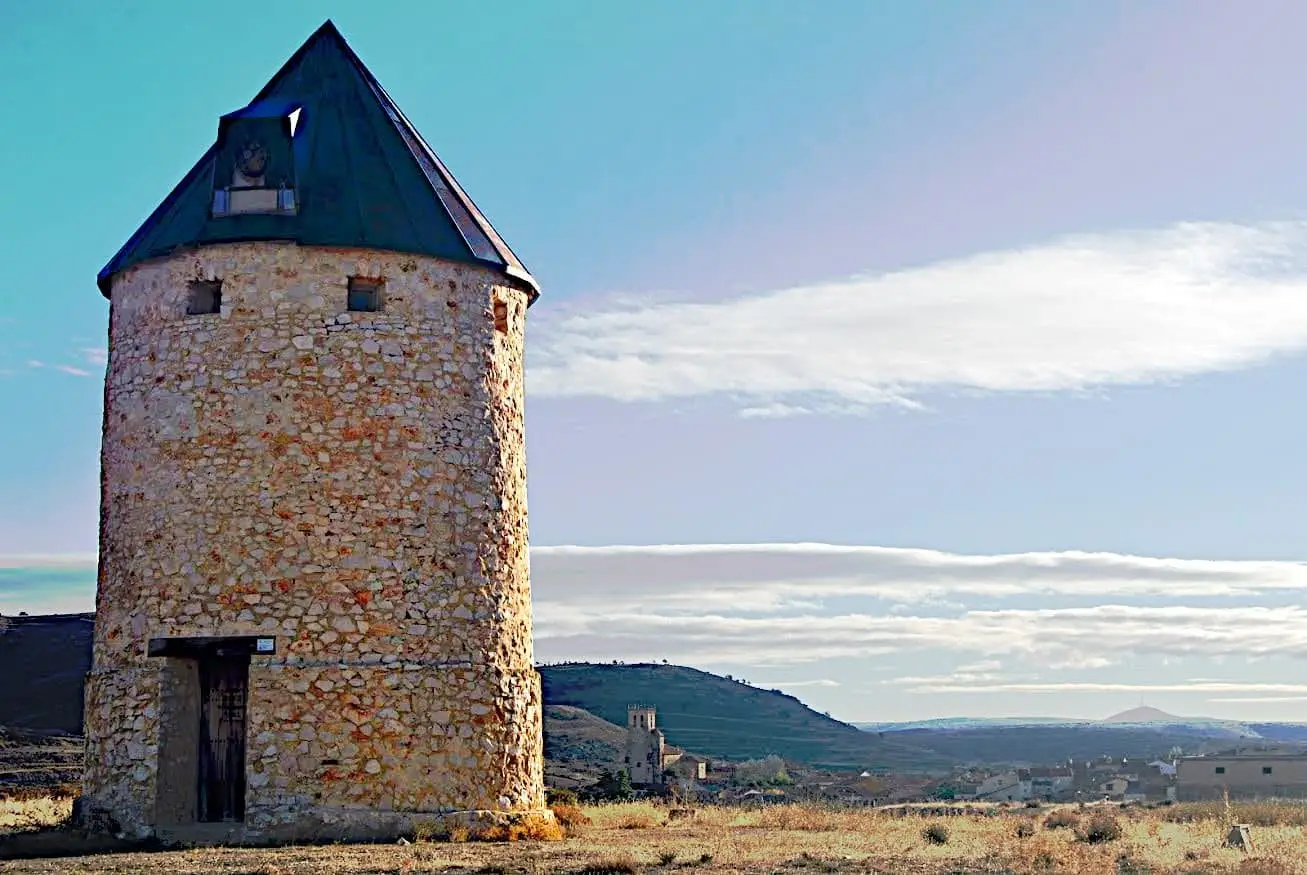
The high altarpiece is a Renaissance work dedicated to the Assumption of the Virgin, and the church preserves an organ crafted by Navarrese organ-maker Bartolomé Sánchez. Alustante is also celebrated for its traditional campanology and bell-ringing rhythms. Very close by stands the windmill of Alustante.
Location
● Reference point · ● Villages · ● Places
Location diagram. Detailed map with tracks and names loads on zoom.
Reference villages: Alustante · Motos · Adobes · Piqueras.
Open the full map and historical layers →