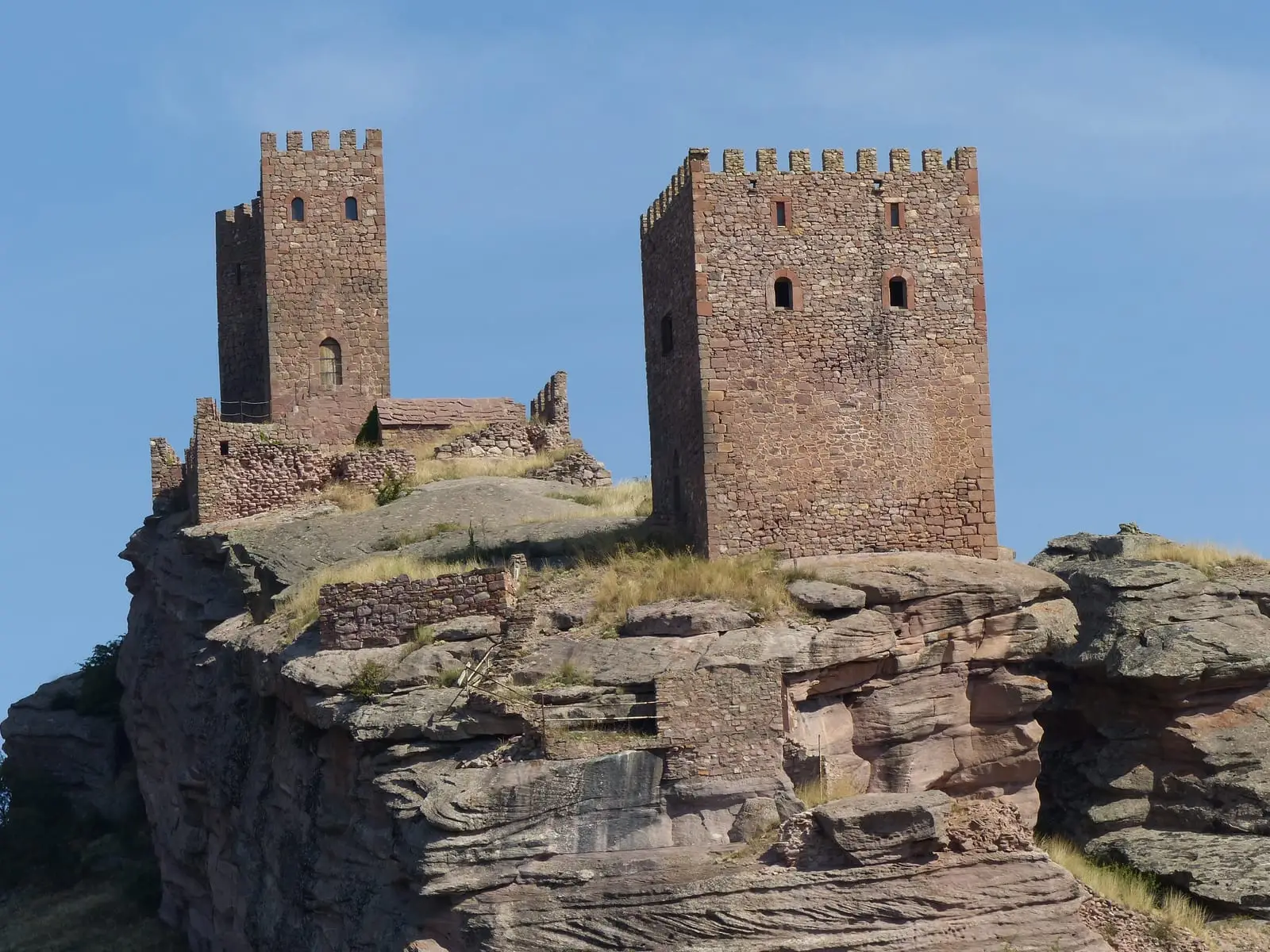
Castle · Embid
Castle of Embid: the pentagonal stronghold of the Aragon frontier
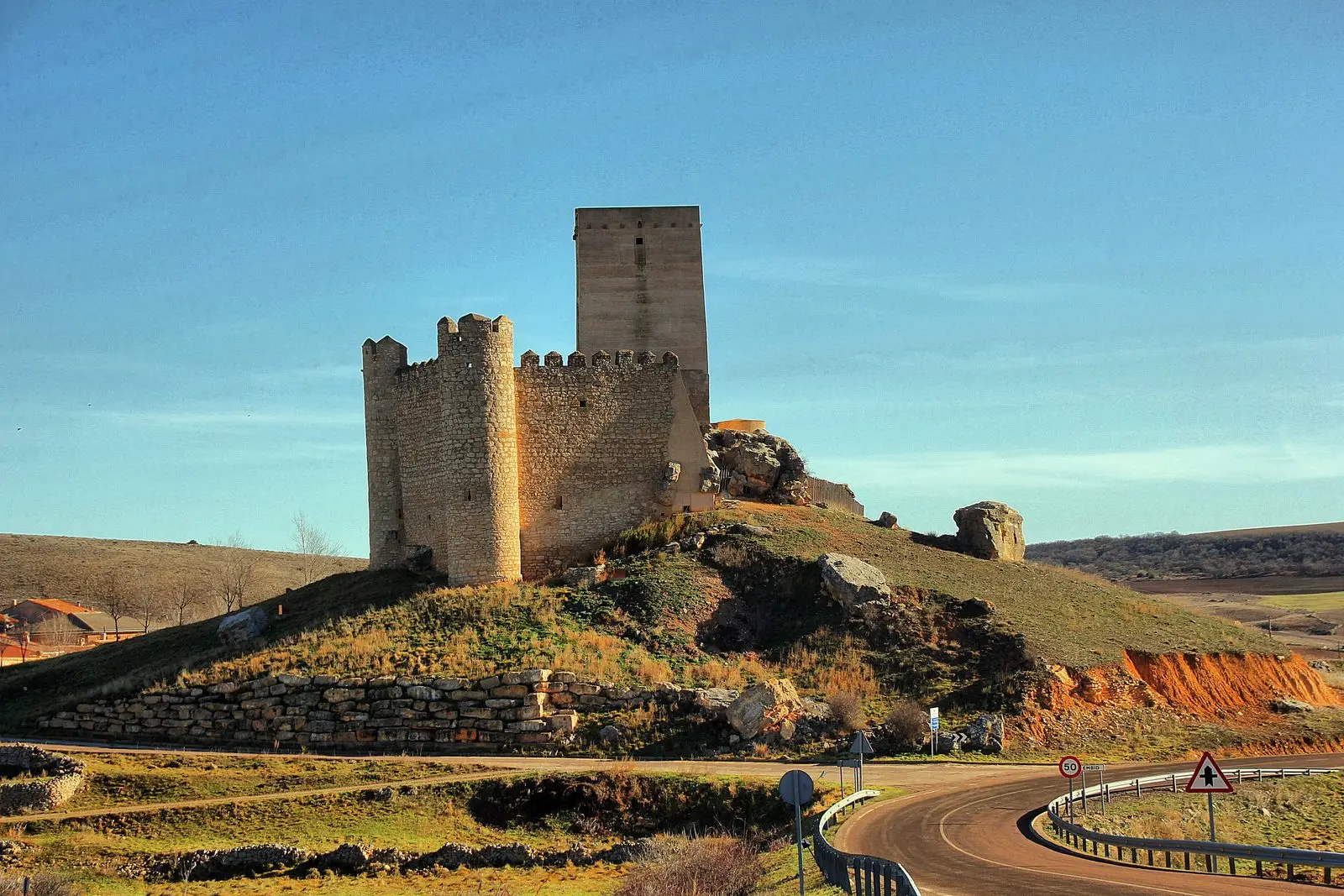
The castle of Embid is a pentagonal fortress built on the border between Castile and Aragon. Alfonso XI authorized Diego Ordóñez de Villaquirán to construct it in 1331. Damaged during the reign of Pedro I, it was rebuilt from 1426 and took its present form in the mid-15th century. It preserves three cylindrical crenellated towers joined by curtain walls.
This place across time
Which eras you can read here
A single place can preserve traces from different eras. These layers connect what you see with the stories in the atlas.
- Municipality
- Embid
- Province
- Guadalajara
- Altitude
- 1,077 m
- Pentagonal layout
- 14th century
- Aragon border
- Cylindrical towers
A silhouette across the paramera
From afar, the castle of Embid stands out against the high plain as a sharp stone pentagon. This pentagonal ground plan, featuring towers at its corners, is unusual and highly effective for enduring siege warfare. Today, three cylindrical crenellated towers remain standing, connected by two curtain walls; of the other two original corners, one is partially reconstructed and the other has disappeared.
Border fortress
Embid is situated along the frontier with Aragon, and its historical trajectory reflects that border condition. Following the integration of the Señorío de Molina into Castile, in 1331 Alfonso XI granted the locality to Diego Ordóñez de Villaquirán, granting licence to repopulate and fortify it. Partially destroyed during the Castilian-Aragonese wars of Pedro I, it was rebuilt starting in 1426. It subsequently passed to the Medinaceli family and then to Juan Ruiz de los Quemadales, known as the Old Knight, who gave the fortress its definitive 15th-century form. During hostilities with Aragon, it repeatedly served as a stronghold of refuge for Castilian forces.
Nearby
The village sits in the northeastern corner of the Señorío. Very close by are the tower of La Yunta and its seasonal lagoons.
Frequently asked questions
Who built the castle of Embid?
In 1331, after the Señorío de Molina had been incorporated into Castile, Alfonso XI granted Embid to Diego Ordóñez de Villaquirán and authorized him to resettle the place and erect the castle. It was rebuilt from 1426 and acquired its current layout in the mid-15th century.
Location
● Reference point · ● Villages · ● Places
Location diagram. Detailed map with tracks and names loads on zoom.
Reference villages: Embid · La Yunta · Tortuera · Cubillejo de la Sierra.
Open the full map and historical layers →