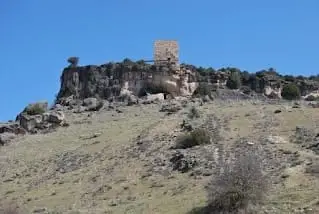
Archaeological site · Santa María del Espino
Cueva de la Hoz (Santa María del Espino): Paleolithic art of the Tajuña
The Cueva de la Hoz, about 2 km from Santa María del Espino in Anguita, contains some two hundred Upper Paleolithic engravings dating between 30,000 and 15,000 years ago. Discovered by Juan Cabré in 1933, it was declared a monument in 1935 and is now a Cultural Asset (BIC). It is closed to the public to safeguard the fragile rock art.
This place across time
Which eras you can read here
A single place can preserve traces from different eras. These layers connect what you see with the stories in the atlas.
- Municipality
- Santa María del Espino
- Province
- Guadalajara
- Altitude
- 1,170 m
- Upper Paleolithic
- Around 200 engravings
- Juan Cabré, 1933
- BIC, closed to public
One of the inland plateau’s major caves
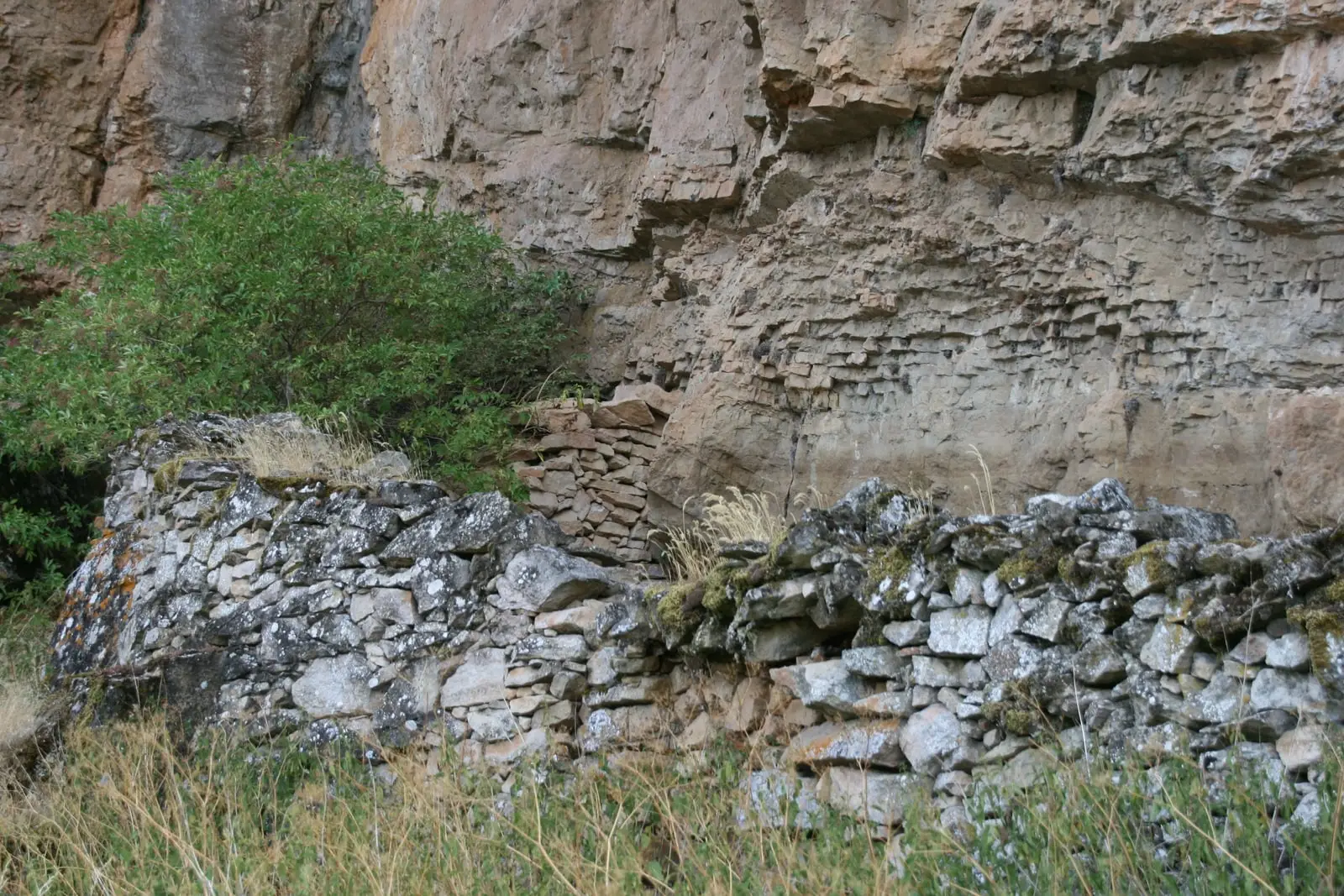
Near Santa María del Espino, in the municipality of Anguita, opens one of the most important Paleolithic art caves in the Castilian plateau. It preserves around two hundred engravings belonging to the Upper Paleolithic, created between 30,000 and 15,000 years ago: animal representations and abstract signs incised into the limestone, comparable to those found at Cueva de los Casares a few kilometres away.
Cabré’s 1933 discovery
It was discovered in 1933 by archaeologist Juan Cabré, collaborator of the Marquis of Cerralbo, and was designated a national historic-artistic monument already in 1935. Today it is classified as a Cultural Asset (BIC).
Conservation protection
The cave is closed to the public: Paleolithic cave art is exceptionally delicate, and visitor respiration and humidity cause rapid degradation. To observe prehistoric engravings in the region, Cueva de los Casares provides regulated guided visits. Nearby stands the Torre de la Cigüeña. Read more on this prehistoric era in the earliest markings.
Frequently asked questions
Can Cueva de la Hoz be visited?
No. It is closed to the public to safeguard its prehistoric rock engravings. To see Paleolithic art in the comarca, Cueva de los Casares in Riba de Saelices offers guided visits.
Location
● Reference point · ● Villages · ● Places
Location diagram. Detailed map with tracks and names loads on zoom.
Reference villages: Santa María del Espino · Luzón · Anguita · Riba de Saelices.
Open the full map and historical layers →More archaeological sites and rock art nearby
View all →Castro de Hocincavero (Anguita)
Anguita
La Cava (Luzón): a Celtiberian town above the Tajuña
Luzón