Geosite · Checa
Checa Graptolites: Fossils That Look Like Writing
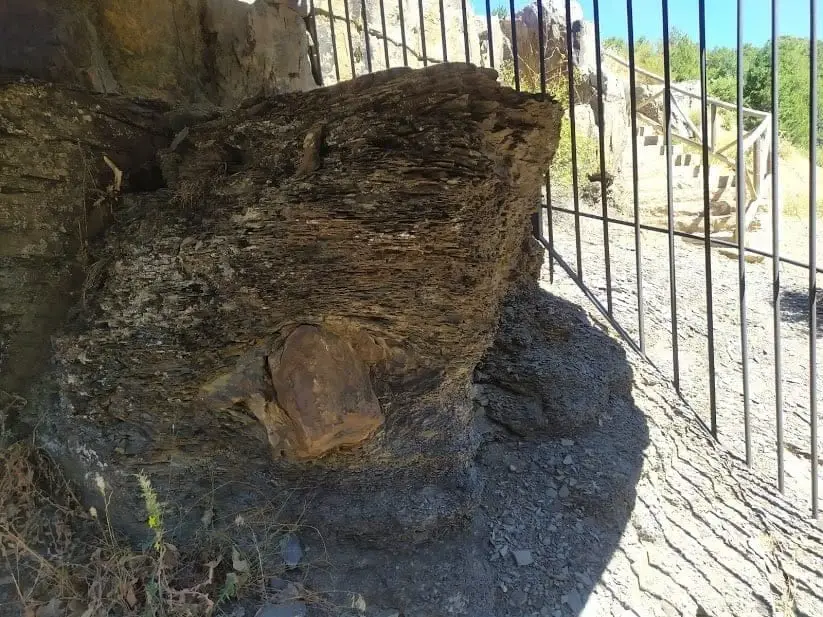
In the slates near the La Tejera experimental area in Checa, graptolites are easily found: fossils of tiny colonial marine organisms that lived about 430 million years ago. They look like grey saw-toothed strokes on the black slate; their name means 'written stone'. They became extinct and have no living equivalent.
Lands and landscapes
From here, follow the memory of the territory
These readings connect Checa Graptolites: Fossils That Look Like Writing with the history, work, and villages around it.
This place across time
Which eras you can read here
A single place can preserve traces from different eras. These layers connect what you see with the stories in the atlas.
- Municipality
- Checa
- Province
- Guadalajara
- 430 million years
- Colonial fossils
- Black slates
- Beside La Tejera
Pencil marks on the stone
Graptolites appear as small grey saw-toothed marks on black slates, as if someone had written with a pencil. Hence their name: in Greek, graptos is ‘written’ and lithos, ‘stone’.
What they were
Planktonic marine organisms that lived in floating colonies in the oceans of the Lower Paleozoic, some 430 million years ago, when vertebrates did not yet exist. They became extinct without leaving any living equivalent relative.
Where to see them
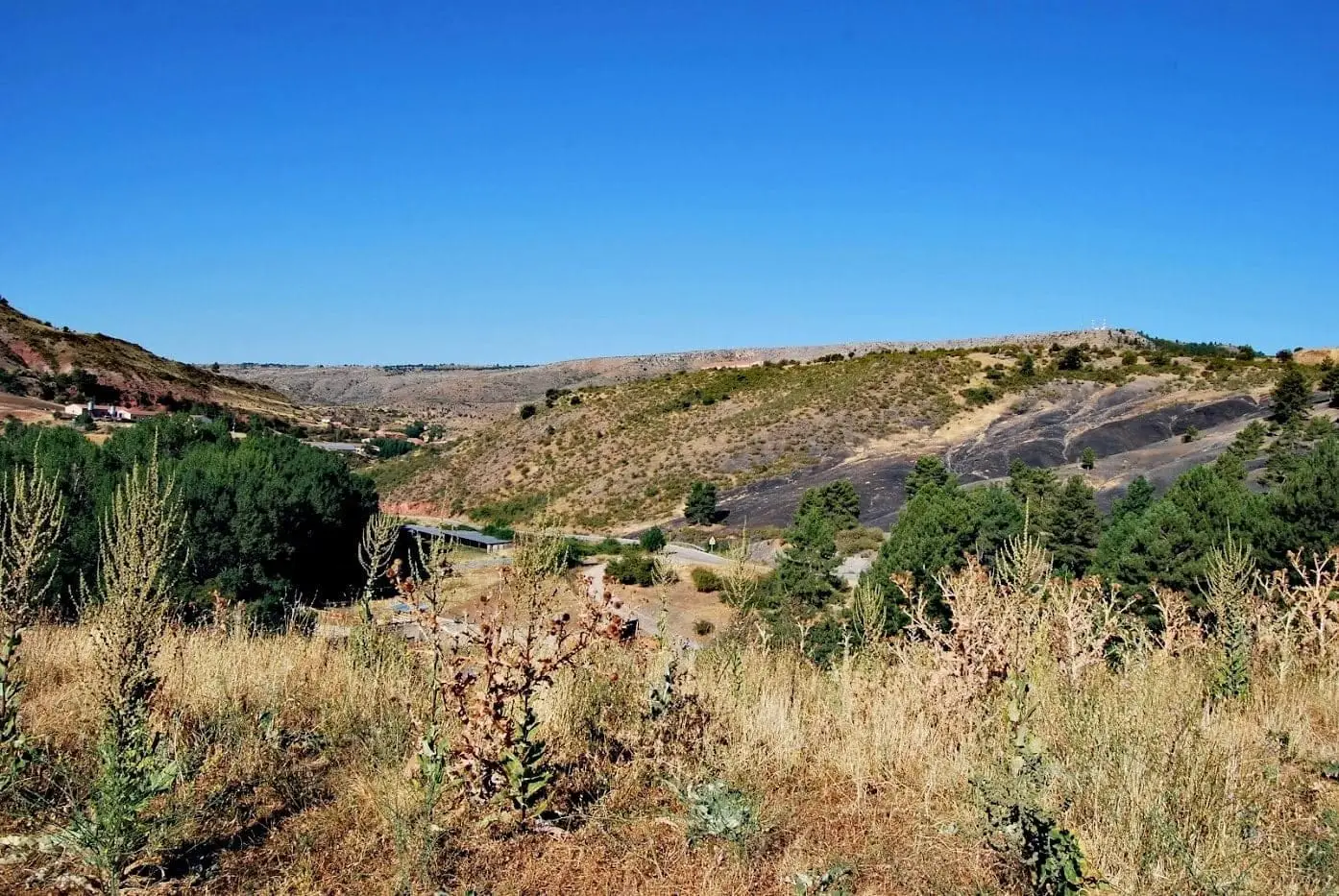
On the slates beside the La Tejera experimental area, on the outskirts of Checa. Look at them and leave them in place.
Location
● Reference point · ● Villages · ● Places
Location diagram. Detailed map with tracks and names loads on zoom.
Approximate position: village centre.
Reference villages: Checa · Chequilla · Alcoroches · Orea.
Open the full map and historical layers →More geology and geosites nearby
View all →Poljé del Cubillo (Checa): a closed karst valley
Checa
Sierra Molina: Ancient Dehesa of Transhumance
ChecaLa Tejera experimental area (Checa): the ten rocks of the Park
Checa