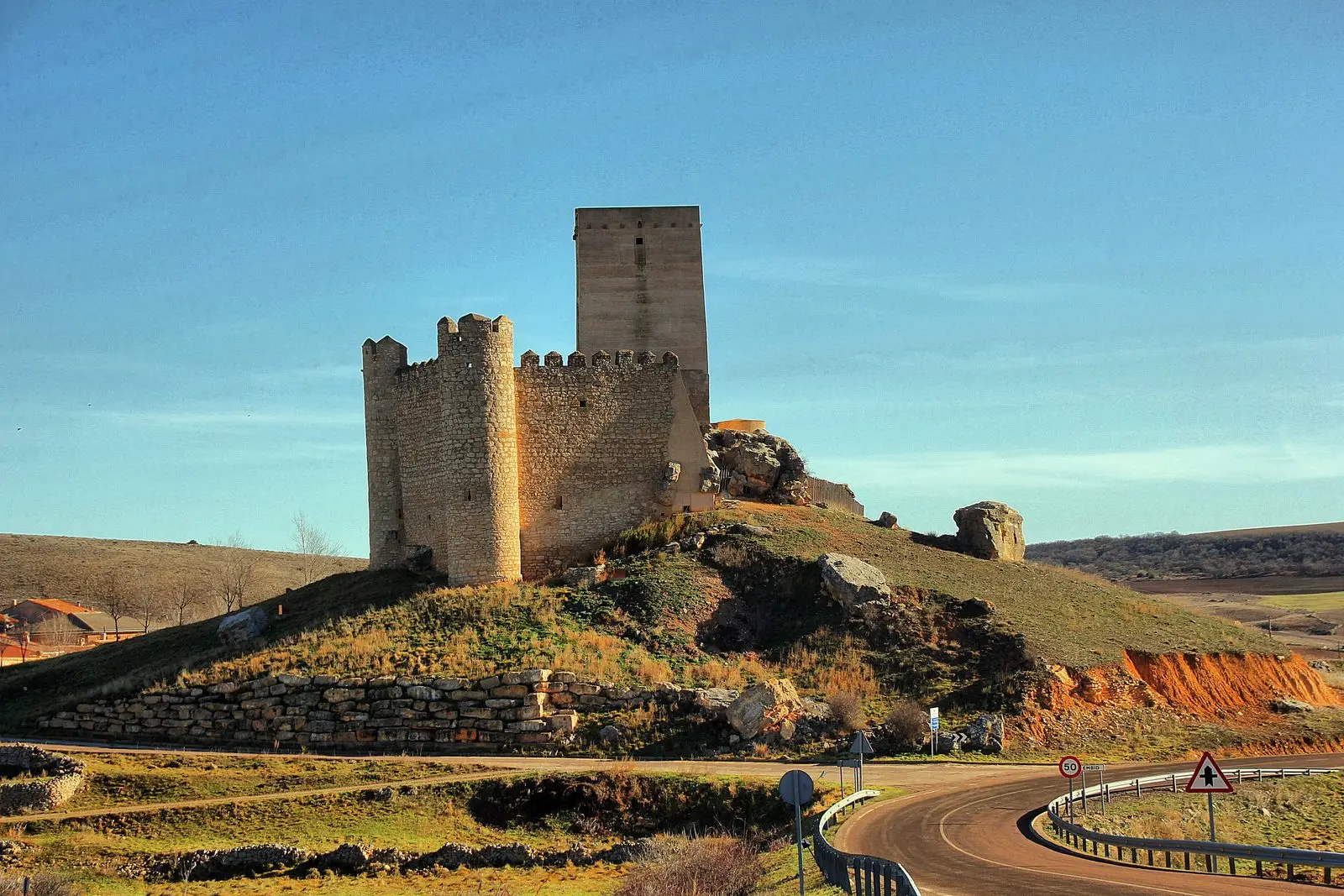
Protected area · Maranchón
Parameras de Maranchón, Hoz del Mesa, and Aragoncillo: land of Dupont's lark
The Parameras de Maranchón, Hoz del Mesa, and Aragoncillo is a Natura 2000 reserve (SPA and SAC) covering roughly 49,400 hectares across fifteen northern municipalities. Cold, wind-swept high plains of low scrub, one of the last European refuges of Dupont's lark, alongside stone-curlews, great bustards, and other steppe birds.
Lands and landscapes
From here, follow the memory of the territory
These readings connect Parameras de Maranchón, Hoz del Mesa, and Aragoncillo: land of Dupont's lark with the history, work, and villages around it.
- Best season
- Spring at dawn, when steppe birds are singing.
- Municipality
- Maranchón
- Province
- Guadalajara
- Altitude
- 1,313 m
- SPA and SAC
- About 49,400 ha
- Dupont's lark
- Steppe birds
An immense highland plain
North of the Señorío, between Maranchón, the Mesa River gorge, and Aragoncillo, spread wide high-altitude plains: cold, wind-swept tables of wild thyme, gorse, and sparse pasture. They cover about 49,400 hectares across fifteen municipalities, from Algar de Mesa and Mochales to Luzón, Establés, and Villel de Mesa. They are protected as an SPA and SAC within Natura 2000.
Dupont’s lark
Their main prize is Dupont’s lark, a secretive bird found in Europe only in Spain. This is one of its last regional strongholds. It shares the open plateau with stone-curlews, great bustards, tawny pipits, and thekla larks. It is sensitive to habitat fragmentation, and recent large-scale livestock proposals in the area have stirred debate over its conservation.
How to visit
The best time is spring at dawn, when birds are in full song. Farm tracks allow walking through the area; stay on established paths. Along the edge of these plains runs the GR 168, the Camino Real de Aragón. Beside Maranchón lies also the juniper forest.
Frequently asked questions
Why is Dupont's lark important?
Dupont's lark lives in Europe solely in Spain, in low-shrub plains such as those around Maranchón. It is listed as vulnerable in the Spanish Catalogue and endangered in the Red Data Book of Birds, with biologists warning it could vanish within decades without habitat protection.
Location
● Reference point · ● Villages · ● Places
Location diagram. Detailed map with tracks and names loads on zoom.
Reference villages: Maranchón · Codes · Ciruelos del Pinar · Luzón.
Open the full map and historical layers →