Historical land · territorial memory
The Ducado: the memory of another jurisdiction
Ciruelos, Anguita, Riba de Saelices, Maranchón and Ablanque: salt works, pine woods, and trading trails of the Tierra de Medinaceli.
In the western sector of the atlas another historical name endures: the Ducado, the Land of Medinaceli. Ciruelos del Pinar, for example, was granted in 1234 by Archbishop Rodrigo Jiménez de Rada to the Cistercian monastery of Buenafuente, and was officially named simply Ciruelos until 1964. The Geopark Guide records the historic organization of this land into cuadrillas.
The land lived on salt, pine forestry, and travel routes. The San Juan salt pans in Saelices de la Sal are documented since 1203. In Mazarete in March 1937, the seasonal resin tapping campaign was halted by military requisition. And mule dealers from Maranchón sold working stock across Spain between the mid-19th century and 1950s, speaking a private professional slang called migaña so outsiders could not follow their negotiations.
In Ablanque, juniper-thatched chozones sheltered livestock. In Riba de Saelices, Cueva de los Casares preserves Upper Palaeolithic cave art. And in Saelices de la Sal, the 1938 Forgotten Battle swept three kilometres from a reinforced concrete machine-gun bunker that was never fired.
Stories to read this land
12th – 20th centuries
The salt of the earth
The San Juan salt works preserve wells, mule wheels, evaporation pans, and warehouse barns dating from 18th-century royal ownership.
Follow the salt heritage →1860 – 1989
Living from the pine woods
Resin gathering in Mazarete was suspended in March 1937 due to military mobilization. Local resin tappers from Ablanque, Huertahernando, and Luzón were drafted to the front.
Enter the forest memory →Middle Ages – 1960s
Shelters for the livestock
The pastoral chozones of Ablanque feature dry-stone walls beneath conical juniper roofs up to 1.5 metres thick, built without mortar, nails, or tiles.
Read the life of the shepherds →12th century – 1960
Mules and the migaña cant
Mule dealers from Maranchón, sheep shearers, and muleteers used a secret cant to communicate trade terms across livestock fairs.
Read the memory of trade fairs →Villages to follow the thread from
Every name opens its locations and memories, leading to other readings of the territory.
Traces on the ground
These places connect stories with what endures. Their guides allow you to locate them on the map and explore them in person.
Cueva de los Casares: Paleolithic art, Neanderthals, and Islamic tower
Riba de Saelices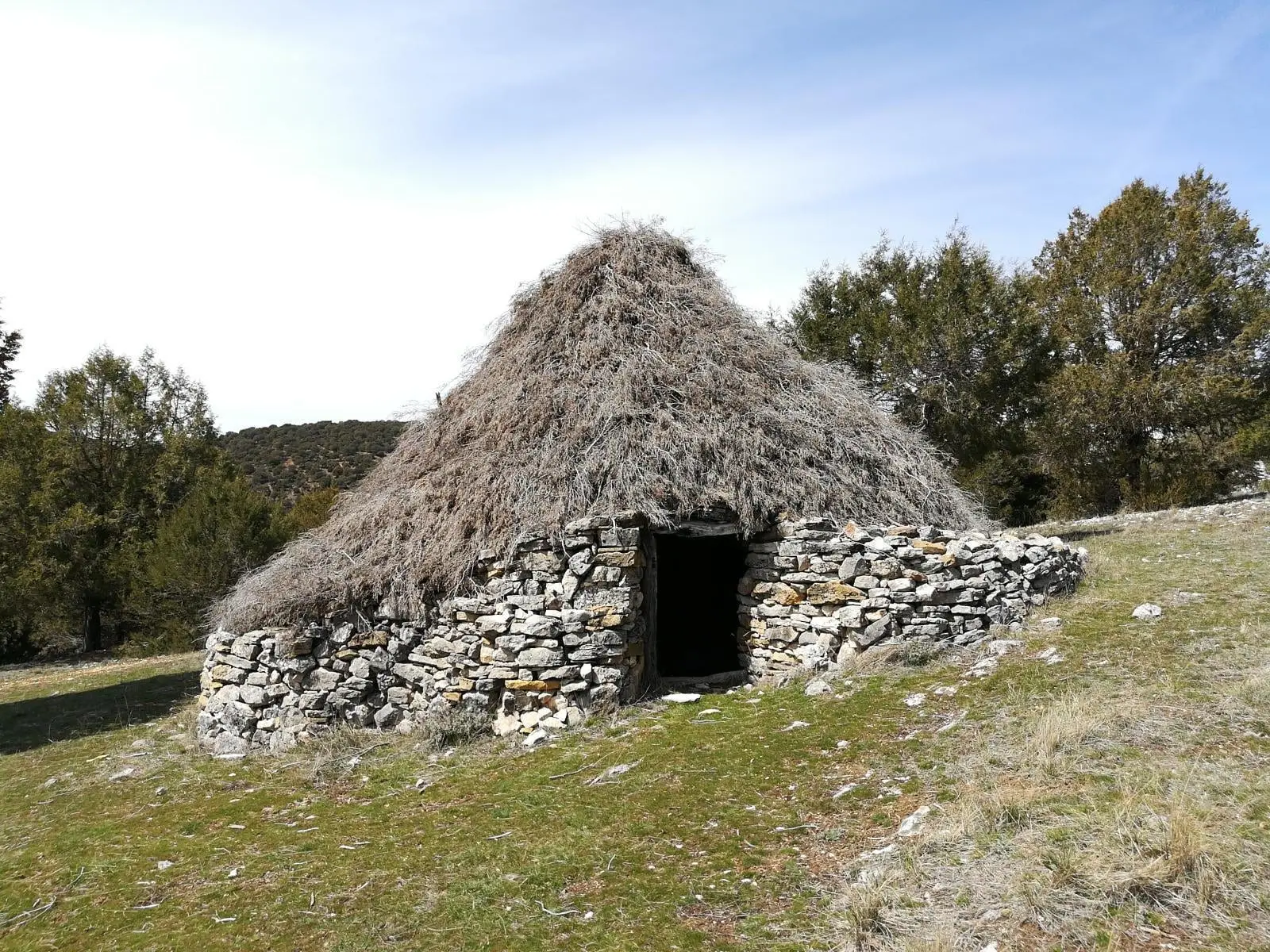
Juniper chozones of Ablanque: evolution of pastoral architecture
AblanqueSaelices de la Sal Pillbox: memory of the Spanish Civil War
Saelices de la Sal