Trade · 1860 – 1989 · Resin, hooks and pastoral shelters
Resin tappers: pine woods that smelled of work
For over a century, thousands of Alto Tajo families lived from resin. Tappers cut pine trees from March to October, and raw resin was distilled in factories in Zaorejas, Villanueva de Alcorón and Huertapelayo. Zaorejas, Armallones and Villanueva had their own technique, pica en redondo. The province’s last factory, in Villanueva, closed in 1983.
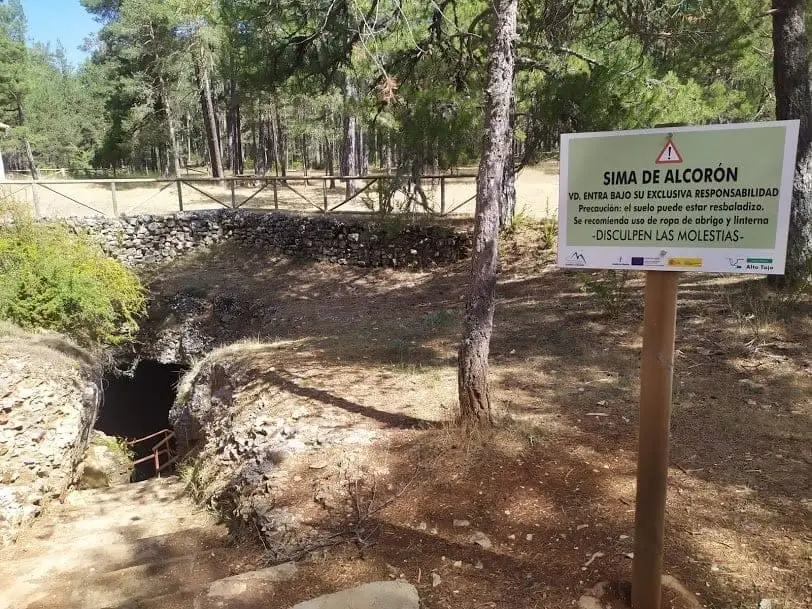
Photo: El Observario
The scent of the pine woods
Walking today through the pine woods of Zaorejas or Villanueva de Alcorón, you sometimes find trees with a long, dark scar on their trunks. It is the trace of a trade that fed this territory for over a hundred years: resin tapping.
Resin tapping in Spain was regulated in the mid-19th century, when the state began cataloguing and managing public forests. From then on, the pine woods of Alto Tajo, Sierra de Molina and the Duchy of Medinaceli provided more than fuel and timber. They were miera, raw resin converted into turpentine and rosin and sent to factories making varnish, soap, ink and paper. The province’s first reliable figures date to the forestry year 1878–1879: 193,000 kilos of raw resin yielded almost 34,000 kilos of turpentine and over 144,000 of rosin.
March to October, pine by pine
The season began in March and ended in October. The tapper worked at piece rates, paid for the kilos delivered. First he scraped off thick bark, desroñando the tree; then opened the cara, the tapping face, with an axe, renewing it every few days with a fresh pica. Resin dripped into a clay pote attached to the trunk; in the Beteta mountains these came from Priego’s potteries. Each remasa emptied the pots, and at the season’s end the barrasco, hardened resin on the wound, was scraped off.
The tool was everything. Village blacksmiths forged the axe, renewed its cutting edge and tempered it just right. Those of Cobeta, Villar de Cobeta and Ablanque were renowned among tappers, as was a Molina smith nicknamed “tío Bernia”, whose axes did not bend.
Pica en redondo: the knowledge of three villages
In Zaorejas, Armallones and Villanueva de Alcorón, the forests were black pine, valued for its timber. Tappers therefore used their own technique, pica en redondo, considered exclusive to these three villages in the literature: bark and inner bark were removed without damaging the wood. A small axe, the hachuelillo, as it was called in Villanueva, required years of practice. The method closely resembles American bark chipping, which also removes bark and inner bark without touching the wood. Some writers of the period proudly presented the mountain technique almost as its forerunner; recent research finds that claim unfounded. What is documented is that the authorities tried for years to eradicate pica en redondo and failed: tappers stayed faithful to their method. The same workers made the cuts, collected resin and carried it in pitchers and drums on their animals to village factories.
Factories beside the river
Before the large factories came Huertapelayo. Almost every resident had a still in their yard, distilling pine and juniper resin. The “pelayos” sold turpentine in goatskin containers throughout the district. But so many boilers consumed the surrounding pine woods, leaving bare soil and bringing floods: 1900 is still “the year of the flood”. As modern factories appeared, such as La Avellaneda and Mazarete, the backyard stills closed. Mazarete’s factory was built by Calixto Rodríguez, an Asturian forestry engineer who had studied distillation in the French Landes. He named it La Cándida after his mother. Berlanga dates construction to 1882; other sources date its opening to 1883. It distilled resin with steam using the most advanced technique of its time and closed in 1976. With the factories, many pelayos moved to resin-producing villages in Cuenca, taking their trade with them.
In Zaorejas, Villanueva de Alcorón and the surrounding area, several distilleries operated simultaneously. Between Zaorejas and Peñalén stood the Casas Vicente estate distillery, owned by Compañía Ibérica de Resinas and absorbed by La Unión Resinera Española in 1903. In Villanueva, the Embid family’s distillery processed as much as 700 tonnes annually. Mariano Villaverde’s factory still has standing walls and turpentine tanks.
In Valsalobre, residents remember five tappers, one with 3,500 pines, and the village’s best wages coming from resin. They tell it in a year in a mountain village.
The end
Petroleum products, imported resin and emigration arrived. Teodoro Embid’s factory in Villanueva de Alcorón was the province’s last, distilling raw resin until 1983. Six years later, in 1989, Corduente’s pine woods stopped producing. Villanueva’s serenading songs preserved what resin meant at home: a woman asking the pine worker to make the tree sweat so she could wear a new dress at the feast of the Magdalena.
Today projects seek to revive tapping with less demanding techniques, and resin from these woods remains high quality. Above all, the tapping faces remain on the trunks: an archive written in the pine trees themselves, easier to read when someone teaches you to look.
Words of the trade
- Cuartel
- A group of forest pines allocated to each resin tapper.
- Miera
- Resin as it comes from the pine, before distillation.
- Cara or entalladura
- An elongated wound cut into the trunk, from which raw resin flowed.
- Desroñar
- Scraping thick pine bark to prepare the surface for the tapping face.
- Pica
- Each fresh cut renewing the wound and keeping resin flowing during the season.
- Pica en redondo
- A technique particular to Zaorejas, Armallones and Villanueva de Alcorón, leaving black pine wood undamaged. It used a small axe called a hachuelillo.
- Pote
- A clay pot attached beneath the tapping face to collect resin.
- Remasa
- The periodic collection of resin accumulated in the pots.
- Barrasco
- Resin hardened on the tapping face, scraped off at the end of the season.
- Turpentine and rosin
- The two products of distilling raw resin: the liquid essence and solid resin.
Where to see it today
Trail 7: the lime kilns of Villanueva de Alcorón
6.3 km · 2.5 h · CircularSima de Alcorón: Descending 63 Metres to the Heart of the Paramera
Villanueva de Alcorón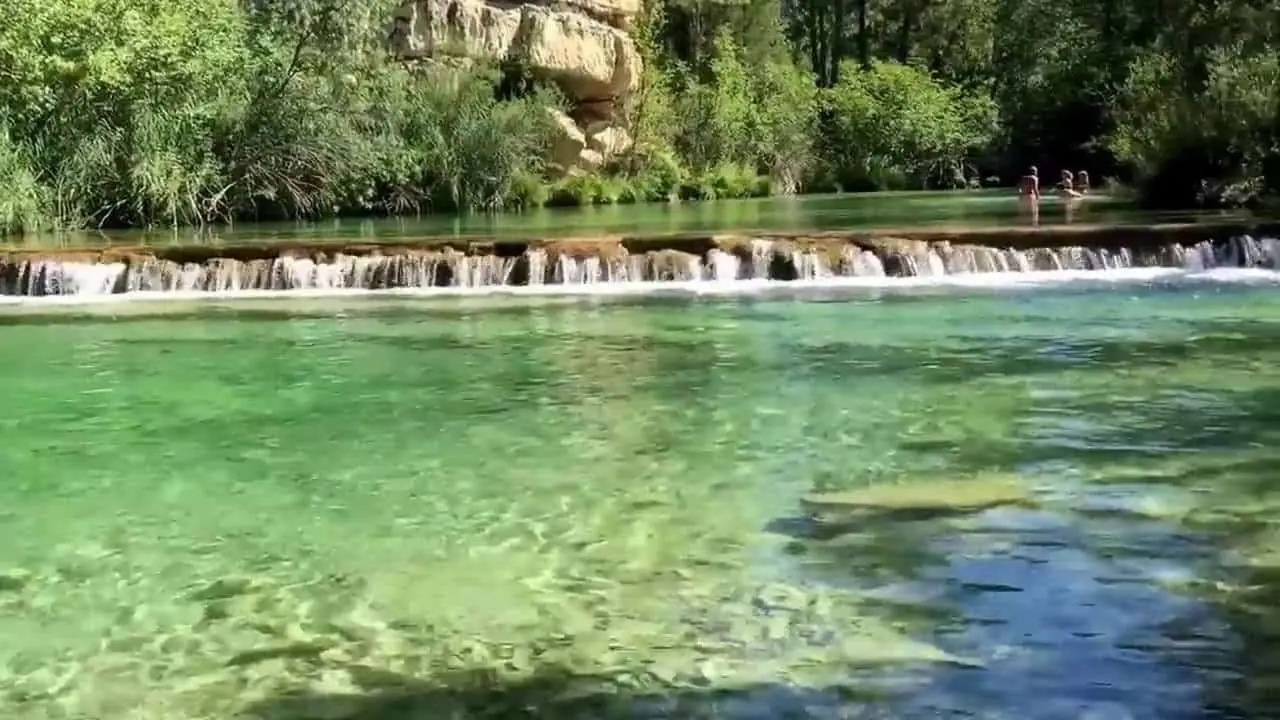
Puente de San Pedro: where the Tagus and Gallo meet
Zaorejas
Geotrail 6: from Villanueva de Alcorón to Peñalén
22 km · 5 h · LinearFrequently asked questions
How was resin extracted from pines?
Between March and October, the tapper scraped the trunk, opened a tapping face with an axe and renewed it with successive cuts. Raw resin dripped into a clay pot emptied at each collection. It was then carried by mule to a factory for distillation into turpentine and rosin.
What is pica en redondo?
A resin-tapping technique that, according to the literature, was used only in Zaorejas, Armallones and Villanueva de Alcorón. Their black pine woods produced valuable timber, so the cuts left the wood undamaged. Learning it took a long time.
When did resin tapping end in Alto Tajo?
Guadalajara province’s last raw-resin distillery, Teodoro Embid’s in Villanueva de Alcorón, operated until 1983. Corduente’s pine woods were the last to produce resin, until 1989.
Sources and readings
- Berlanga Santamaría, A.: La industria resinera en Guadalajara. Expansión y declive. Diputación de Guadalajara, 2023 (caps. VI, VII y IX).
- Revista Montes, n.º 52 (1953), citada por Berlanga.
- Delgado Macías, J. L.: Del bosque a la fábrica. Técnica y ciencia de la resina de pino en la España contemporánea. Tesis doctoral, UCM, 2015.
- Guía turística del Geoparque de la Comarca de Molina-Alto Tajo: patrimonio industrial.
- Testimonios de vecinos de Valsalobre sobre la resina (Vestal Etnografía, YouTube).
- «Fábrica de Resinas La Cándida de Mazarete», Patrimonio Industrial COIIM, 2009.
Further reading on the history of this land. Full bibliography.
Next story: The water Rome brought across