Trade · 12th – 20th centuries · The frontier and the Señorío
The salt of the earth: inland saltworks in Alto Tajo
Far from the sea, Alto Tajo produced salt by evaporating saline spring water in shallow pans under the sun. Armallá’s saltworks appear in Molina’s 12th-century charter; their name comes from Arabic for “salt mine”. Saelices de la Sal and Armallá, with their warehouses and wells with waterwheels, are the largest and best preserved.
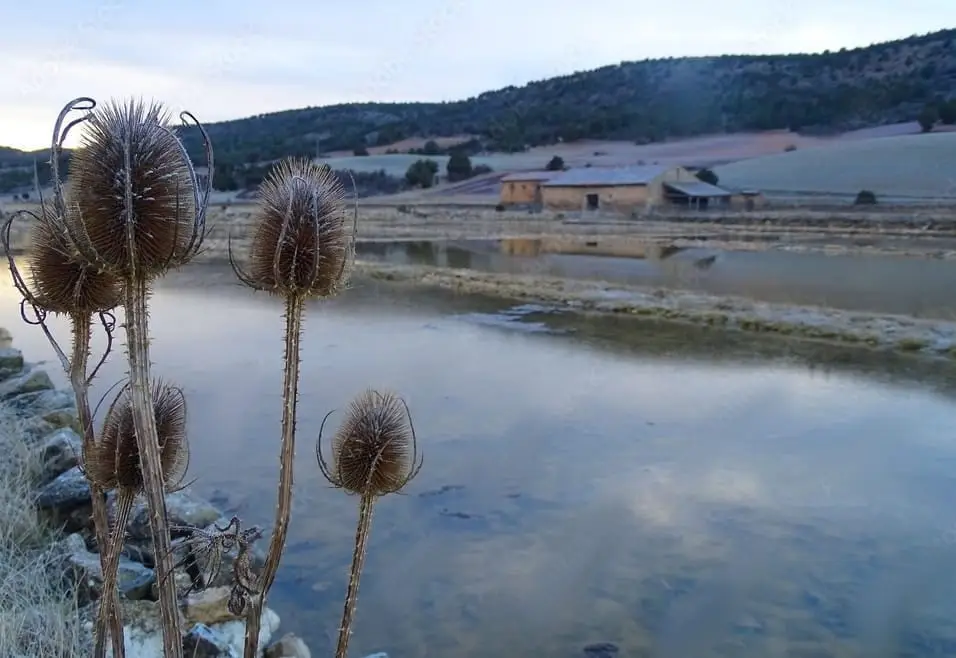
Photo: El Observario
Salt far from the sea
An ancient sea lies beneath Alto Tajo. More than two hundred million years ago, in the Triassic, coastal lagoons repeatedly dried out, leaving salt layers buried beneath rock. Rainwater passing through them emerges as saline springs. Wherever there was such a spring, there could be a saltworks.
In and around Alto Tajo, traces survive at Saelices de la Sal, Armallá, Terzaga, Traid, Pinilla, Anquela del Ducado, Castilnuevo and La Inesperada in Ocentejo, and in Cuenca at Valsalobre. In a world without refrigerators, salt was everything: it preserved slaughtered meat, cured cheeses and hides, supplied livestock and tempered iron in the forges.
Armallá: a salt mine with an Arabic name
The name of the Armallá saltworks comes from Arabic, roughly meaning “salt mine”. Above them, on the hill overlooking the valley, lies a site from the Islamic period. The first written reference is from the 12th century: the charter Manrique de Lara, Molina’s first lord, granted his territory. Afterwards the saltworks passed from owner to owner like a jewel: they belonged to Huerta monastery, appeared in doña Blanca’s will in 1293 and eventually reached the Mendozas.
In the 19th century Madoz estimated Armallá’s annual output at 16,000 to 18,000 fanegas of salt. Around forty labourers worked there, many from the saltworks themselves and Baños de Tajo.
How salt was made
The season ran from June to October, with pans prepared in May. A waterwheel lifted brine from the well. Juniper-wood channels carried it to the albercas, reservoirs where it rested and concentrated. Then it was distributed into the eras, shallow pans where the sun did the rest. Once the white crust was ready, rakes drew it into ridges; it dried and was taken to the warehouse on mules.
Even today, a hand passed along those juniper channels feels a silky surface polished by centuries of salt water.
Valsalobre: the last harvest
In Valsalobre, whose name already speaks of salt, the saltworks operated until 1982. Those who worked there remember the final seasons. Their grandfather had bought it from a resident of Masegosa, and the family ran it for decades. The grandson remembers the last harvest: it was the year he left for military service, when his father said he no longer felt able to manage alone.
The method was the old one, with a few changes. In mid-June the pans were washed, built with wood and stone slabs, never iron or cement, which salt corrodes. A layer of brine five or six centimetres deep was poured in, and they waited. The enemy was the summer storm: an afternoon’s rain ruined the harvest, because the fresh water had to evaporate first. Salt was collected with wooden rakes and shovels, piled in the lanes between pans to drain and swept with brooms of baleo, a wild shrub.
It was sold by measure, in a level wooden media; four made a quintal. The saltworker always left “a little gift” above the rim. Buyers who did not pay immediately were recorded with marks on a stone column: one line per wheelbarrow, a cross every ten. Holes can still be seen in the house wall where the mules arriving for sacks were tethered.
Why did it close? For the same reasons the village emptied. Each resident bought one or two arrobas a year for the pig slaughter, but livestock were the major customer. Shepherds estimate that neighbouring Villanueva alone had around 15,000 sheep, with thousands more in Valsalobre, Carrascosa, Peñalén and Tragacete. Sheep needed salt in the mountains, but not on the southern winter pastures. When the flocks disappeared and hanging salt blocks and cheap sea salt arrived, inland saltworks lost their purpose. The final surplus went onto roads against ice.
Saelices de la Sal: the king’s saltworks
In Saelices de la Sal, salt was a matter of state. The Crown held the monopoly, and under Charles III the works were rebuilt along almost industrial lines: perfectly symmetrical pans, wells with octagonal roofs and enormous warehouses, more suggestive of a cathedral than a small village. Early this century they were restored to resume production, and an exhibition space about salt was created in the warehouse. They can be explored independently or on a guided visit. The San Juan saltworks are nearby.
A landscape of salt
Saltworks create unusual habitats: saline soils with salt-adapted plants rarely found inland, and brackish lagoons such as La Salobreja. The same story is told twice: first by geology, then by the people who learned to make use of it.
Words of the trade
- Media
- A wooden measure for salt or grain. Four medias made one quintal.
- Alega
- A stone slab on which shepherds put salt for livestock.
- Era
- A shallow pan paved with slabs or compacted earth, where the sun evaporated brine and left salt.
- Recocedero or alberca
- A reservoir where brine rested and concentrated before entering the evaporation pans.
- Well with a waterwheel
- A well supplying salt water; at Armallá and Saelices, beneath octagonal timber roofs.
- Alfolí
- A salt warehouse, from the Arabic word for granary.
- Fanega
- An old measure of capacity, also used to record salt production.
Where to see it today
Armallá Salt Pans (Tierzo): Salt of the Señorío Since Roman Times
Tierzo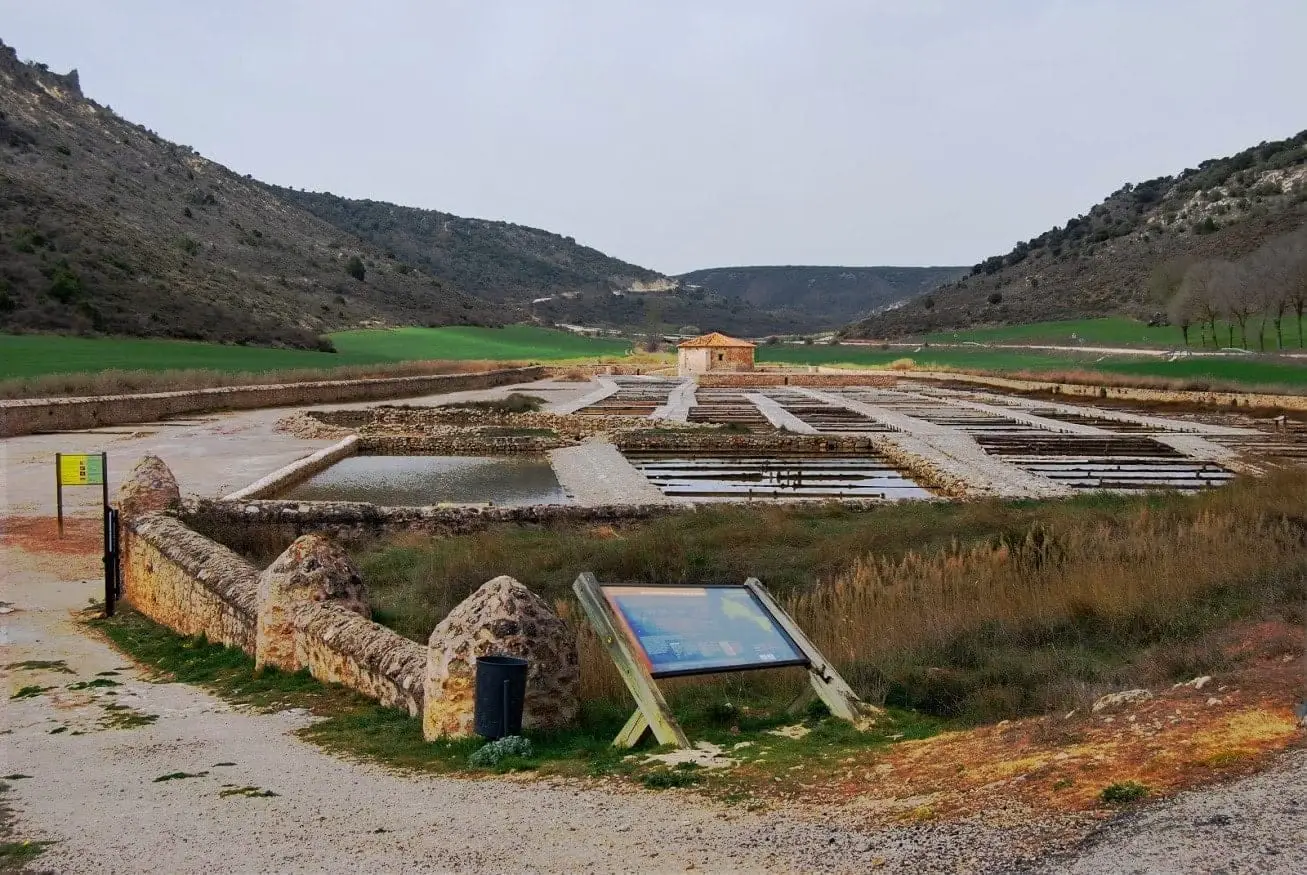
San Juan Salt Pans (Saelices de la Sal)
Saelices de la Sal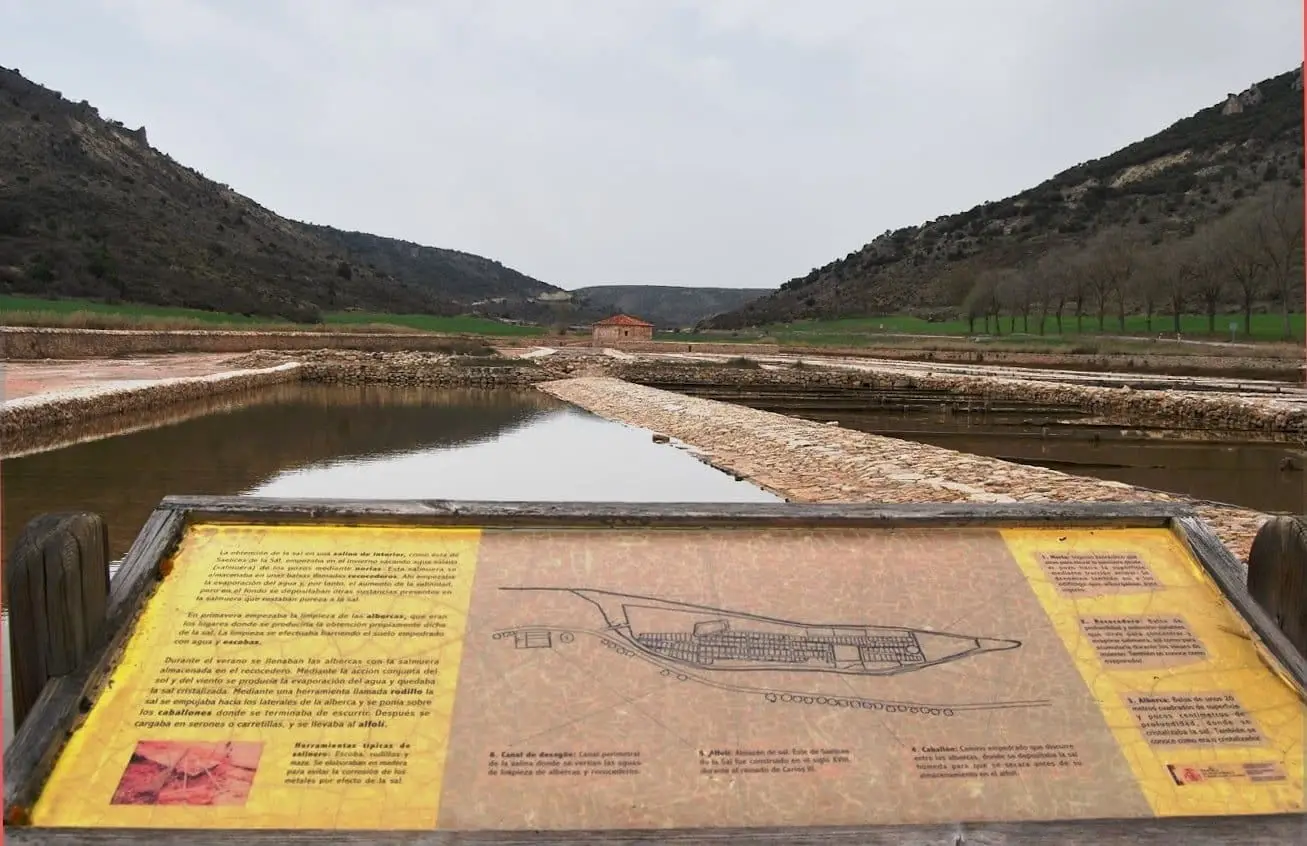
Guided visit to Saelices de la Sal saltworks
Saelices de la Sal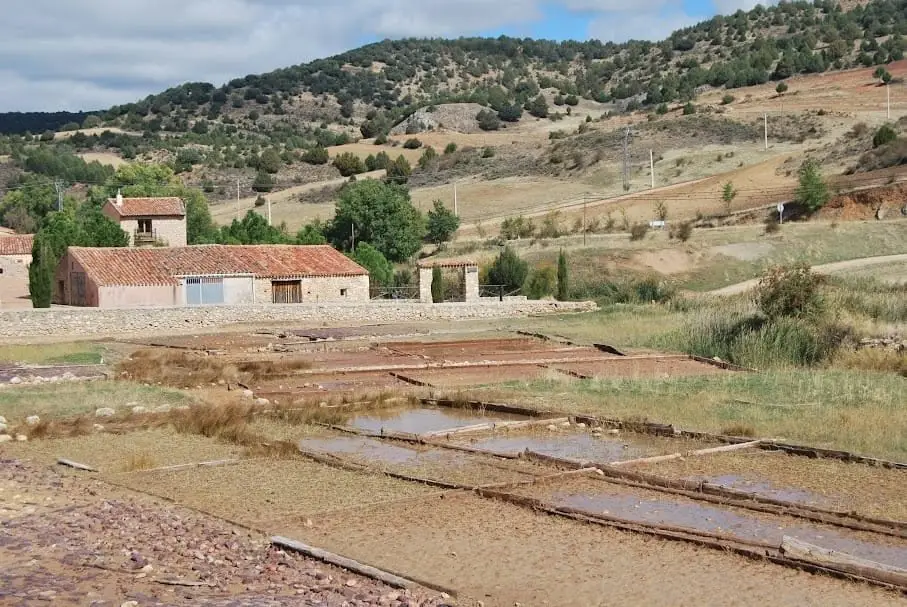
Terzaga Salt Pans: Medieval Salt on the Bullones River
Terzaga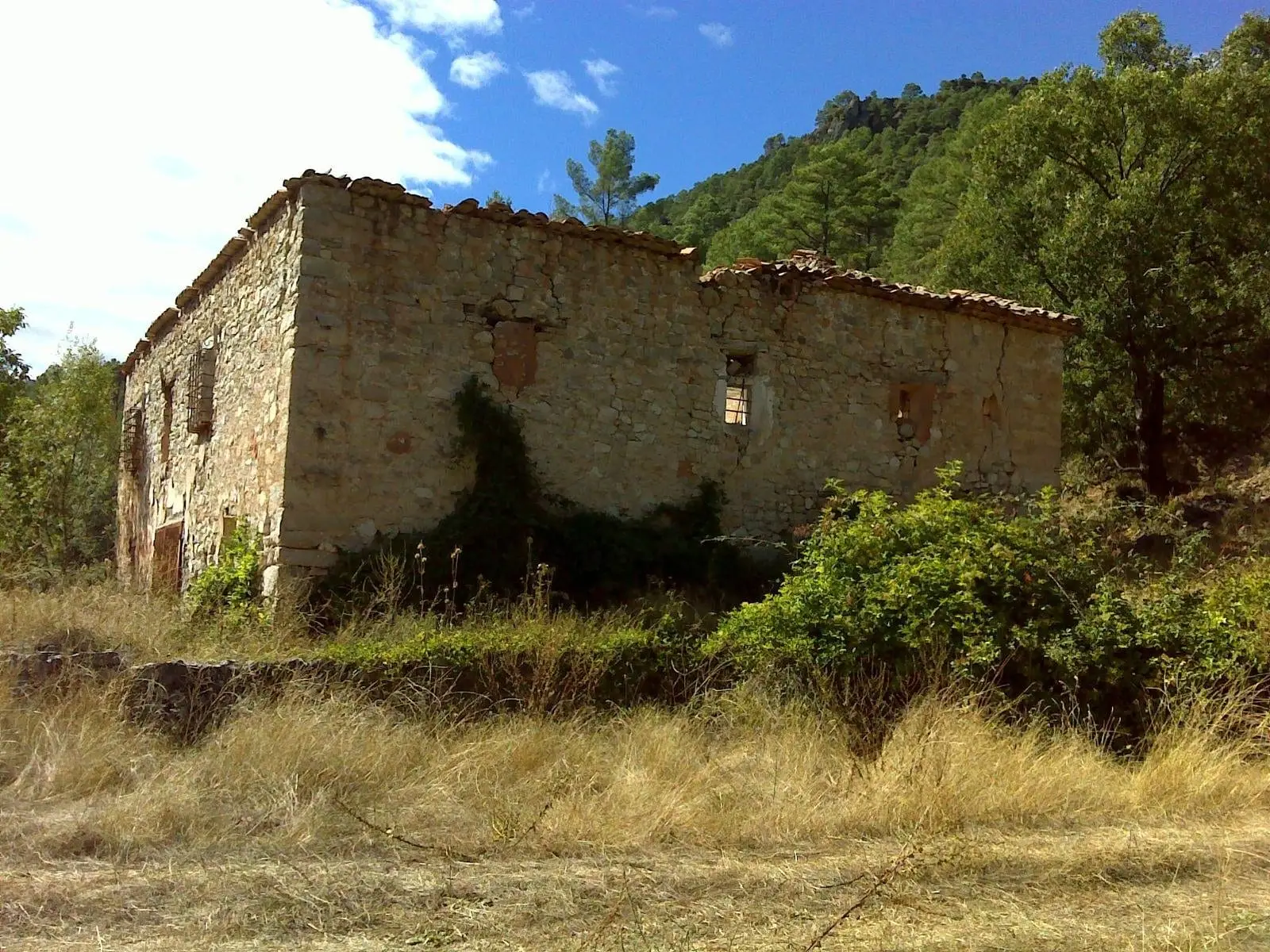
La Inesperada saltworks (Ocentejo)
Ocentejo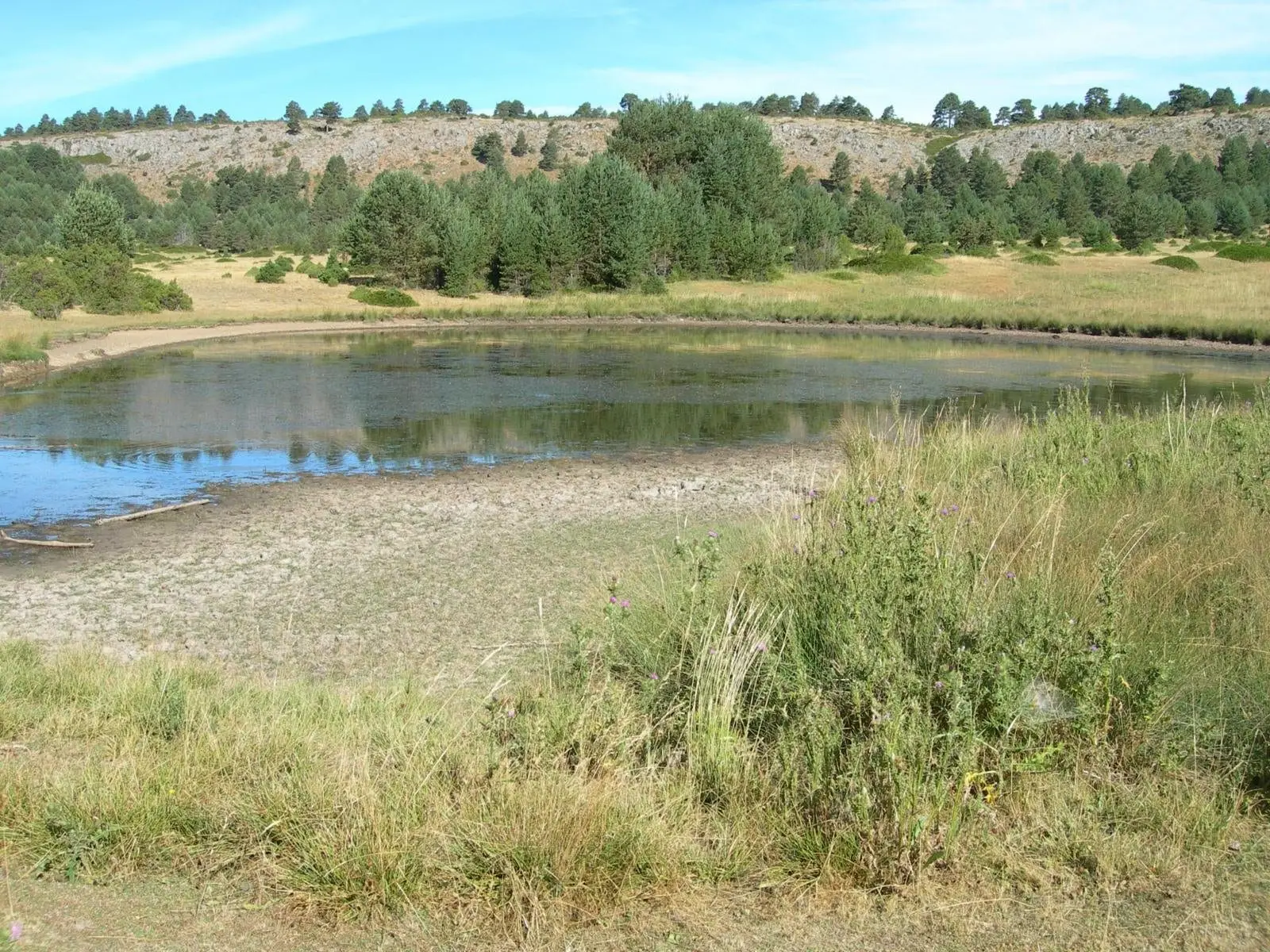
Laguna de la Salobreja (Orea): a saltwater lagoon in the mountains
OreaFrequently asked questions
How was salt made inland, far from the sea?
Water was drawn from saline springs or wells crossing Triassic salt layers, then left to evaporate in shallow pans under the sun. The season ran from June to October; pans were prepared in May.
Which are Alto Tajo’s most important saltworks?
Saelices de la Sal and Armallá, in Tierzo, are the largest and best preserved, with monumental warehouses, pans and wells with waterwheels. Others include Terzaga, La Inesperada in Ocentejo, Valsalobre, Traid and Pinilla.
What does Armallá mean?
The place name comes from Arabic and means roughly “salt mine”. Above the saltworks stands a hill with remains from the Islamic period.
Sources and readings
- Boletín del Parque Natural del Alto Tajo «El río que nos lleva», n.º 3: salinas del Parque.
- El Alfolí, revista de la Asociación de Amigos de las Salinas de Interior.
- Boletines 5 y 6 del Parque Natural del Alto Tajo: restauración de Saelices y Armallá.
- Guía turística del Geoparque de la Comarca de Molina-Alto Tajo.
- Testimonio de Gabriel, Fulgencio y Agustín sobre las salinas de Valsalobre (Vestal Etnografía, YouTube).
Further reading on the history of this land. Full bibliography.
Next story: Fairs, dealers and muleteers: a land that lived on the road