Trade · Middle Ages – 1960s · Resin, hooks and pastoral shelters
Chozones sabineros: a home for shepherd and flock
Chozones sabineros are Alto Tajo livestock shelters with dry-stone walls and a juniper-branch roof up to a metre and a half thick, without tiles or nails. They sheltered flocks and sometimes shepherds. Some are circular, with a living juniper at the centre; others square. The finest groups are at Ablanque, Escalera and Olmeda de Cobeta.
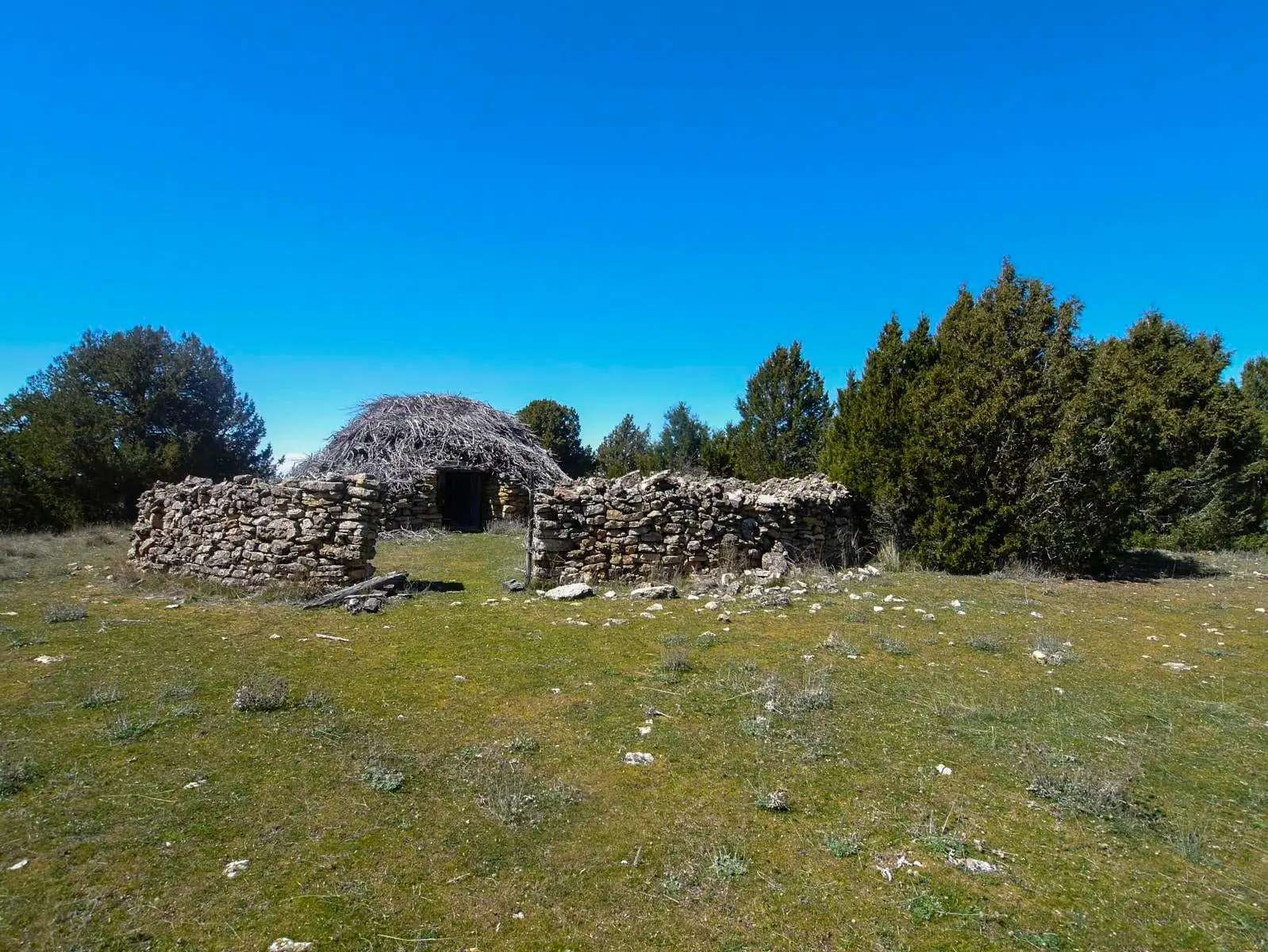
Photo: El Observario
A house made of woodland
Walking through Alto Tajo’s juniper woods, you sometimes find what looks like a heap of dry branches on a low stone wall. Come closer. It is a chozón, and may have stood there for over a century.
Essentially, a chozón is a livestock enclosure with a juniper roof. A perimeter dry-stone wall, around a metre high, supports the barda, juniper branches piled into a layer one to one and a half metres thick. No tiles, nails or mortar. The layer is so thick that rain runs off before penetrating it. Beneath, juniper posts and rafters carry the weight, fitted together without nails or ropes. To remain watertight, the barda was renewed every two or three years. (Sources differ on thickness: the Park leaflet says “over half a metre”, while other studies give one to one and a half metres.)
From living juniper to supporting post
The oldest have a circular plan and sometimes a living juniper at the centre, acting as a post and protecting the building with its crown. As flocks grew, more space was needed: square and rectangular huts appeared, and from the 1950s some were built without internal posts. Each is different, adapted by its shepherd to the ground, available trees and flock size.
They sheltered sheep and goats on cold nights and during lambing, often also the shepherd, sleeping with the flock far from the village. They occur in groups on high plateaux, usually on ridges with good views, water and pasture nearby, like small seasonal settlements.
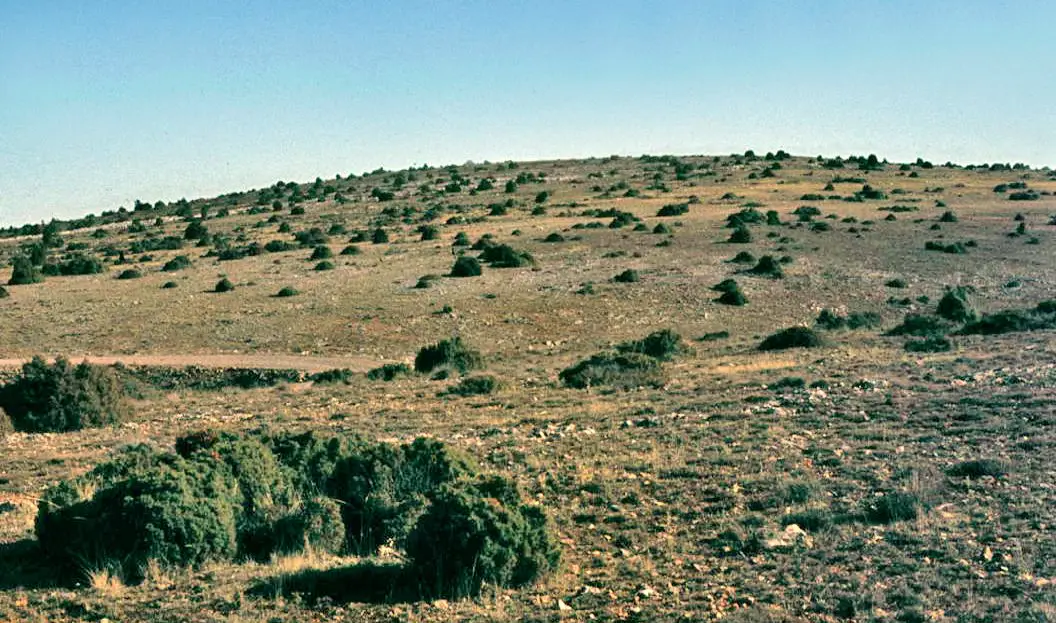
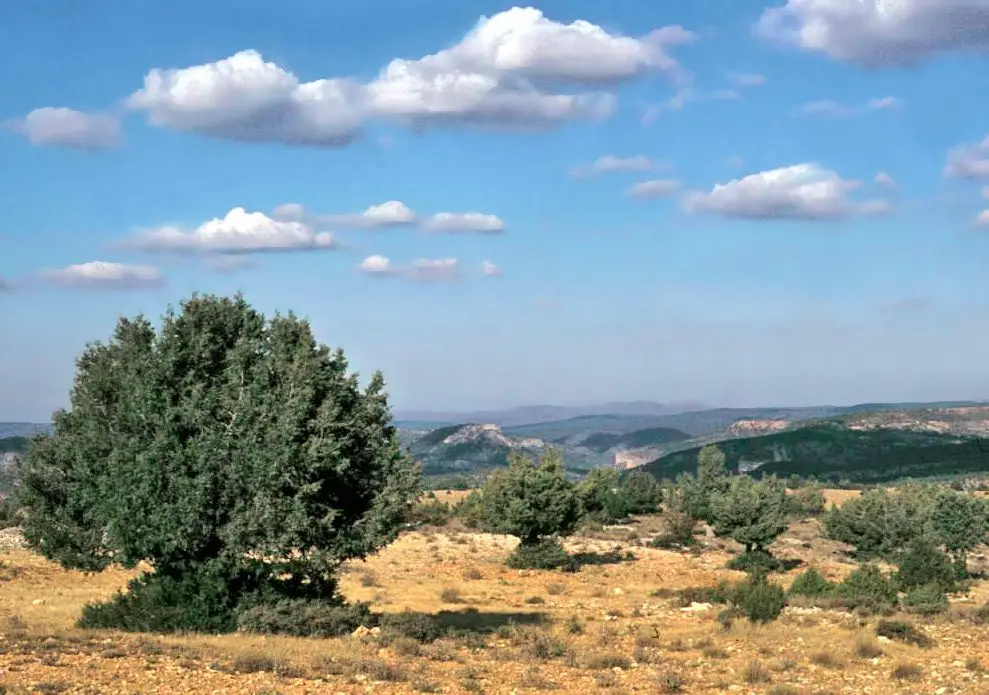
Shepherds also shaped the juniper woods. They pruned trees for leafy fodder and timber, leaving clipped crowns still recognisable today. In idle hours they wrote and drew: some posts and beams preserve handwritten letters and drawings, an archive still not fully studied.
A territory of shepherds
Alto Tajo and the Lordship of Molina were for centuries among the Peninsula’s great livestock regions. Cañadas, livestock routes, descended towards southern winter pastures, and transhumance shaped many families’ calendars. Even in the 20th century, Checa men signed on as seasonal shepherds around Saint Michael’s Day, going to Andalusia from November to May. Those remaining tended village animals in turns.
A shepherd did much more than watch sheep. A saying from neighbouring mountains captures it: three legs support a flock: grass, water and salt. In spare hours he made crooks, bell clappers and braided esparto for his sleeping mat. He tended the countryside without being asked, cleaning springs and troughs and keeping routes open. Without him, those who study the trade say, the countryside “is left orphaned”.
In Checa, the Museum of Traditional Livestock Farming in Alto Tajo gathers tools and objects from that pastoral life. In 2020 it expanded through the loan of Santiago Arrazola Sanz’s collection: livestock bells and carlancas, spiked collars protecting dogs from wolves.
Where to see them
The Natural Park has equipped several ethnographic routes:
- Ablanque huts route: three short branches from a car park on the Buenafuente del Sistal road, and a museum hut beside the village.
- Escalera huts route, beside the Valhermoso–Lebrancón road.
- La Loma huts route, in Riba de Saelices.
The catalogue prepared for architect Paz Núñez Martí’s thesis recorded over forty huts and lambing shelters in the Park in 2004, particularly in Olmeda de Cobeta and Villar de Cobeta, as well as Escalera, Cuevas Labradas and Ablanque. Many were sound, but others already had collapsed roofs or rotten rafters.
Saving them by hand
An abandoned hut soon deteriorates: the barda rots, its weight overwhelms the rafters and the wall spreads. Since 2015, the Micorriza Association has organised volunteer work in which over three hundred people helped restore four huts, three on Escalera’s commons and one in Ablanque. In 2020 a circular hut was rebuilt in Ablanque with the council, the Park and support from Obra Social La Caixa. It is difficult: suitable juniper rafters are scarce, and fewer people know how to place them.
A hut is therefore centuries of knowledge passed on by word of mouth, surviving only if someone keeps practising it.
Learning beside the flock
In Checa, Isidro García Gómez began shepherding as a child and could not attend school. His granddaughter María Lozano recalled Luis Martínez, tío Leyes, teaching him reading, writing and arithmetic. That life continues in The war that entered people’s homes.
The trade was handed down, but it could also occupy the time a child needed for study. Pastoral memory preserves both sides.
From the archive


Words of the trade
- Pleita
- A braided esparto-grass strip used to stitch panniers, mats and baskets.
- Chozón
- A livestock shelter with dry-stone walls and a plant roof, almost always juniper in Alto Tajo.
- Paridera de barda
- Another name for a chozón: a roofed enclosure where ewes gave birth.
- Barda
- A waterproof roof of piled juniper branches, one to one and a half metres thick.
- Cabrios
- Juniper poles forming the sloping roof framework.
- Dry stone
- Stones laid without mortar, held by their weight and fit.
- Carlanca
- A broad spiked leather or iron collar worn by mastiffs for protection against wolves.
- Ramón
- Tender branches cut from trees to feed livestock; the source of ramonear, to browse.
- Transhumance
- Seasonal livestock journeys between mountain summer pastures and warmer winter grazing.
Where to see it today
Juniper chozones of Escalera: El Cerrillo and El Sabinar
Escalera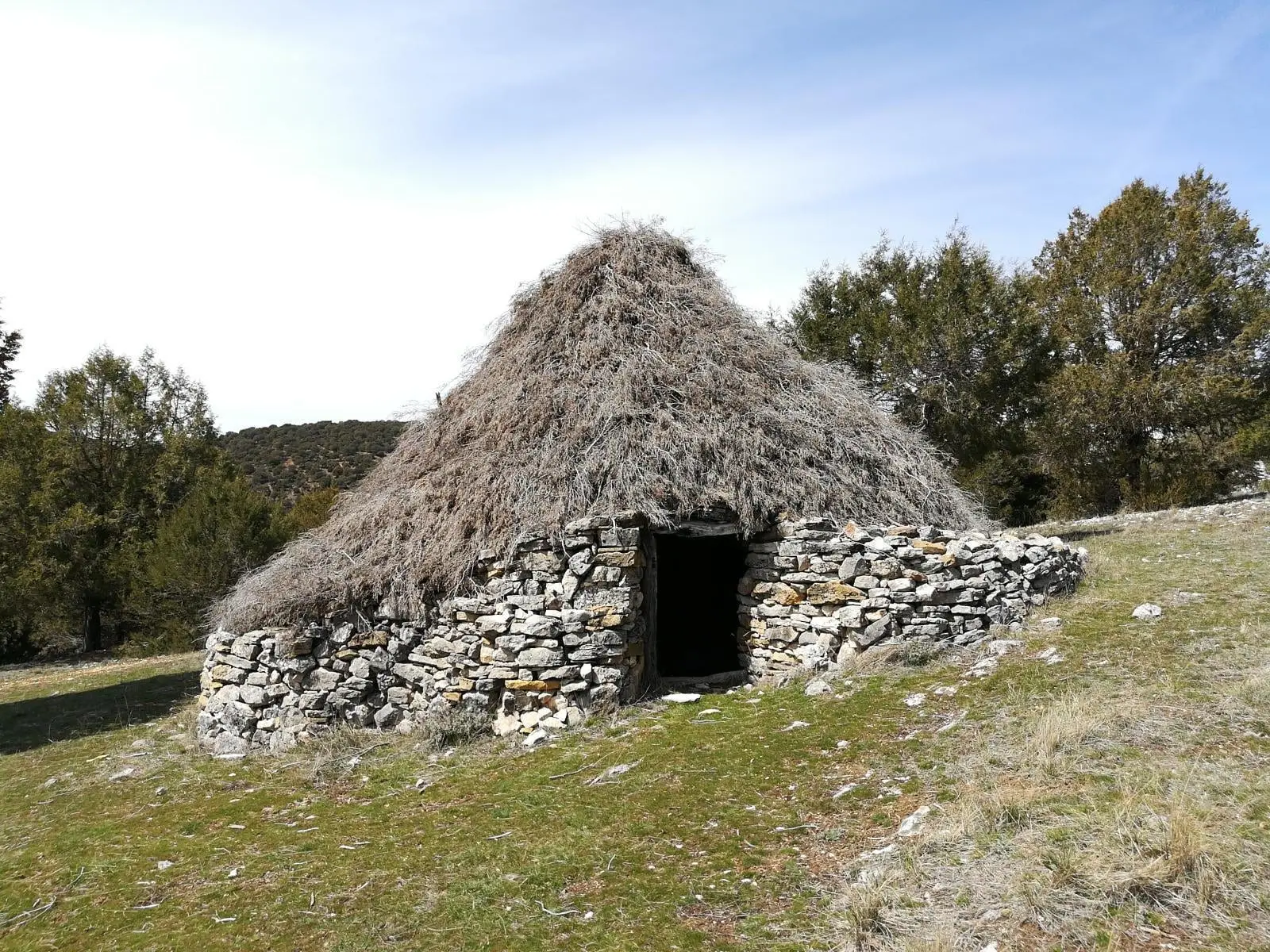
Juniper chozones of Ablanque: evolution of pastoral architecture
Ablanque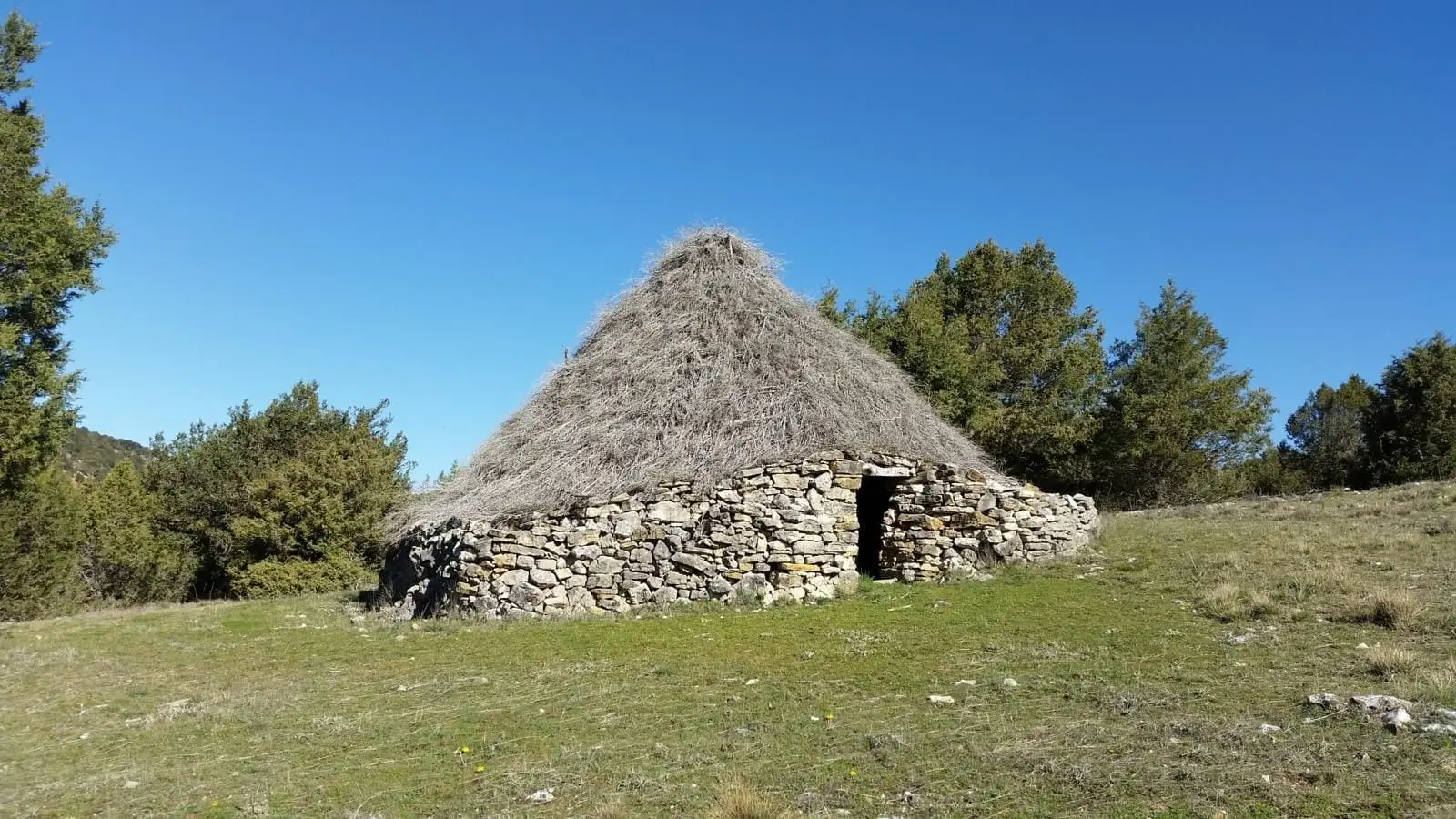
Chozón Museum of Ablanque: how paramera shepherds lived
Ablanque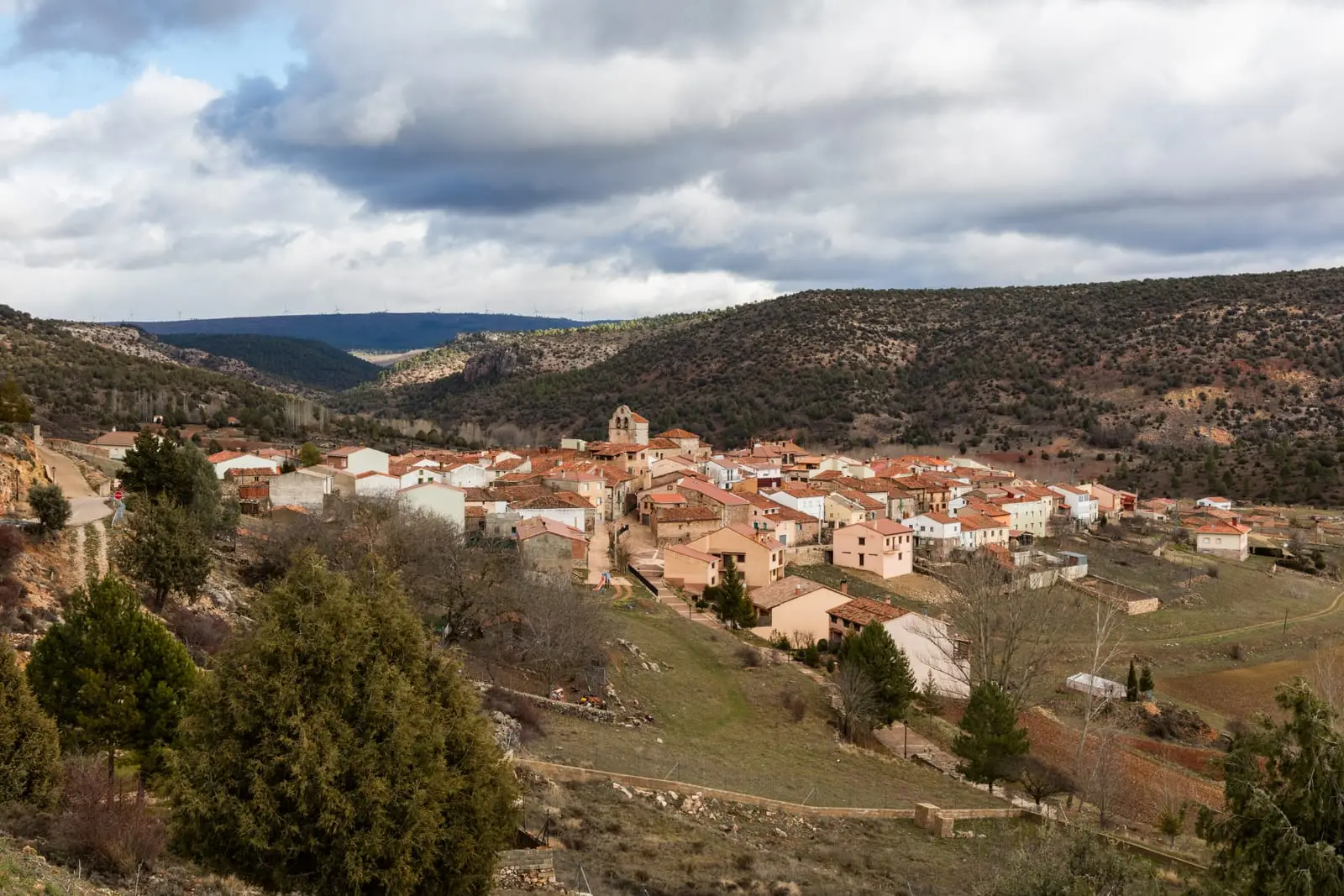
Ethnographic route 1: the chozones of Ablanque
3 km · 3 h · LinearEthnographic route 2: the chozones of Escalera
2.5 km · 2 h · LinearTrail 5: the chozones of La Loma (Riba de Saelices)
10.5 km · 4 h · Circular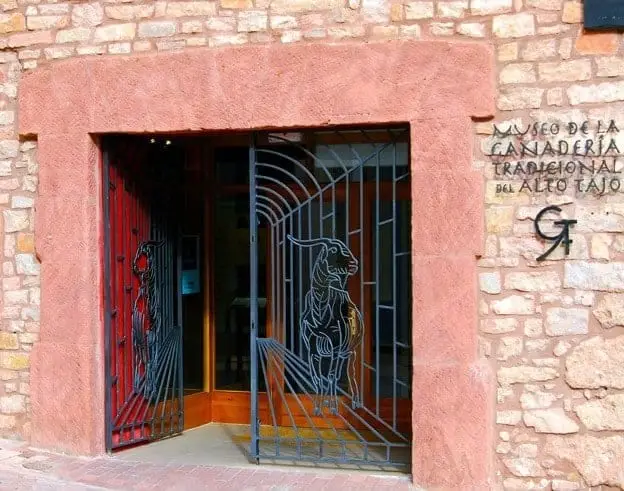
Museum of Traditional Pastoral Life of the Alto Tajo (Checa)
Checa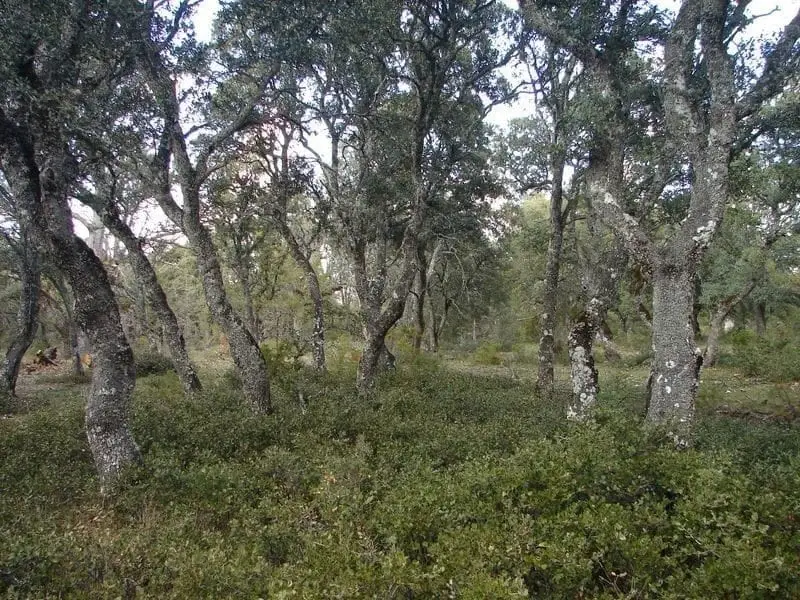
Dehesa of Olmeda de Cobeta: ancient pollarded Pyrenean oaks
Olmeda de CobetaFrequently asked questions
What is a chozón sabinero?
A traditional Alto Tajo livestock building: a dry-stone wall around a metre high topped with juniper branches one to one and a half metres thick, supported by juniper posts and rafters. It has no tiles or nails.
Where can you see juniper huts in Alto Tajo?
On the Natural Park’s ethnographic routes: Ablanque’s huts, with a museum hut beside the village; Escalera; and La Loma in Riba de Saelices. The Park catalogue also records many at Olmeda de Cobeta and Villar de Cobeta.
Why do some huts have a tree inside?
The oldest were built around a living juniper, sometimes a holm oak, which served as a central post and protected the structure with its crown. They are the most literal union of tree and architecture.
Sources and readings
- Núñez Martí, P.: Arquitectura y construcción, paisaje y territorio: los refugios de la cuenca alta del río Tajo. Tesis doctoral, ETSAM-UPM, 2015 (y su Anexo II, catálogo de chozones).
- Asociación Micorriza: «Chozones sabineros en el Parque Natural del Alto Tajo, un patrimonio único», boletín del 20 aniversario del Parque.
- Boletines 1 y 5 del Parque Natural del Alto Tajo: inventario y rutas etnográficas.
- Revista Aguaspeña (Checa), n.º 20: los viejos labradores y pastores temporeros.
- Parque Natural del Alto Tajo: folleto «Chozones» y Memoria de actividades 2020 (chozón de Ablanque, colección Arrazola del Museo de Checa).
- Entrevista a José Fajardo Rodríguez, etnobotánico, sobre los saberes del pastor (Vestal Etnografía, YouTube).
Further reading on the history of this land. Full bibliography.
Next story: The water that drove the wheels: mills, fulling mills, trip hammers and the first electric light