Episode · 1950 – today · Villages that emptied
The villages that emptied
The 36 Alto Tajo municipalities with unchanged boundaries since 1900 had 17,571 inhabitants in 1910 and just 2,319 in 2021, a fall of 87%. The decline was concentrated between 1960 and 1981, when more than half the population was lost. Woodland trades disappeared, reservoirs and roads arrived, and villages such as Valtablado de Beteta and Villaescusa de Palositos emptied.
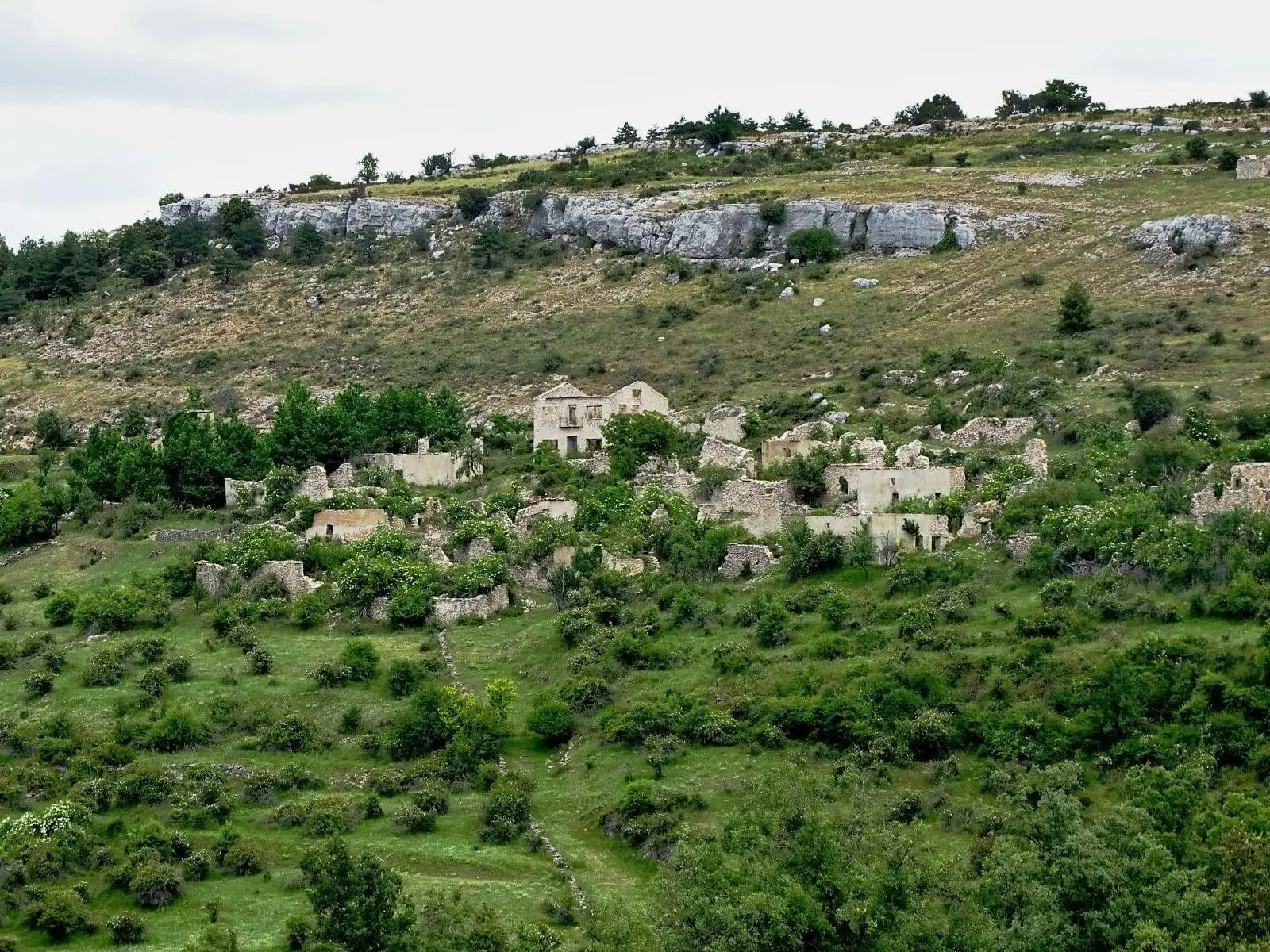
Photo: El Observario
Nine in ten
The chart above shows thirty-six villages: all Alto Tajo municipalities whose boundaries have remained unchanged since 1900, added together census by census. In 1910, 17,571 people lived in them. In 2021, 2,319. Almost nine in ten left, or were never born there.
The curve does not fall evenly. Until 1950 the decline is slow, almost a trickle: the war, the postwar years and the first people leaving for Madrid. Between 1960 and 1970, Alto Tajo loses 39% of its population in ten years, and between 1970 and 1981 another 45% of those remaining. These were also the years of Guadalajara province’s greatest emigration: according to the INE, over 45,000 people left between 1961 and 1970, and the province had already lost over 150,000 through emigration since the beginning of the century.
Village by village
Behind the total are individual stories. Checa had 1,811 inhabitants in 1887 and 286 in 2021. Zaorejas reached 1,011 in 1930; by 1970 it had absorbed Huertapelayo but still had only 415. Taravilla fell from 420 to 32; Pinilla de Molina, from 360 to 11; Valtablado del Río, from 196 in 1900 to eight residents. Every village page in this atlas now includes its population curve using INE census figures.
To avoid mixing unlike figures, the total above excludes municipalities that merged or split along the way. Those mergers are themselves part of the story: between 1970 and 1981 Huertapelayo and Villar de Cobeta came under Zaorejas, Motos under Alustante, Valtablado de Beteta under Beteta and Villaescusa de Palositos under Peralveche. When a village can no longer sustain its council, it becomes a pedanía.
Why they left
There was no single cause. There were many, arriving almost together.
- Woodland trades faded. Entrepeñas reservoir blocked timber floating in 1954; resin declined against petroleum products and imports, and the province’s last factory closed in Villanueva de Alcorón in 1983. Transhumance on foot gave way to lorries.
- Farming became mechanised and needed fewer hands.
- Cities drew people in. Madrid, Valencia, Zaragoza and Barcelona offered steady work, schools and doctors.
- Migration changed its form. For centuries, people in Checa left seasonally as shepherds, charcoal burners or labourers, then returned. This was migración golondrina, migration like the swallows. In the 1960s people began leaving permanently, and many young women went into domestic service in cities.
What life was like just before departure, with the common pasture enclosed by thorn branches, the communal oven and the Judas Pine, is told by residents of Valsalobre, Orea and Peralejos in a year in a mountain village.
The abandoned settlements
Some places reached the end.
Valtablado de Beteta, in the Serranía de Cuenca, was one of Beteta’s dependent villages and an independent municipality from 1850. Emigration in the 1960s and 1970s and the sale of its land to ICONA emptied it; in 1974 it came under Beteta again. Today it is a ruin, and an association of former residents preserves its memory.
Villaescusa de Palositos is documented from the Reconquest. Its church and cemetery remain, and its territory joined Peralveche in 1977.
Villanueva de las Tres Fuentes, called La Chaparrilla until the 19th century, lies in Sierra Molina within Orea’s municipality, surrounded by pine woods. It was abandoned over forty years ago.
Beside the Armallá saltworks, below a hill with Islamic remains, stands the former saltworkers’ hamlet, now ruined.
What remains
Few people and much territory remain. Across much of Molina and Alto Tajo, density is around two inhabitants per square kilometre, figures of a demographic desert in the heart of Europe. But there are also those who stayed, those returning each August and those who have arrived in recent years to live here year-round.
Depopulation is more than a statistic. It affects who can find work, schooling, transport and a home in which to stay. A closed house can preserve a family connection while remaining beyond the reach of someone who wants to live here.
The August return brings many families together, but cannot by itself sustain life during the rest of the year. That other part of the story, the lack of rentals and the needs of permanent residents, continues in A home to stay in.
Vocabulary
- Despoblado
- A settlement once permanently inhabited that now has no registered residents.
- Pedanía
- A village without its own municipality, administered by another village’s council.
- Migración golondrina
- Temporary migration followed by a return: shepherds, charcoal burners or labourers leaving for a few months, then coming back.
- Net migration
- The difference between the number of people arriving in a place and those leaving.
- De facto and de jure population
- People present on census day, compared with those officially resident there.
Where to see it today
Valtablado de Beteta: an abandoned village in the Serranía
Beteta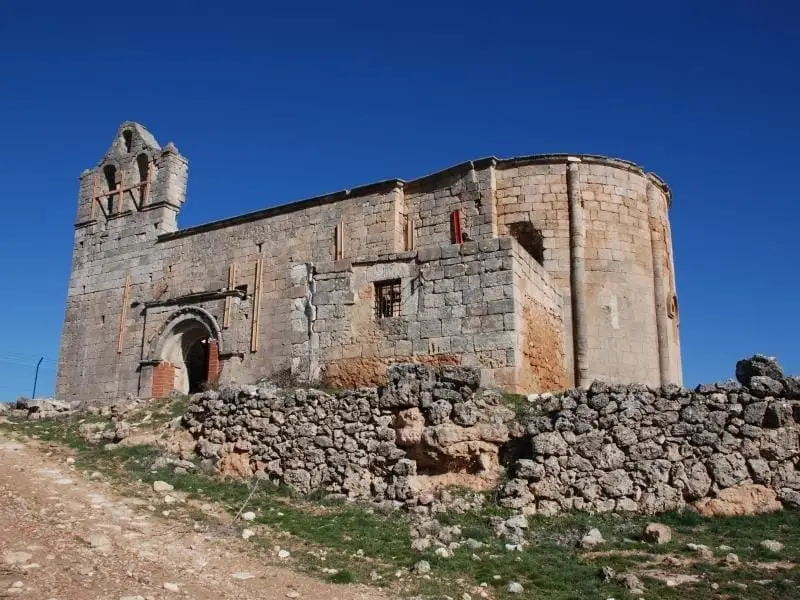
Villaescusa de Palositos: the village almost erased from the map
Peralveche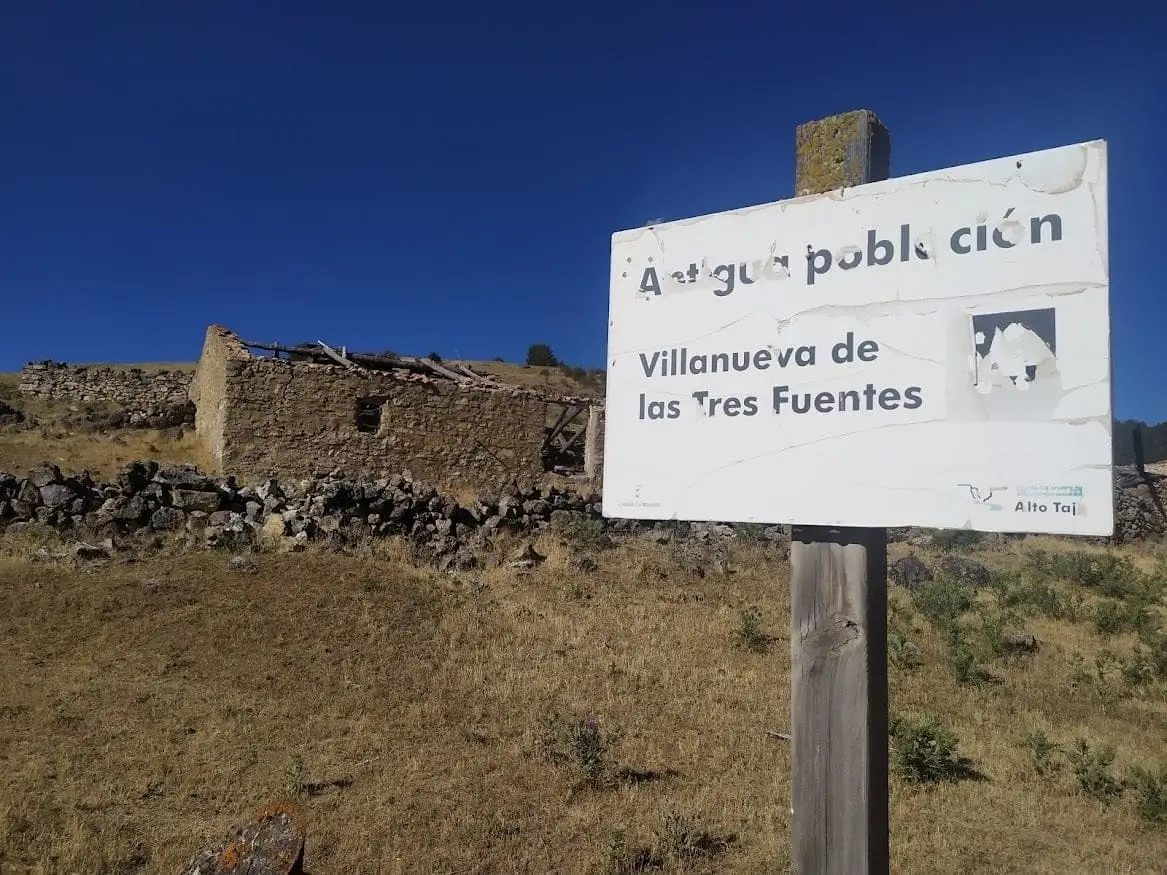
Villanueva de las Tres Fuentes (Orea): an abandoned village in Sierra Molina
Orea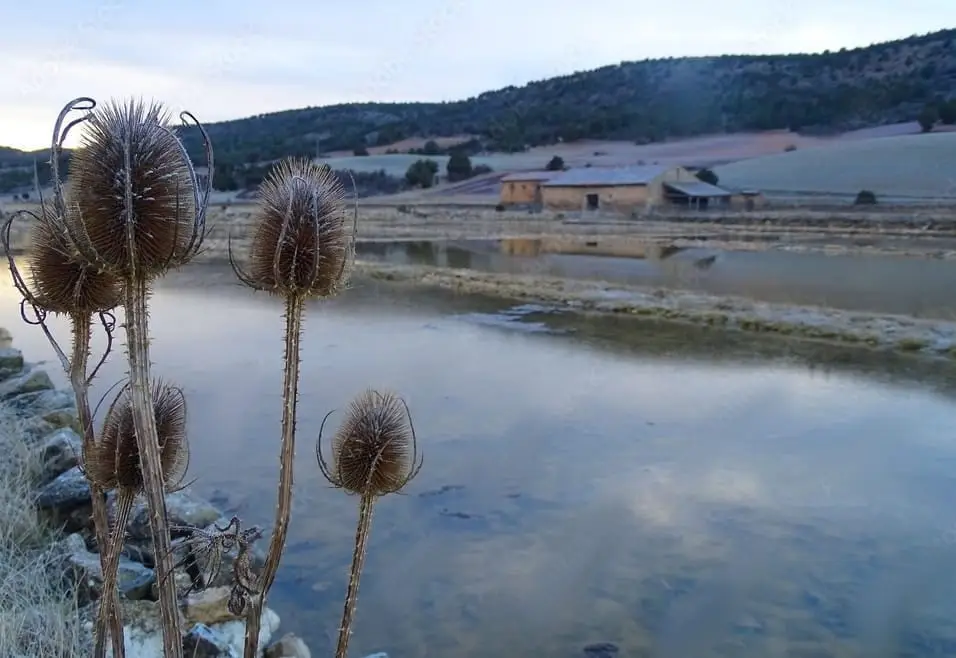
Armallá Salt Pans (Tierzo): Salt of the Señorío Since Roman Times
TierzoFrequently asked questions
How much population has Alto Tajo lost?
Across the 36 municipalities whose boundaries have remained unchanged since 1900, the population fell from 17,571 in 1910 to 2,319 in the 2021 census, a decrease of 87%. More than half was lost between 1960 and 1981.
Why did Alto Tajo lose its population?
Several causes coincided: mechanised farming, the end of trades such as resin tapping, timber floating and transhumance on foot, the appeal of Madrid, Valencia, Zaragoza and Barcelona, and a territory with harsh winters and poor transport links. Emigration accelerated particularly in the 1960s.
Which abandoned villages are there in Alto Tajo?
The best known include Valtablado de Beteta in the Serranía de Cuenca; Villaescusa de Palositos, annexed to Peralveche; Villanueva de las Tres Fuentes in Orea; and the former saltworkers’ hamlet at Armallá. Other villages, such as Valtablado del Río, had eight residents in 2021.
Sources and readings
- Instituto Nacional de Estadística: censos de población 1842-2021 (series municipales recopiladas en Wikipedia, «Gráfica de evolución demográfica», consultadas en septiembre de 2026).
- El Alfolí, n.º 12 (2013): la emigración en la provincia de Guadalajara 1900-1970, con datos del INE.
- Montaner Salas, M. E.: «Algunos comentarios sobre la población del municipio de Molina de Aragón». Universidad de Murcia.
- Revista Aguaspeña (Checa), n.º 20 (2013): «Los viejos labradores».
- Arquitectura popular de Molina y el Alto Tajo (densidad de población de la comarca).
- Berlanga Santamaría, A.: La industria resinera en Guadalajara (cierre de la resina).
Further reading on the history of this land. Full bibliography.
Next story: Roads of wool, salt and timber