Trade · 6th century BC – 20th century · Salt, iron and timber
Fire and earth: ironworks, lime kilns, tileworks and ochre mines
Before industry, Alto Tajo transformed its own rock: iron from Cueva del Hierro was worked in water-powered ironworks such as Peralejos; limestone was fired in lime kilns such as Villanueva de Alcorón’s; clay yielded tiles in over thirty tileworks, and a mine in Peñalén extracted ochre pigments until 1936.
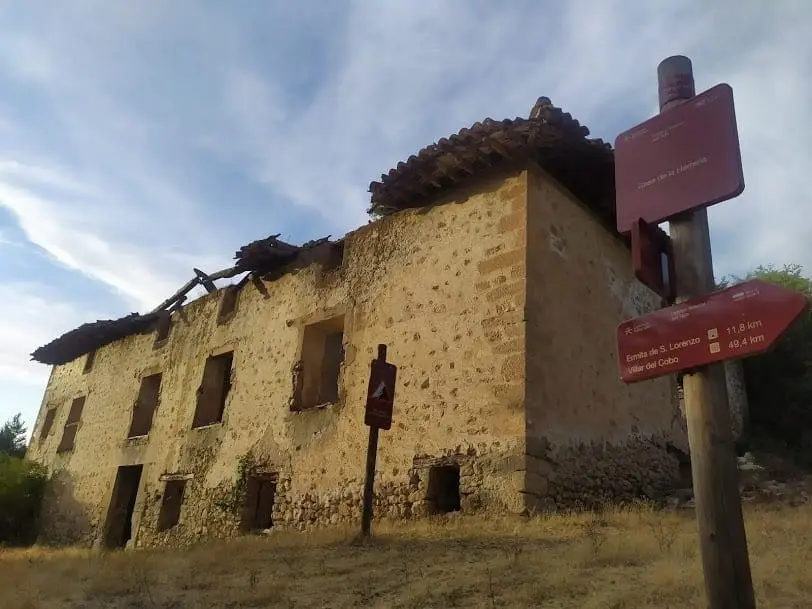
Photo: El Observario
Four elements
The old mountain ironworks could be understood almost literally through the Greek philosophers’ four elements. Earth: iron ore. Fire: the charcoal that reduced it. Air: bellows feeding the embers. Water: the wheel driving bellows and hammers. Alto Tajo had everything: ore, forests for charcoal and powerful rivers.
Iron from the mountains
Cueva del Hierro mine, in the Serranía de Cuenca, was worked from around the 6th century BC, and later by Rome. Centuries afterwards, a 1632 dispute over Beteta’s iron mines shows how the Crown granted deposits across Tierra de Molina, “eight leagues around”, to people close to the king. In the 1960s, Cueva del Hierro’s ore still supplied the Beteta blast furnace.
In Peralejos de las Truchas, beside the Hoz Seca river, stand the Morencos ironworks, a large 18th-century building where iron renowned for its hardness was forged for generations. Nearby, Puente del Martinete preserves in its name the giant hammer that struck iron to the rhythm of water. In Lebrancón, the La Herrería recreation area recalls another forge.
The woods paid the price. A study of an ironworks in the Serranía de Cuenca estimates that sustainable operation would have required cutting over fourteen hundred hectares of woodland each year to make charcoal. The more modest village smithies lasted longer: they forged and renewed the cutting edges of resin-tappers’ axes. The blacksmiths of Cobeta, Villar de Cobeta and Ablanque were renowned throughout the district.
Glass that left the village
In El Recuenco, sand and fire produced another kind of object: bottles, flasks and jugs. Then came the journey. Sellers loaded the pieces into large baskets and travelled from village to village for months; some sales were paid for by barter.
María José Sánchez Moreno found fragments of crucibles and glass of various colours while investigating the old furnaces. Those fragments brought a lost trade closer. The nickname sopleros, glassblowers, used for the villagers, also preserved its memory. Orders for El Escorial and the lives behind the workshop continue in The village that made glass.
Lime to whiten the world
Lime was used for mortar, whitewash, disinfecting animal pens and even in vegetable gardens. It was obtained by firing limestone for days in a calera, a stone kiln that had to be fed constantly with woodland fuel. Near Villanueva de Alcorón, on the left of the road towards Zaorejas, a group of lime kilns survives, some restored. They are visited on the Caleras de Villanueva route.
Earth in the kiln
Local clay produced tiles and bricks: more than thirty-five tileworks have been recorded in the Geopark. Earth also built entire houses. In Tierra de Molina people used rammed earth, walls compacted between boards, already employed by the Celtiberians of El Ceremeño, and adobe, particularly on upper floors and in grain-storage rooms.
Peñalén’s ochre
In Peñalén, among the Utrillas sands exposed beside the village, Santa Engracia mine operated until 1936, a small source of pigments for paint. Miners entered horizontal galleries with rails and carts, seeking the clay layers richest in iron oxides. They ground them, roasted them in kilns and obtained a range of ochres sent out in sacks on mules.
The white sands of those same layers had another, more domestic use: moistened and rubbed with a scouring pad, they whitened the wood in Molina’s houses and brought out its grain. Cleaning was also a way of making things beautiful.
The hand left in the tile
At Arbeteta’s tileworks, workers ran wet fingers over the pieces before firing. Those marks bring the work close to an everyday object: a house’s roof also preserves the gestures of its makers. The story continues in What a roof tile can hold.
From the archive

Words of the trade
- Ferrería or herrería
- Ironworks where ore was reduced with charcoal and forged with water-powered hammers.
- Martinete
- A large forging hammer driven by a waterwheel. Its name survives in several Alto Tajo bridges and places.
- Barquines
- Large bellows, also water-powered, that fed air to the forge fire.
- Calera
- A stone kiln where limestone was fired for days to produce lime for mortar and whitewash.
- Tejera
- A workshop where local clay was moulded and fired into tiles and bricks.
- Ochre
- An earth pigment rich in iron oxides. Roasting it in a kiln produces shades from yellow to red.
Where to see it today
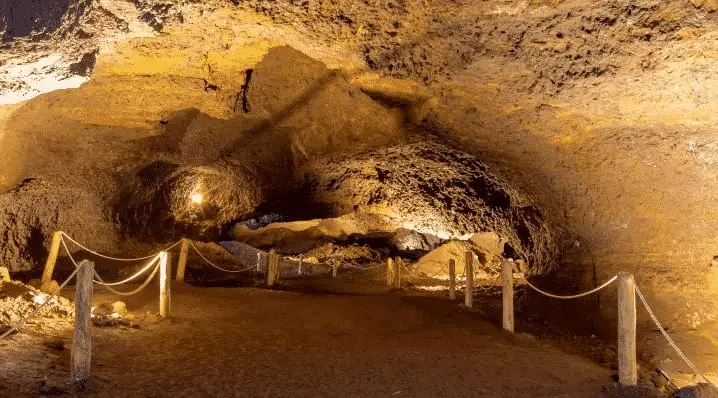
Roman mine of Cueva del Hierro: 2,500 years of iron mining
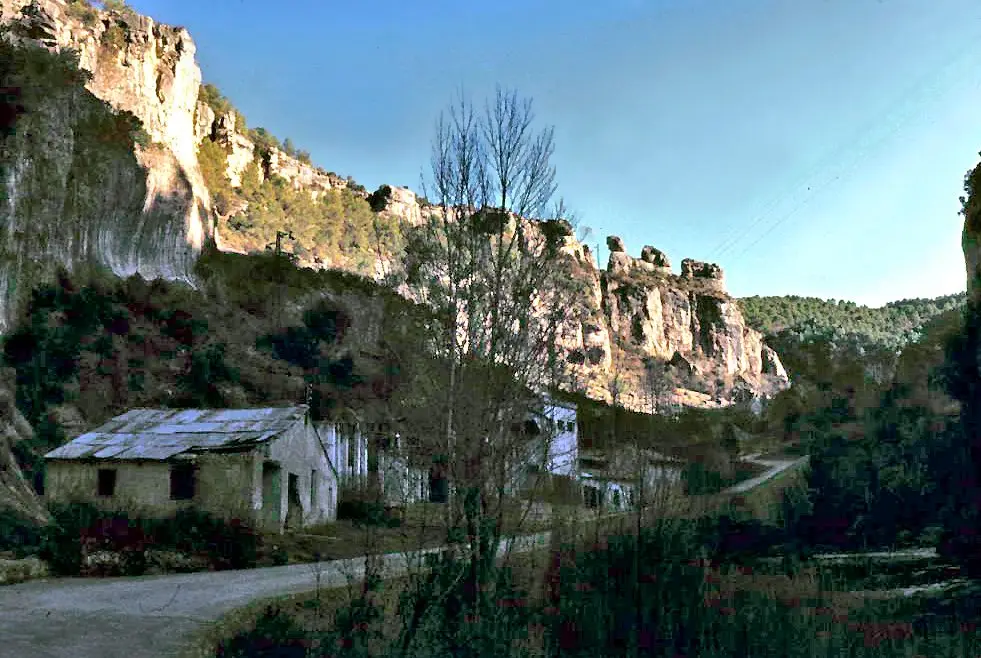
Cueva del HierroMorencos Ironworks (Peralejos): iron forging on the Hoz Seca
Peralejos de las Truchas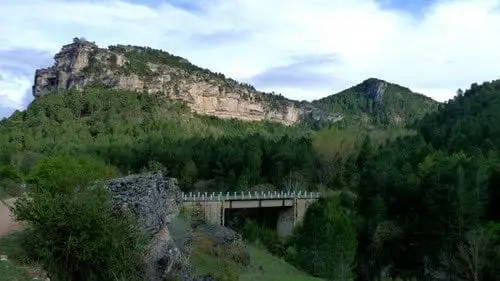
Puente del Martinete: the first major bridge over the Tagus
Peralejos de las TruchasTrail 7: the lime kilns of Villanueva de Alcorón
6.3 km · 2.5 h · Circular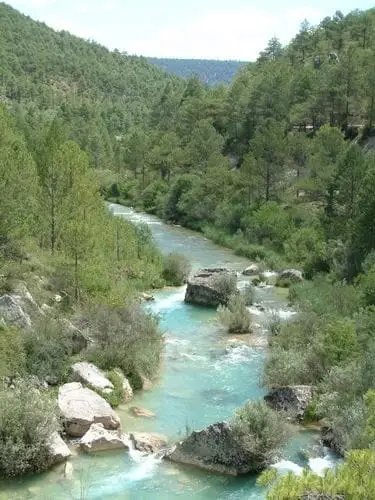
La Herrería de Lebrancón recreation area
Lebrancón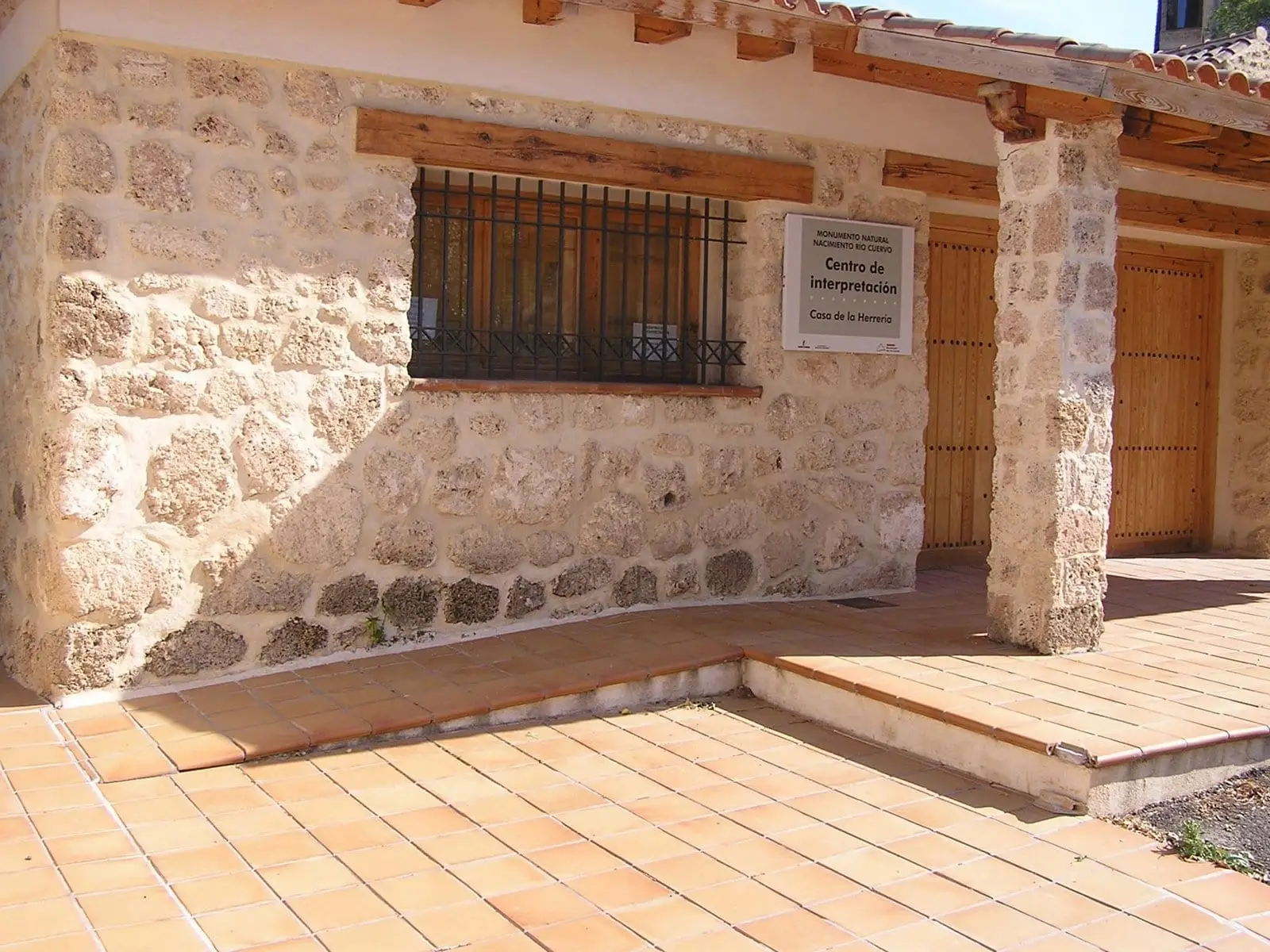
Nacimiento del Río Cuervo Visitor Centre (Casa de la Herrería)
Vega del Codorno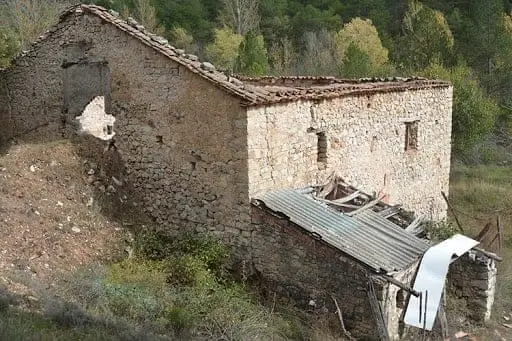
Batán Mill (Ocentejo) and the bridge blown up by the French
OcentejoFrequently asked questions
Were there ironworks in Alto Tajo?
Yes. Water powered their bellows and trip hammers. The best known are the Morencos ironworks beside the Hoz Seca river in Peralejos de las Truchas, a large 18th-century building now in ruins. Ore came from mines such as Cueva del Hierro.
What is a calera, and where can you see one?
A kiln where limestone was fired to make lime. Near Villanueva de Alcorón there is a group of lime kilns, some restored, visited along the Caleras de Villanueva ethnographic route.
What was Santa Engracia mine in Peñalén?
A small pigment mine in Peñalén’s Utrillas sands, active until 1936. Through galleries with mine carts, workers extracted clays rich in iron oxides, ground and roasted them in kilns to produce ochre for paint, then sold it carried on mules.
Sources and readings
- Guadalajara Guadalajara, E.: «Breves apuntes sobre los procesos siderúrgicos y las antiguas ferrerías de la Serranía Alta de Cuenca». Actas del IV Congreso de Geología y Minería Ambiental, Molina de Aragón, 2016.
- Mata-Perelló, J. M.: «La minería en el Geoparque de la Comarca de Molina-Alto Tajo», mismas actas.
- Larriba, L. A.: «Usos tradicionales de las arcillas del Geoparque de la Comarca de Molina de Aragón», mismas actas.
- Carcavilla, L. et al.: Guía geológica del Parque Natural del Alto Tajo (Mina Santa Engracia, Peñalén).
- Berlanga Santamaría, A.: La industria resinera en Guadalajara (herreros de hachas resineras).
- María José Sánchez Moreno, «La fabricación del vidrio en El Recuenco: una industria olvidada». Cuadernos de Etnología de Guadalajara 29 (1997), pp. 208, 210, 212 y 216.
- «El Tejar de Arbeteta». Abarca 6 (2024), pp. 5–7.
Further reading on the history of this land. Full bibliography.
Next story: Before Rome: the Celtiberian hillforts of Alto Tajo