Layer of time · 1860 – 1960
Resin, hooks and pastoral shelters
The century when the mountains sustained everyday life: resin tappers scoring pine trunks, shepherds sheltering under juniper-thatched chozones, lime kilns smoking beside villages. A world that faded within a single generation.
A selection of traces related to this era. Dates correspond to the historical layer; a location may have other origins, transformations, and subsequent uses. Contested attributions are noted in their guides.
Stories of this layer
- What people said while they worked
“Copper to spare” in Checa, the miller’s bad name, childhood service in Zaorejas and the lavender song of Peralveche.
- The woods that fed people: charcoal, firewood, pollards, commons and hives
Charcoal clamps in Sierra Molina, pollarded oaks for fuel and fodder, common pastures spared from land sales and beehives on the plateaux.
- What a roof tile can hold
How tiles were made at Arbeteta’s kiln by tilemakers from Valencia and Alicante, and how Labros’s old forge became a community centre.
- An old pack of cards, an elder branch
Estornija, cartetas and an elder-wood popgun: how children in Labros made their toys and played, as Fernando Gutiérrez recalled in 2009.
- What could be made from a stalk, a log or a horn
Rye baskets, log troughs, pine bark, horn containers and hearth chains: Masegosa’s material life, told through its own words.
- The women who also told the village’s story
Juliana la Jabonera in Alustante, tía Jacinta and la Molinera in Checa: school, domestic service, the river and the shop in mountain women’s lives.
- Chozones sabineros: a home for shepherd and flock
What Alto Tajo’s juniper huts are, how they were built without nails or tiles, where to see them and who is saving them.
- Everyday plants: what the countryside gave and people knew how to use
Lavender in Peralveche, asphodel in Checa and juniper for shepherds’ huts: traditional Alto Tajo uses recorded by local sources.
- Resin tappers: pine woods that smelled of work
Resin tapping in Alto Tajo, the local pica en redondo technique, turpentine factories and the last factory’s closure in 1983.
- A year in a mountain village
Pasture fenced with thorns, asphodel and lavender, the communal oven, pig slaughter and Judas Pine: a mountain village’s calendar in residents’ words.
Where its trace endures
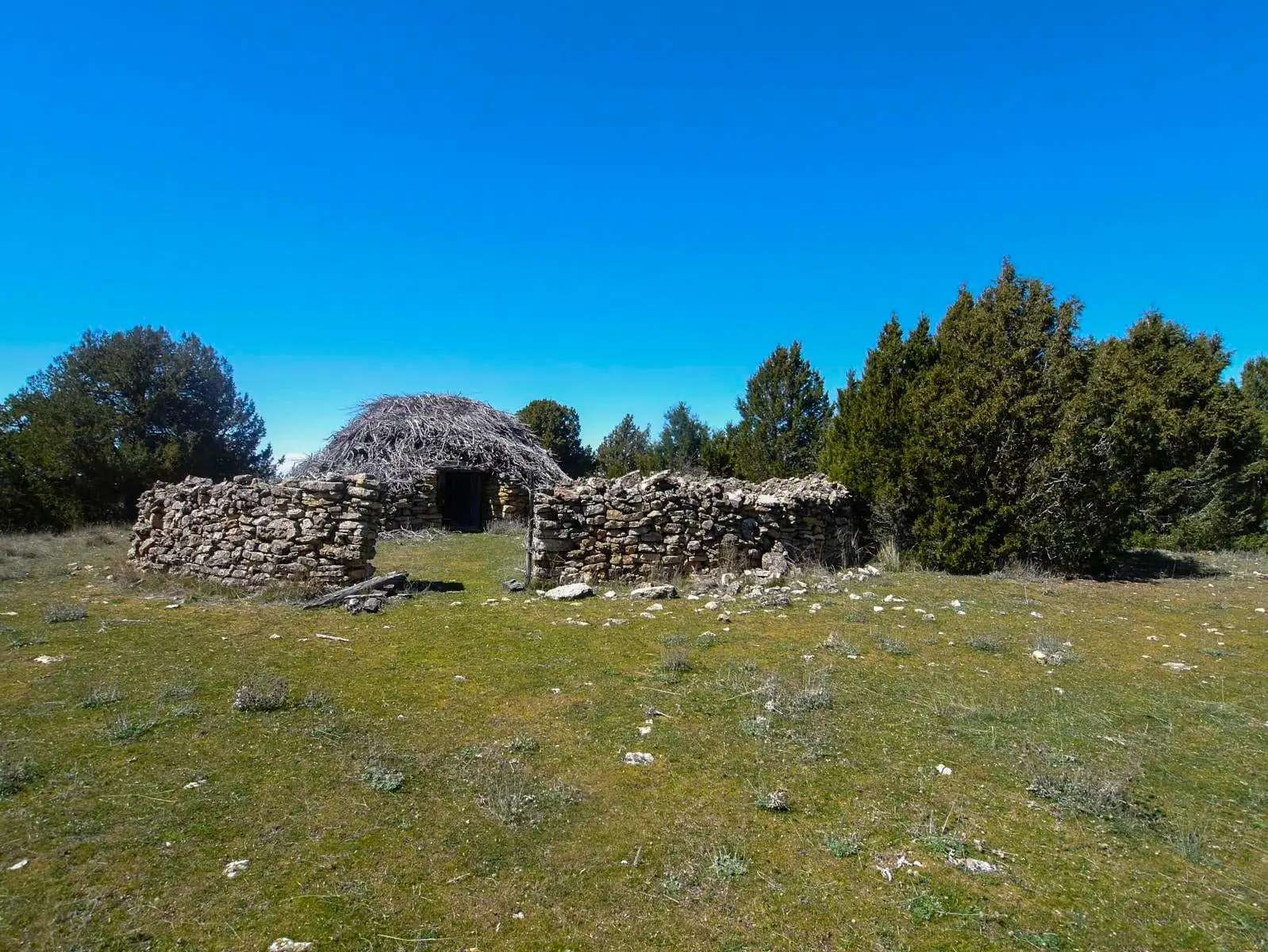
Juniper chozones of Escalera: El Cerrillo and El Sabinar
Escalera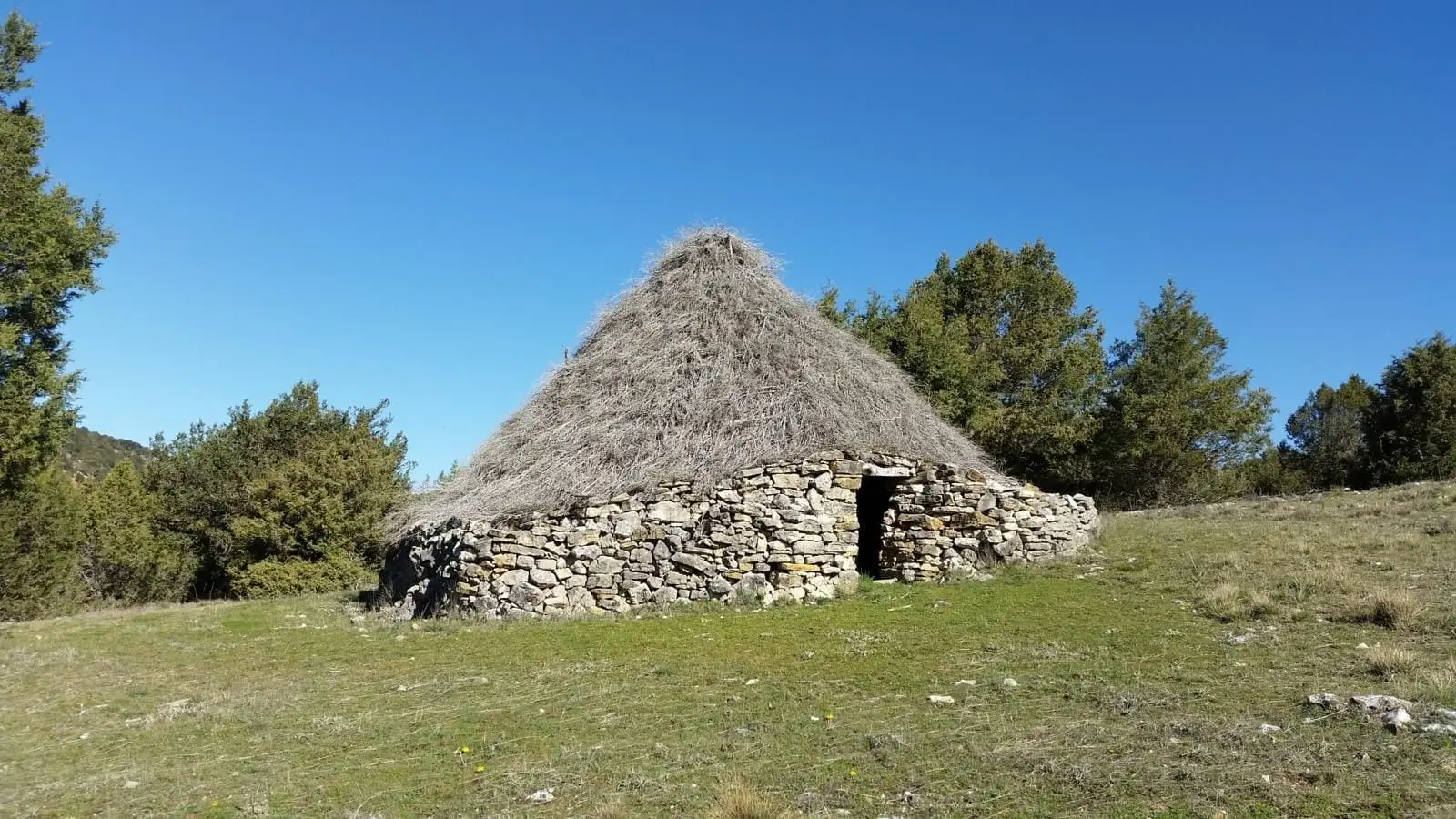
Chozón Museum of Ablanque: how paramera shepherds lived
Ablanque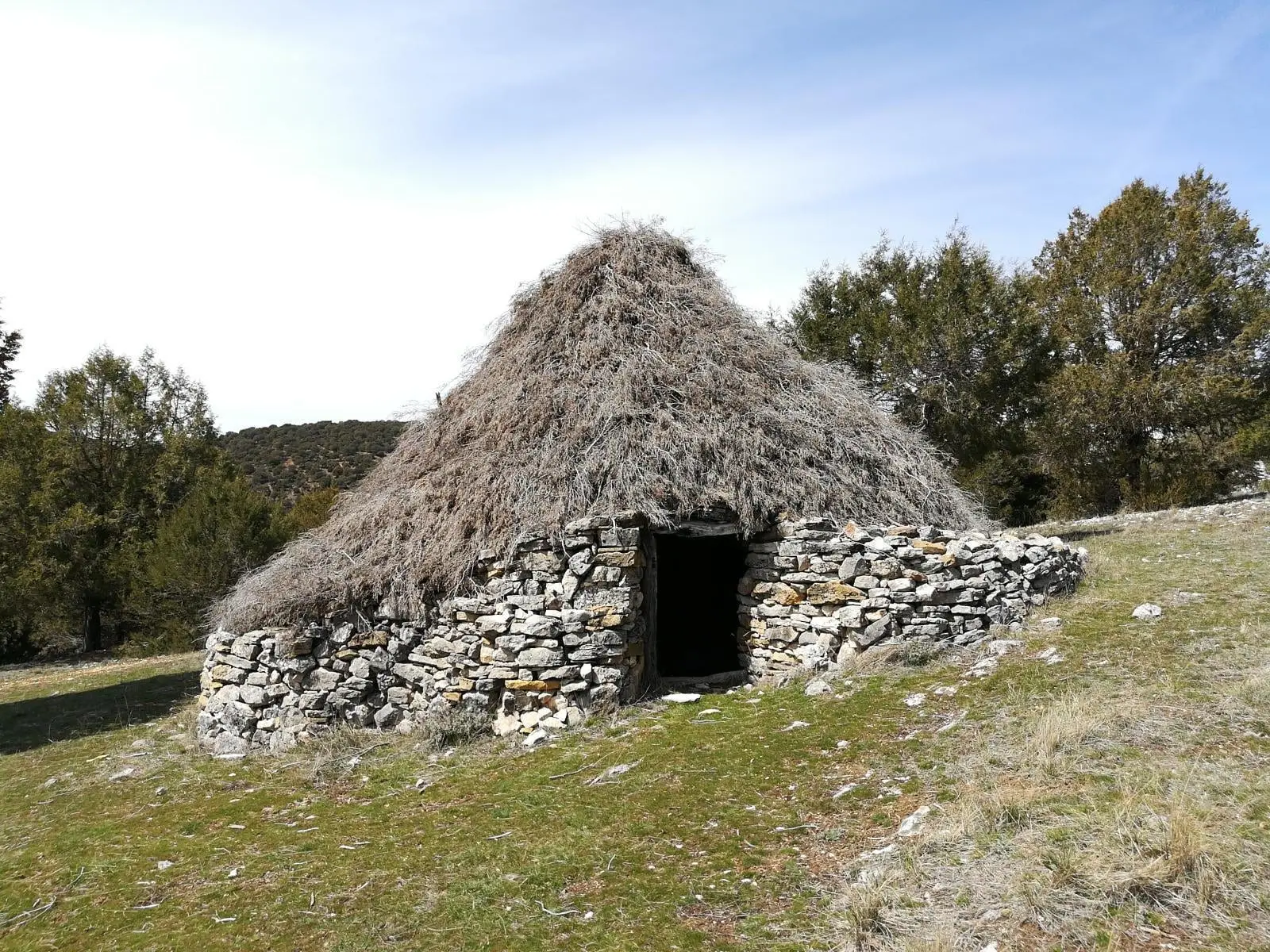
Juniper chozones of Ablanque: evolution of pastoral architecture
Ablanque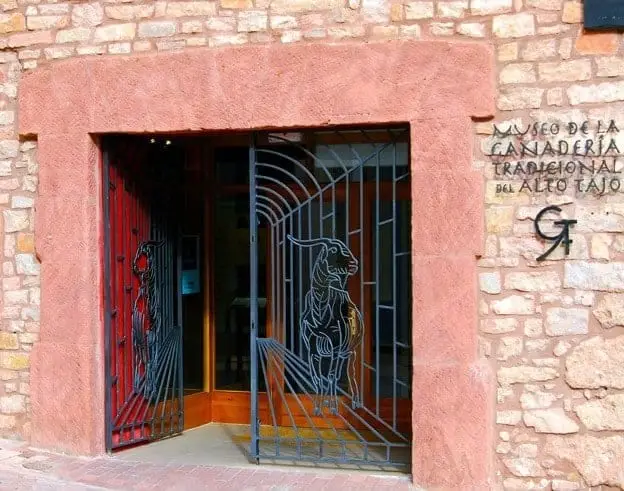
Museum of Traditional Pastoral Life of the Alto Tajo (Checa)
Checa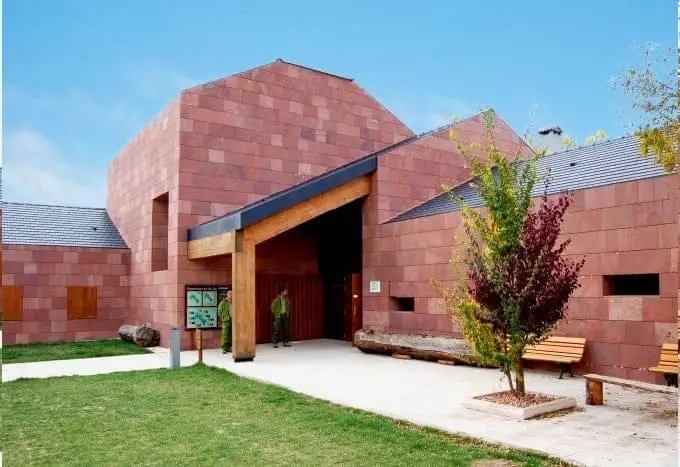
Sequero de Orea Visitor Centre
OreaPortillo Tunnel: The Road Carved by the People of Huertapelayo
HuertapelayoCouncil Pen of Ciruelos del Pinar: communal justice among neighbours
Ciruelos del PinarLa Cándida Resin Works (Mazarete)
MazareteTrail 5: the chozones of La Loma (Riba de Saelices)
10.5 km · 4 h · CircularTrail 7: the lime kilns of Villanueva de Alcorón
6.3 km · 2.5 h · Circular
Ethnographic route 1: the chozones of Ablanque
3 km · 3 h · LinearEthnographic route 2: the chozones of Escalera
2.5 km · 2 h · LinearThe era on the map
450 million years ago – present
Before us
Before people, the Alto Tajo was a cold sea near the south pole, a forest buried by ash, a plain of red rivers, salt lagoons, and a tropical ocean; later the earth buckled and the Tagus carved through it. Each era left a rock that can still be seen today.
Upper Palaeolithic – Bronze Age
First traces
Before villages there were rock shelters. In the Cueva de los Casares, Upper Palaeolithic hunters engraved horses, stags, and human figures on the cave walls; at the Gallo shelters and Peña Escrita, later peoples left schematic painted signs on the stone.
7th – 1st centuries BC
Celtiberian hillforts
Settlements perched on spurs with defensive ditches, dry-stone ramparts, and fields of chevaux-de-frise stones. El Ceremeño, Peña Moñuz, and Castil de Griegos tell how people lived, defended themselves, and worked iron in Celtiberia before Rome.
1st – 4th centuries AD
Rome in the canyon
A double-tiered aqueduct in Zaorejas, perhaps linked to a mansio on the road between Laminium and Caesaraugusta, and the iron mining galleries of Cueva del Hierro: Rome arrived in the Alto Tajo in search of water, transport routes, and metal.
1129 – 15th century
The frontier and the Señorío
Borderland between Castile and Aragon, the Señorío de Molina was almost an independent kingdom: castles, watchtowers, a Cistercian monastery, and the salt pans of Armallá already recorded in the 12th-century charter of Manrique de Lara.
16th – 19th centuries
Salt, iron and timber
The Crown took control of the salt pans, ironworks drove tilt hammers with river water, and every winter thousands of logs floated down the Tagus toward Aranjuez guided by timbermen.
1860 – 1960
Resin, hooks and pastoral shelters
The century when the mountains sustained everyday life: resin tappers scoring pine trunks, shepherds sheltering under juniper-thatched chozones, lime kilns smoking beside villages. A world that faded within a single generation.
1936 – 1939
The frontline on the river
The canyon formed part of the Civil War frontline: positions atop the cliffs, guarded river crossings, and bunkers. The memory of the war also encompasses the Molina guerrillas, forestry labor, and local families. The Upper Tajuña valley traces this history on the western flank.
1950 – present
Villages that emptied
Reservoirs severed the river to floating timber, motor trucks retired the muleteers, and villagers migrated to Madrid, Valencia, or Barcelona. Some hamlets were abandoned completely; others endure with a handful of year-round residents.