Trade · Middle Ages – 1960s · Salt, iron and timber
The water that drove the wheels: mills, fulling mills, trip hammers and the first electric light
Before grid electricity, the Tagus and its tributaries powered Alto Tajo. Water turned flour-mill stones, paid for with a grain share; fulling-mill hammers that thickened woollen cloth; and ironworks’ trip hammers. In the 20th century some became “electricity mills”, powering the first light bulbs. Ruins, waterfalls and dams now proposed for removal preserve those works.
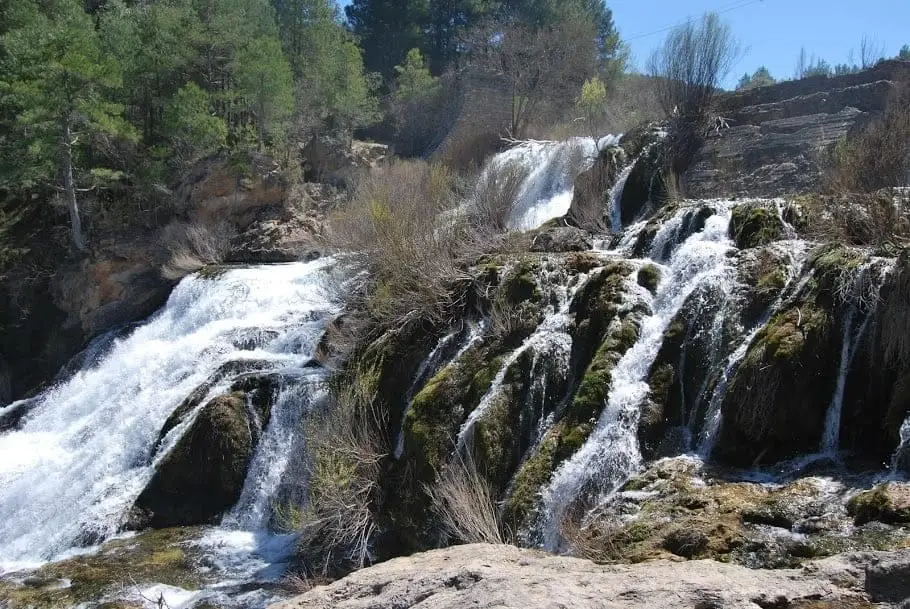
Photo: El Observario
A motor coming down from the mountains
Until seventy years ago, Alto Tajo’s only power beyond human arms and mules came from water. The Tagus, Gallo, Cabrillas, Hoz Seca and any stream with enough drop turned wheels. Each village with water had a mill, sometimes two or three; wool meant a fulling mill, iron an ironworks. Water was therefore carefully shared and passionately disputed: who could build a weir, how much water was diverted, which hours belonged to irrigation and which to milling.
The mill and its grain share
The technique was simple and ingenious. An azud, a small stone-and-branch weir, diverted river water into a caz, the mill channel. Where flow was low but the drop large, a cubo, a tall reservoir, accumulated water for a forceful fall. Below, water turned the rodezno, a horizontal paddle wheel whose shaft moved the grinding stone over the fixed one.
Millers charged maquila, a grain share measured with scoops or a celemín. Mountain villages said you could change millers but never escape a thief. The joke had substance: nobody clearly saw how much the miller kept.
Ruined mills remain along almost every Alto Tajo river. Beside the Tagus in Ocentejo, Molino del Batán preserves its tall cylindrical reservoir, fed by a stream. Around two kilometres from Peralejos, Molino de Arriba waterfall grew from an abandoned dam the river reclaimed; the name preserves its purpose. On the riverless plateau, Alustante had a rarity: a windmill, recorded in 1860 and already stopped in 1886.
Fulling: the other half of wool
The Señorío lived from flocks, and not all wool left raw. Cloth woven on household looms was loose; to give it body it needed fulling. Water drove two large wooden hammers, striking soaked cloth alternately. It shrank, compacted and became thicker and stronger, fit for a shepherd’s winter. The name remains: Ocentejo’s mill is still called del Batán.
The trip hammer: iron to the river’s rhythm
Ironworks used water to drive the bellows feeding the forge and lift the trip hammer, falling repeatedly onto red-hot iron. Beside the Hoz Seca in Peralejos stand the Morencos ironworks, a large 18th-century ruin. Nearby Puente del Martinete preserves the hammer’s name. Iron, lime kilns and tileworks are described in The trades of fire.
Timber against mills
The river also carried the gancheros’ timber drives, thousands of logs capable of breaking a weir or blocking a channel. The custom, recalled by timber floaters themselves, was clear: the river was everyone’s road, but if logs damaged a mill, the drive paid for repairs. Its leader therefore answered to millers, fulling-mill owners and the authorities throughout the journey. See the timber floaters.
The electricity mill
The dynamo arrived in the late 19th century, bringing an idea that spread across the mountains: water could turn a turbine as well as a stone. In Iberian System valleys many flour mills installed turbines and became small electricity works. Village memory retained “el molino de la luz”, the electricity mill. Ocentejo’s Molino del Batán was one, supplying village electricity.
That first electricity was scarce and measured by light bulbs. Mountain residents remember households paying according to bulb numbers, with the operator fitting a seal to prevent extra connections. Some wanted no bulb at all, fearing house fires. Power came and went with river flow, and the grid reached some mountain villages very late.
Dams that failed and dams being removed
The 20th century brought larger projects. Between Poveda and Taravilla, a Tagus dam was built for a hydroelectric station intended to power the district, impounding water at La Chorrera. It never operated: cracked ground let water escape, leakage made the station unviable and eventually broke the dam. Sources disagree on its date. What followed is clear: lime-rich Tagus water coated broken concrete with tufa, creating Salto de Poveda, the upper river’s largest waterfall. Workers’ huts are now Casas del Salto.
Downstream beside El Campillo’s tufa formation in Zaorejas stand La Rocha dam and its old power station. Disused, it is among the river barriers proposed for removal. Dams block fish and sediment, and restoring the Tagus’s natural channel is now a conservation aim. For centuries Alto Tajo lived by harnessing water; now it is learning to let it flow.
Modern mills stand high above: since 2008 Caldereros wind-farm turbines have turned within El Pobo de Dueñas.
The mill that needed care
The story continues through rivers and catchments: the Gallo leads to Molina; the Bullones to its valley’s saltworks; the Linares or Salado to Los Casares, Riba and Saelices’s network. Each branch locates a memory of water.
In Alustante, Diego Sanz found orders in a 1502 pastoral visitation to clean Cirujeda mill’s weir and repair its reservoir. A shelter was also requested for animals bringing wheat. Later, 1883 agreements sought to reconcile milling and irrigation.
Water was a motor and a shared resource. Keeping a mill working required repairs and agreements. Behind the stones we see today lay that continuing effort to make work possible.
Words of the trade
- Maquila
- The grain share kept by a miller as payment, measured with scoops or measures such as a celemín.
- Celemín
- A grain capacity measure, one twelfth of a fanega.
- Azud
- A small river weir diverting water towards a mill.
- Caz
- The channel carrying water from the weir to the mill.
- Cubo
- A tall, often cylindrical vertical reservoir that builds up water to fall forcefully onto the wheel, typical where flow is low but the drop large.
- Rodezno
- A horizontal paddle wheel below the mill, turned by water to drive the grinding stone.
- Batán
- A water-powered machine whose large wooden hammers beat soaked woollen cloth to compact and thicken it.
- Martinete
- A large forging hammer driven by a waterwheel; it gives Puente del Martinete in Peralejos its name.
- Molino de la luz
- The popular name for a mill or small power station supplying village electricity.
Where to see it today
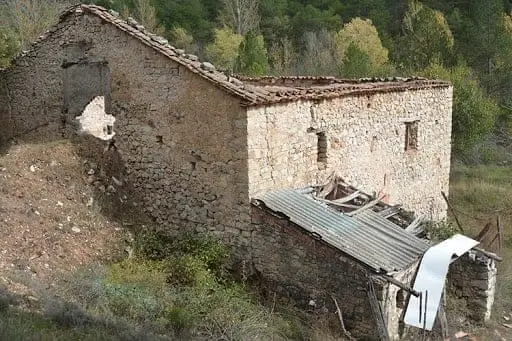
Batán Mill (Ocentejo) and the bridge blown up by the French
Ocentejo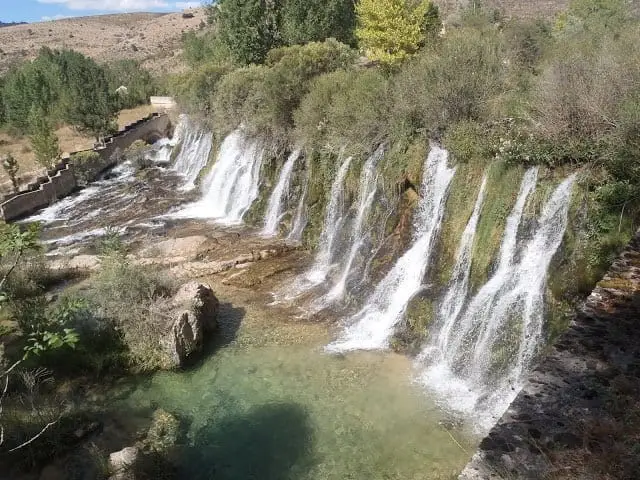
Cascada del Molino de Arriba (Peralejos de las Truchas)
Peralejos de las Truchas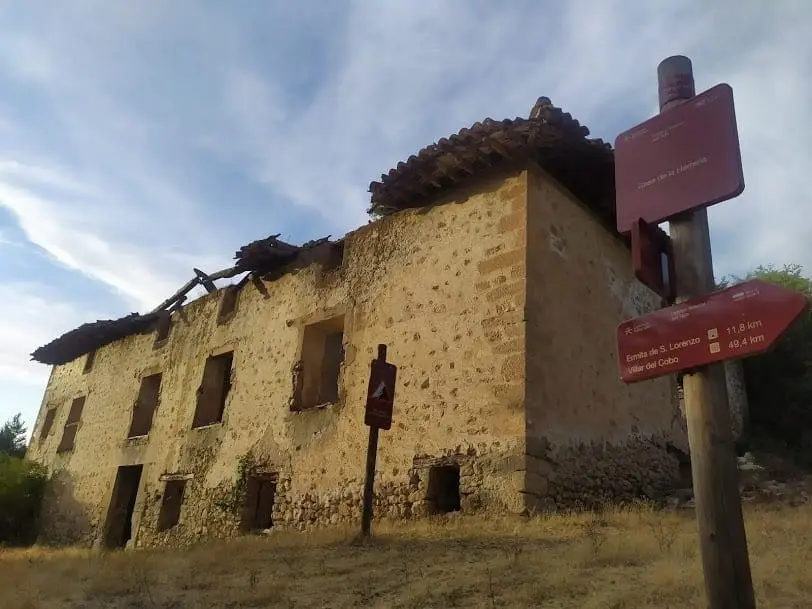
Morencos Ironworks (Peralejos): iron forging on the Hoz Seca
Peralejos de las Truchas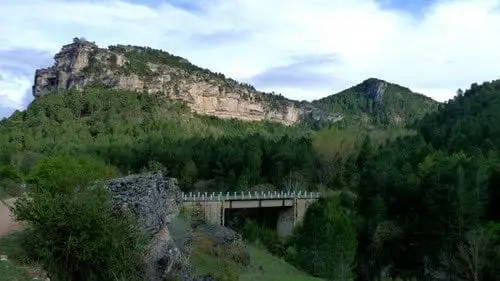
Puente del Martinete: the first major bridge over the Tagus
Peralejos de las TruchasSalto de Poveda: The Largest Waterfall in Alto Tajo
Poveda de la Sierra, Taravilla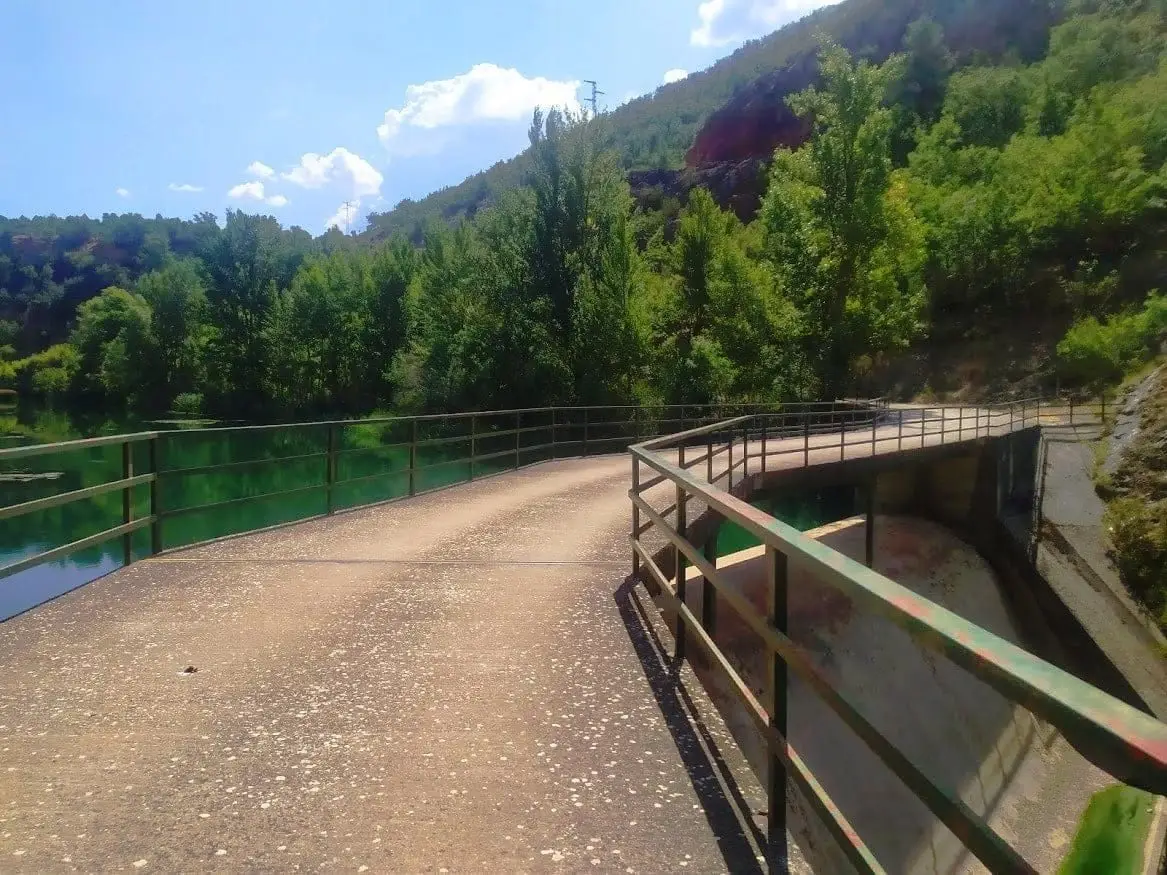
Presa de la Rocha or Campillo Dam (Zaorejas)
Zaorejas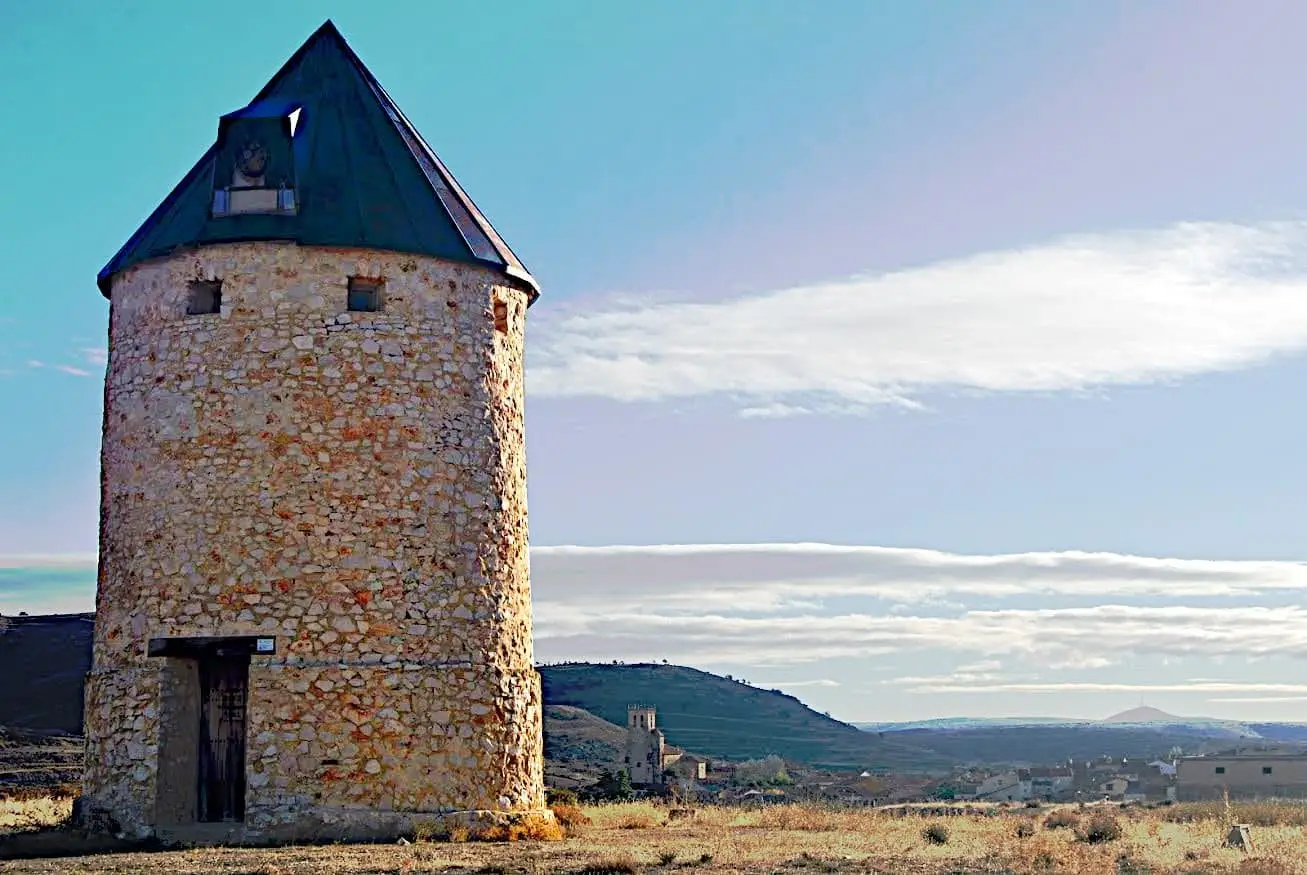
Alustante Windmill
Alustante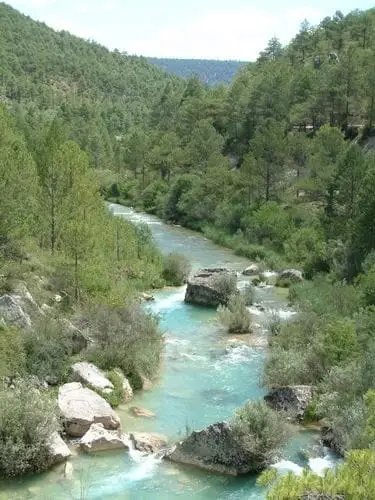
La Herrería de Lebrancón recreation area
Lebrancón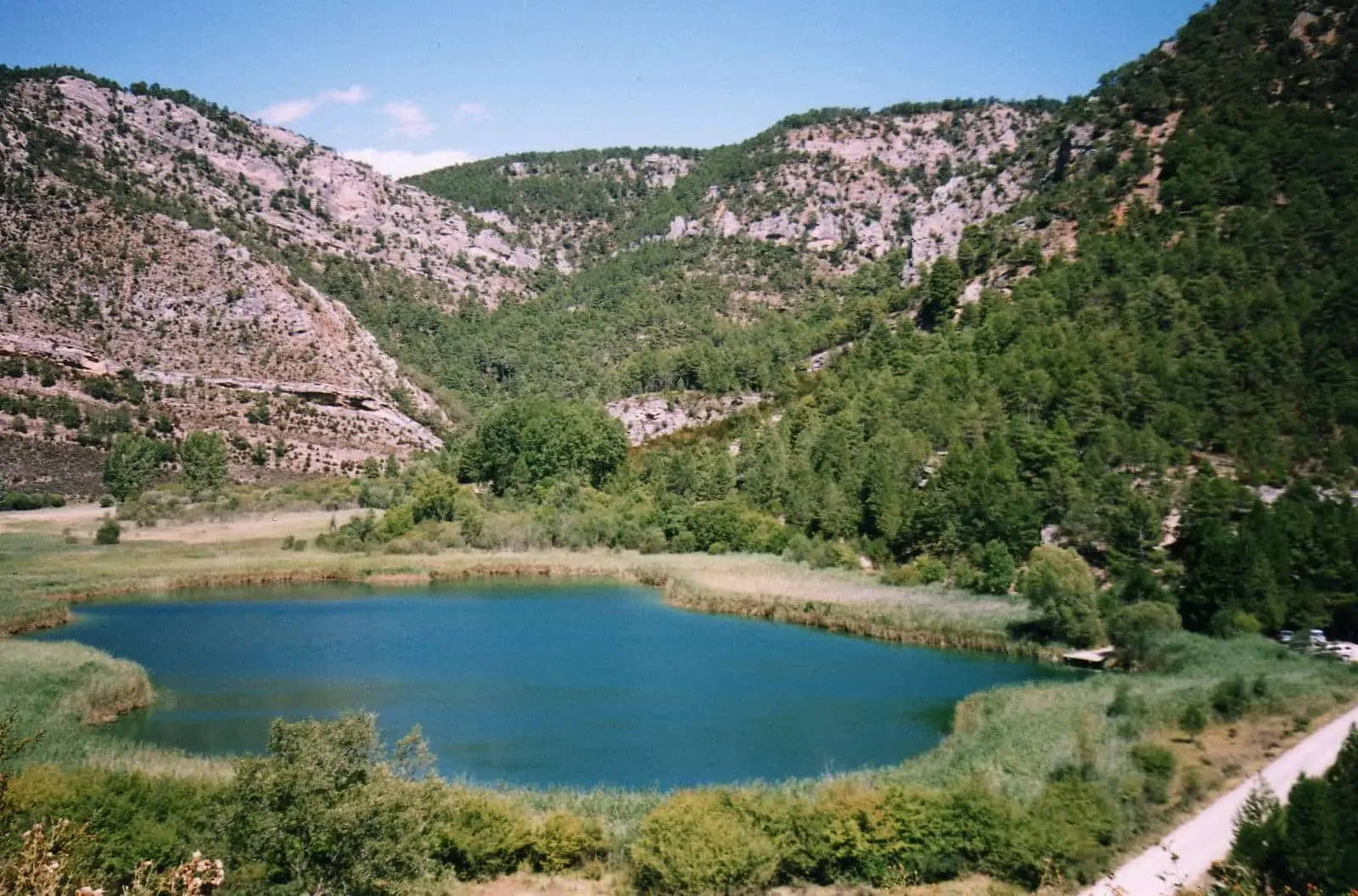
Laguna de Taravilla: an 11,000-year-old natural tufa dam
TaravillaFrequently asked questions
How was the miller paid?
With maquila: a share of the grain brought for grinding, measured with scoops or the celemín. Hence the saying that you could change millers but never escape a thief.
What is a batán?
A water-powered machine with large wooden hammers beating soaked woollen cloth to compact and strengthen it. In a livestock region such as the Señorío, it was the other half of the wool trade.
Why did Salto de Poveda begin as a dam?
A dam was built there in the 20th century for a hydroelectric station that never operated: leakage prevented it and eventually broke the dam. The river covered it in tufa, making it the upper Tagus’s largest waterfall.
Sources and readings
- Fichas del atlas: molino del Batán (Ocentejo), Molino de Arriba (Peralejos), herrería de los Morencos, presa de la Rocha y molino de viento de Alustante.
- Caminos Naturales (Ministerio de Agricultura): Salto de Poveda. elDiario.es: «El curioso origen de esta cascada, la más grande del curso alto del Tajo».
- Xilocapedia (Centro de Estudios del Jiloca): «Fábrica de luz», sobre la conversión de molinos en centrales en el sistema Ibérico aragonés.
- Entrevistas etnográficas de Vestal Etnografía en la Serranía de Cuenca (Boniches, San Martín de Boniches, Valsalobre) y a Cipriano Valiente sobre los gancheros, usadas solo para rasgos comunes a la cordillera.
Further reading on the history of this land. Full bibliography.
Next story: A mountain landscape written in names