Episode · 1950 – today · Villages that emptied
Life that returns (and life that disappears)
As the villages emptied, the countryside changed. Deer came down into the crops, ibex recolonised the cliffs and juniper woods spread into abandoned fields. In 2020 a female bearded vulture spent months around Peralejos. Meanwhile, native crayfish, once a source of extra income, disappeared, as did the villages’ great elms, killed by Dutch elm disease.
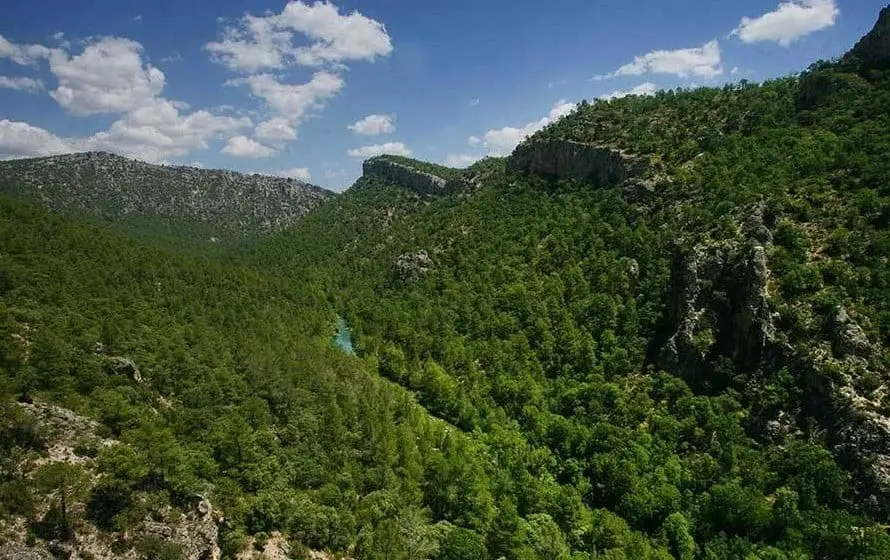
Photo: El Observario
Countryside that filled as the villages emptied
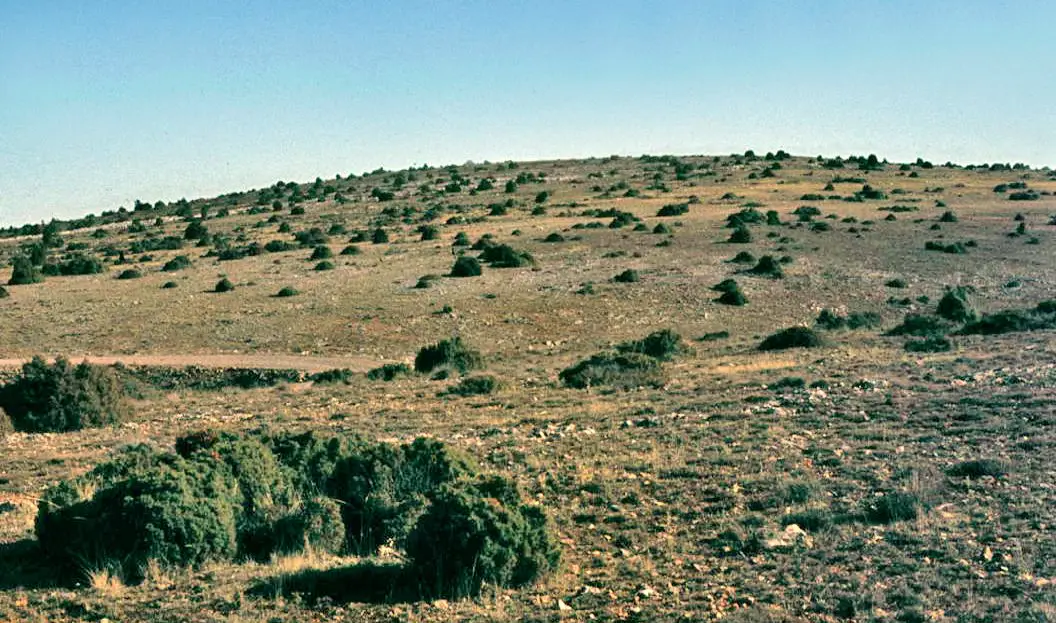
In Checa, farmers in the 1950s and 1960s began noticing something new: the first deer were leaving their mark on the crops. It was no coincidence. As fewer people remained, wild vegetation spread. Fields no longer sown filled with scrub and, across many high plateaux, juniper woods advanced into abandoned farmland. Not everything was a gain: ethnobotanist José Fajardo, who spent ten years studying shepherds’ knowledge in the Serranía de Cuenca, points out that without grazing grasslands become scrub, some plants disappear and even the mushrooms change. The king oyster mushroom, for example, depends on pastures maintained by livestock.
Today deer are part of the landscape, and their rutting calls can be heard in the pine woods every autumn. Iberian ibex have also returned to the cliffs and are recolonising the Park.
Cliffs full of life
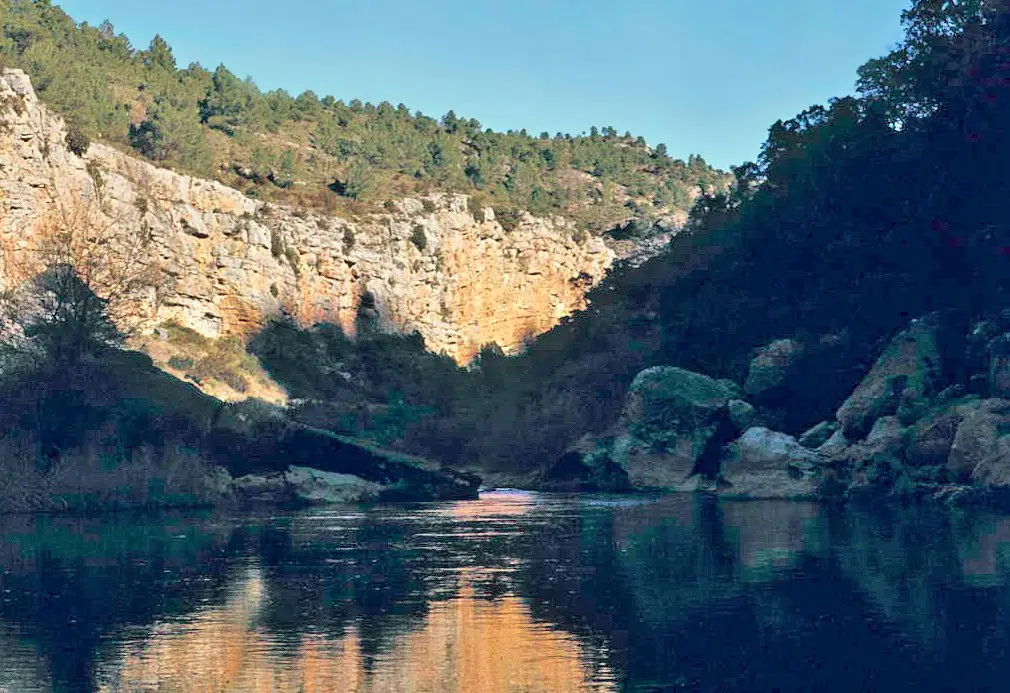
The limestone and red sandstone walls are Alto Tajo’s great living heritage. Some years ago, the Park estimated around 600 pairs of griffon vultures, 45 of Egyptian vultures, 18 of golden eagles and 36 of peregrine falcons. The jewel, and the most fragile, is Bonelli’s eagle: in 2020 only three or four pairs remained in the Park, in territories such as Oter, Armallones, Huertahernando and Villar de Cobeta. Successful breeding is a struggle.
The return of the bearded vulture
The bearded vulture is the only bird that feeds mainly on bones. It disappeared from these mountains long ago, but young birds released in Cazorla, Castellón and the Pyrenees wander hundreds of kilometres, and some pass through here. Alto Tajo lies between those three populations, with cliffs suitable for breeding and plenty of wild hoofed mammals. The Park has therefore prepared feeding sites with legs and bones, and resin decoys resembling adult birds.
In July 2020, a female named Kika, released in Cazorla the previous year, was rescued sick and malnourished in Peralejos de las Truchas. After recovering, she was released there again in September. Her transmitter showed that she spent the following months around Peralejos.
What disappeared: crayfish and elms
Native crayfish were once so abundant that they supplemented the incomes of many households. Introduced exotic species brought a fungus that wiped them out of the larger rivers within twenty years. Today they survive in isolated streams. Around 60,000 young crayfish a year are released from the Rillo de Gallo hatchery to establish new populations.
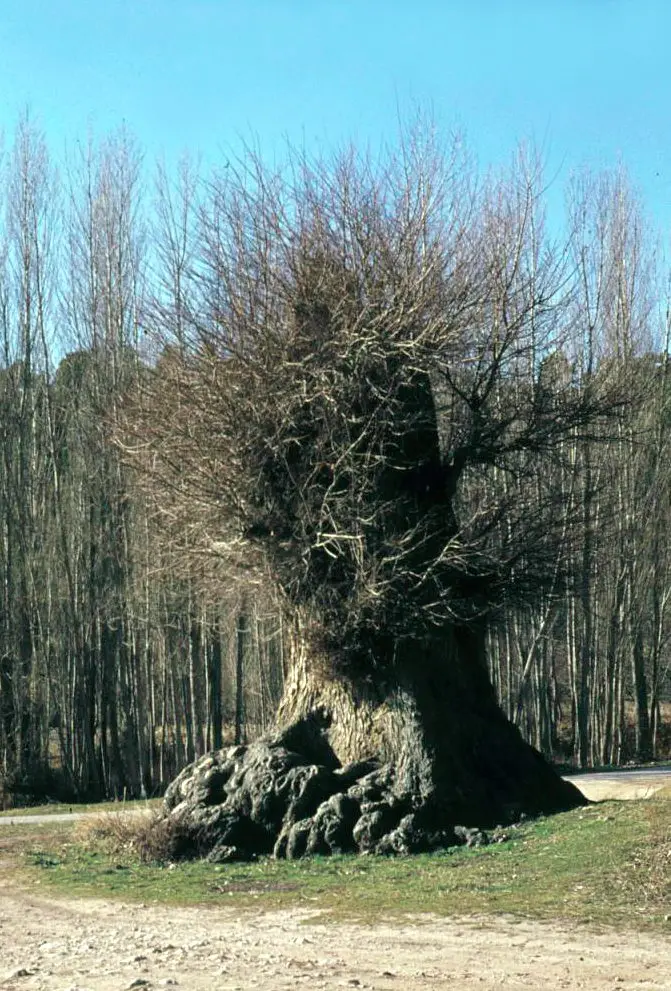
Elms were the trees of village life: they shaded the square, the chapel or the fountain. In 1881 engineer Carlos Castel cited the elms of Ocentejo and La Puerta as examples of exceptionally large trees in the province. A photograph from 1975 still shows an old elm alive in Ocentejo. Soon afterwards, Dutch elm disease killed almost all of them. A few survived. The Amayas elm, at 1,246 metres above sea level and almost four metres in circumference, is listed among Guadalajara’s trees of provincial interest for precisely that reason: it survived the epidemic, while another elm beside it died. In Lebrancón, by contrast, the Olmos de la Soledad, beside the chapel, are now two enormous stumps: ghost trees with a legend of their own.
Shepherd’s tobacco
Around Hundido de Armallones grows one of Spain’s rarest plants: Atropa baetica, an endangered relative of belladonna. In Guadalajara it is known only here, in places around Armallones such as Los Cortes, Fuente de la Osa and Ojos de la Carquima, with a few dozen specimens. In 2011 plants were introduced at Umbría de los Amadores, on the way to Huertapelayo. At Nacimiento del Río Cuervo, a similar planting survived for only three years.
Its popular names, “tabaco gordo” and “tabaco de pastor” — large-leaved tobacco and shepherd’s tobacco — preserve the memory of those who knew it best: shepherds, who traditionally are said to have smoked its leaves. An endangered plant whose name carries an almost vanished occupation is the clearest evidence that in Alto Tajo nature and memory cannot be separated.
From the archive



Vocabulary
- Cliff-dwelling
- Living or breeding on rocky outcrops and cliffs, like the griffon vulture or peregrine falcon.
- Muladar
- A feeding site where livestock remains are left for scavenging birds.
- Dutch elm disease
- A disease caused by a fungus carried by small beetles. It wiped out the great elms across much of Europe.
- Crayfish hatchery
- A centre that breeds native crayfish to restock streams.
- Browsing
- Livestock feeding on shoots and branches, which shaped juniper trees for centuries.
Where to see it today
Hundido de Armallones: the rock collapse that dammed the Tagus
Armallones, Ocentejo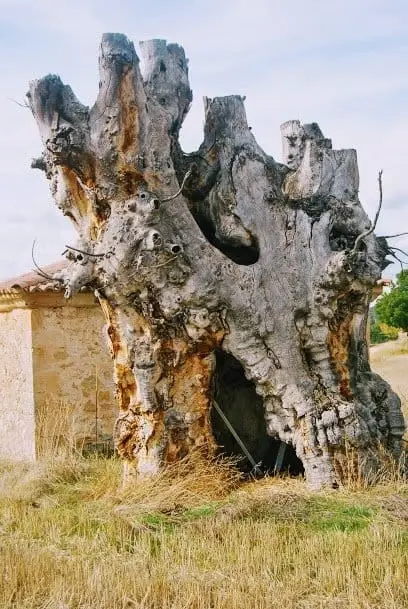
Olmos de la Soledad (Lebrancón)
Lebrancón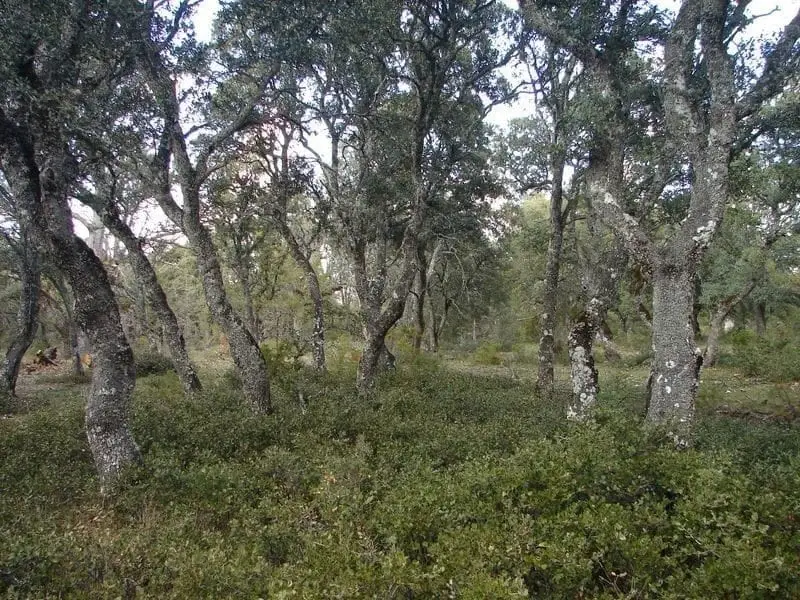
Dehesa of Olmeda de Cobeta: ancient pollarded Pyrenean oaks
Olmeda de Cobeta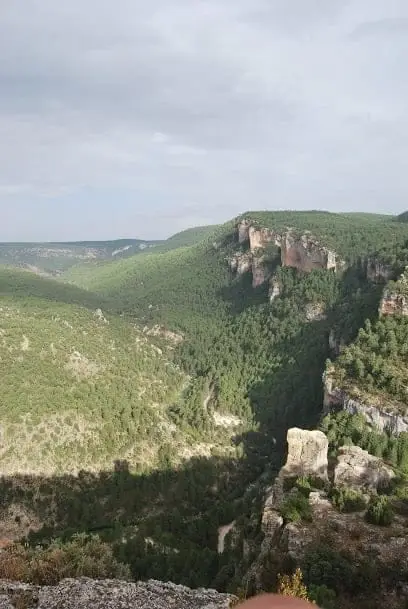
Mirador del Tajo (Zaorejas): raptors and the Puente de San Pedro tufa
ZaorejasFrequently asked questions
Are there bearded vultures in Alto Tajo?
There is no breeding population, but birds released in Cazorla, Castellón or the Pyrenees pass through Alto Tajo. The Park has installed special feeding sites and decoys to encourage them to stay. In 2020 a female, Kika, was rescued and released at Peralejos de las Truchas.
What is Atropa baetica, or shepherd’s tobacco?
A very rare, endangered member of the nightshade family, related to belladonna. In Guadalajara it is known only around Hundido de Armallones, with a few dozen plants. Its popular name recalls the tradition that shepherds smoked its leaves.
What happened to Alto Tajo’s native crayfish?
Native crayfish were once abundant enough to supplement many families’ incomes. Introduced exotic species brought a fungus that made them disappear from the larger rivers. They survive in isolated streams, and around 60,000 young crayfish are released each year from the Rillo de Gallo hatchery.
Sources and readings
- Revista Aguaspeña (Checa), n.º 20 (2013): «Los viejos labradores».
- Folleto «Fauna del Parque Natural del Alto Tajo» (2010) y guía «Dónde ver aves en la comarca de Molina-Alto Tajo».
- Parque Natural del Alto Tajo: Memoria de actividades 2020 (águila perdicera y quebrantahuesos).
- Mayoral, O. et al.: «Contribución al conocimiento de las poblaciones septentrionales de Atropa baetica», Flora Montiberica 55, 2013.
- García-Abad, J. J.: «Sobre la presencia actual de Atropa baetica en la Alta Alcarria», Flora Montiberica 63, 2016.
- Asociación Micorriza: Curso de arbolado singular de la comarca de Molina de Aragón (2019).
- Boletín del Parque Natural, 20 aniversario: expansión de los sabinares.
- Entrevista a José Fajardo Rodríguez sobre los saberes del pastor (Vestal Etnografía, YouTube).
- Diputación de Guadalajara: Catálogo de Árboles de Interés Provincial.
Further reading on the history of this land. Full bibliography.
Next story: A year in a mountain village