Trade · 16th century – 1950s · Salt, iron and timber
Gancheros: shepherds of the floating forest
The gancheros guided thousands of loose logs downriver from the pine forests of the Alto Tajo and Serranía de Cuenca to Aranjuez. Armed with a hazel pole tipped with an iron hook, they navigated timber drives of up to 100,000 logs. Documented since the 16th century, the trade died out with the arrival of dams and logging trucks. In 2022 UNESCO inscribed it as Intangible Cultural Heritage.
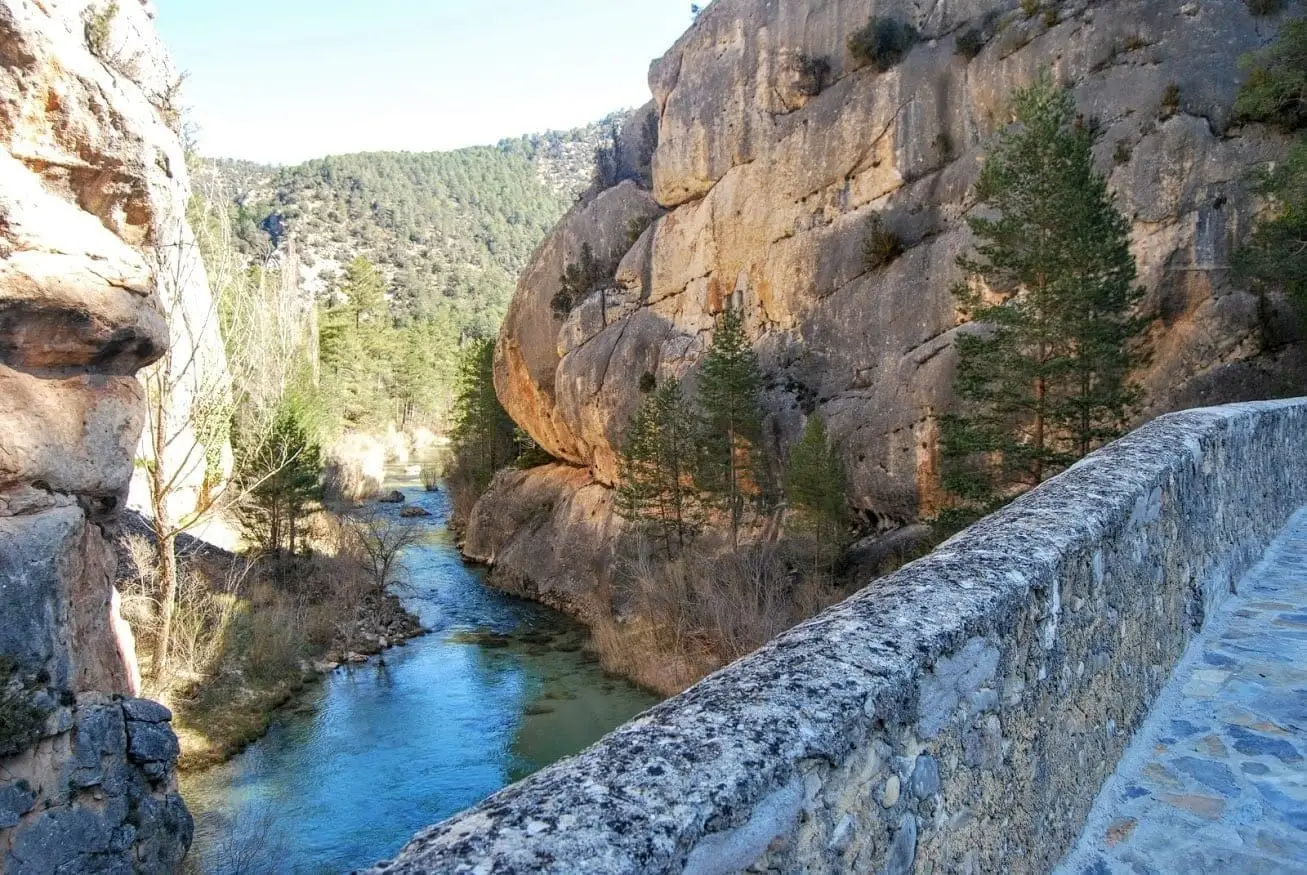
Photo: El Observario
A forest travelling by water
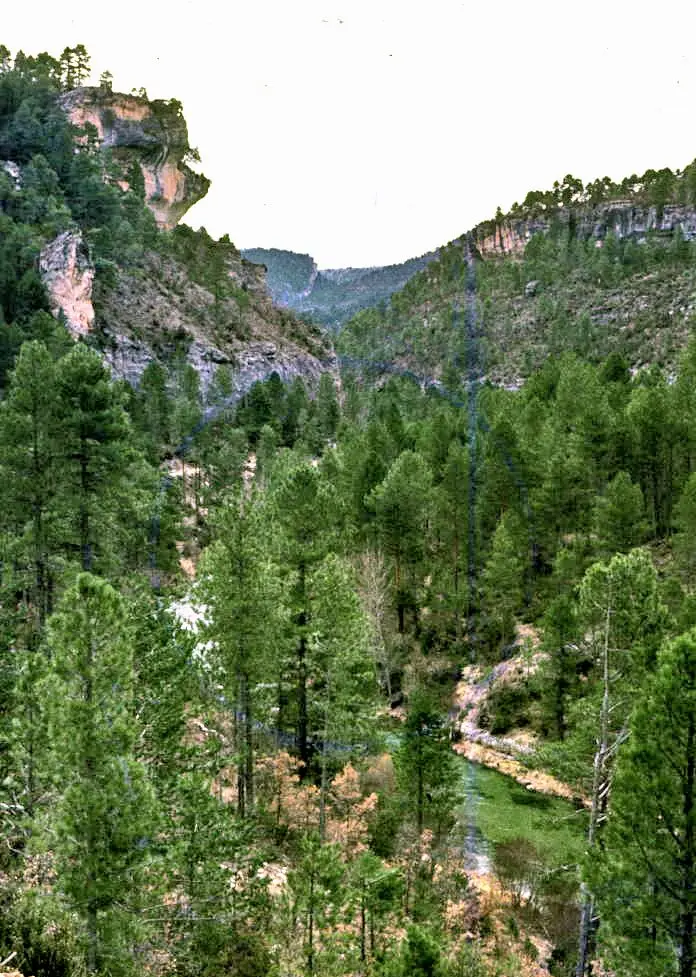
Look at the black pines (Pinus nigra) clinging to the sheer canyon walls of the Tagus and try to imagine the reverse journey: thousands of unlashed logs descending the river, drifting hundreds of kilometres down to Aranjuez. For centuries, this was how timber moved. From the headwater pine forests of the Montes Universales, the Serranía de Cuenca, and the Molina highlands, wood traveled down the Tagus, the Cabrillas, the Gallo, and the Ablanquejo. Timber from the Serranía de Cuenca descended via the Guadiela and its tributaries, the Cuervo and the Escabas. The Guadiela itself joins the Tagus: today it passes through the Buendía reservoir and meets the Tagus at Bolarque, downstream from the Entrepeñas reservoir. There the two timber streams converged, bringing together the timbermen of both mountain ranges: their craft, tools, and vocabulary were identical on either side. Those who navigated the logs were the gancheros.
As early as the reign of Philip II, the royal Topographical Relations record timber from the Cuenca and Molina highlands floating down the Tagus to Toledo. In the 18th century the terminus moved to Aranjuez, and from the mid-19th century onwards the railway—which competed with the river—became its greatest customer: wooden sleepers for the tracks and telegraph poles.
How a timber drive worked
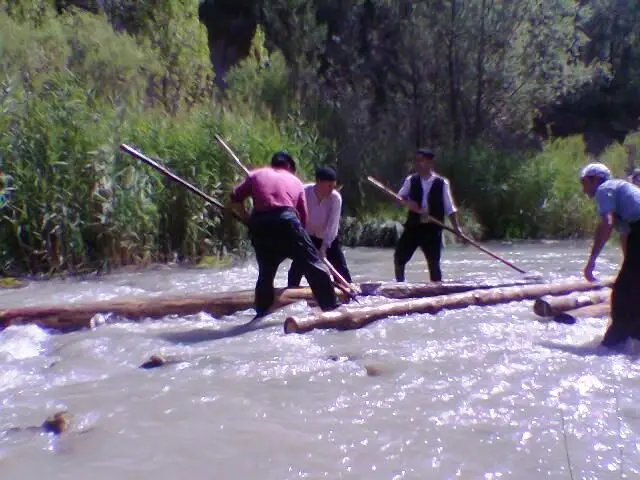
However small, a timber drive never set out with fewer than a hundred men. Large drives could number one hundred thousand pines and a thousand gancheros stretched out over thirty kilometres of river. Each carried his gancho, a hazel pole two to three metres long tipped with an iron spike and hook. With it they bullaban the logs (prodding them forward) or bailaban them (spinning them in the water to dislodge jams).
The company was organized into three crews. The delantera (vanguard), made up of the most skilled men, opened the way, cleared obstacles, and built artillas—temporary dams of logs that ponded water and, when released, flushed timber through shallow rapids. The centro (main crew), the bulk of the men, ensured log jams did not form. The zaga (rearguard) brought up the rear and dismantled what the vanguard had built. The schedule was governed by snowmelt. “Marzo con sus marzadas se lleva las maderadas” (March and its storms carry the timber drives), went the river saying remembered by Cipriano Valiente, chronicler of the Cuenca timbermen. A drive of forty to eighty thousand logs could occupy eight to ten kilometres of river. Overseeing the whole operation was the maestro de río (river master), who knew every rapid and pool, and on whose decisions rested not only the timber but the lives of his crew.
Surrounding them was an entire moving encampment: cooks, couriers, mules, and frequently young boys. They began at four or five years old as rancherillos, assisting in the kitchen, and by age ten were already gancherillos wielding hooks. Their rations of bread, wine, and olive oil supported the family economy back home.
A life in the water
Timber drives took place when the river ran high—in winter and spring. A ganchero spent weeks waist-deep in freezing water, sleeping under the open sky, in drenched clothing for meager wages. At night the timber could not be left free: the crew sought a mill dam or river narrowing to lock the leading logs, allowing the rest to halt naturally behind them.
Many gancheros hailed from riparian villages: Peralejos, Taravilla, Poveda, Zaorejas, Peñalén, as well as Priego, Cañamares, or Poyatos in Cuenca. Cipriano Valiente also notes drivers from Beteta, Priego, and Santa María del Val. For months on end, their only contact with home was the ropero: every fortnight he traversed the drive, collecting dirty clothes and delivering clean laundry along with family messages or small gifts. Yet the most celebrated river masters of the 19th century came from Chelva and Cofrentes in Valencia. Local children along the Tagus used to sing a mocking rhyme about the women of Chelva who, with their husbands always on the river, were already looking for another husband.
1936: the last great drive
The drive of 1936 was overtaken by history. When the Civil War erupted, the rivers were choked with timber; a ganchero strike followed, many men were dispatched to the frontlines, and the journey to Aranjuez dragged on for nine months. It is regarded as the last great timber run on the Tagus. Smaller transports followed, but the Entrepeñas dam, inaugurated in 1954, severed the river, and motor trucks took over. A trade that had lasted at least four centuries was extinguished in a single generation.
Where it is remembered today
You can trace this history through the Tagus river basin, from the headwaters in Albarracín down through the canyon passes. The Guadiela branches into another route toward the Serranía de Cuenca.
The craft survives in the Fiesta Ganchera, declared of Regional Tourist Interest, held each summer in rotation among the five ganchero villages of the Alto Tajo: Peralejos de las Truchas, Taravilla, Poveda de la Sierra, Zaorejas, and Peñalén, where the bridge serves as the traditional stage for the log drive. Men dressed in period attire wade back into the current with their hooks. In Cuenca, the Museum of Gancheros and Timber at Puente de Vadillos, on the banks of the Guadiela, preserves historic tools and photographs.
Since 2021 the trade has been designated an Asset of Cultural Interest (BIC) in Castilla-La Mancha, and since December 2022 it forms part of UNESCO’s Representative List of the Intangible Cultural Heritage of Humanity, under an international nomination for timber driving by water flotation.
Yet the trade is best understood on the river itself. From the Puente de San Pedro bridge to Salto de Poveda, every canyon narrowing was an obstacle that someone had to overcome, standing waist-deep in icy water with a hazel pole in his hands. José Luis Sampedro called them “shepherds of the floating forest”. No better name has ever been found.
From the archive


Words of the trade
- Ropero
- The courier tasked with bringing clean clothing, messages, and news from home to the timbermen every fortnight.
- Maderada
- The mass of loose logs driven downriver during a single seasonal campaign. Major drives exceeded 100,000 pines.
- Gancho or bichero
- A hazel pole two to three metres long tipped with an iron point and hook. The tool that gave the trade its name.
- Bullar
- To prod or push a log with the hook to keep it moving.
- Bailar
- To spin a log in the water to free it from a snag or align it with the main current.
- Maestro de río
- River master and chief of the timber drive. Required an intimate knowledge of every bend and deep pool, and held the trust of the timber owner.
- Delantera, centro and zaga
- The three crews of the drive: the vanguard clearing obstacles, the main body preventing jams, and the rearguard gathering stragglers.
- Artilla
- A temporary dam improvised from the logs themselves to hold back water and, when breached, flush the timber through shallow rapids.
- Rancherillo and gancherillo
- Boys employed on the drive: initially kitchen helpers, then apprentice timber drivers wielding hooks.
Where to see it today
Peñalén Bridge or Puente del Tío Lucas: a 1943 crossing between rock fins
Peñalen
Puente de San Pedro: where the Tagus and Gallo meet
Zaorejas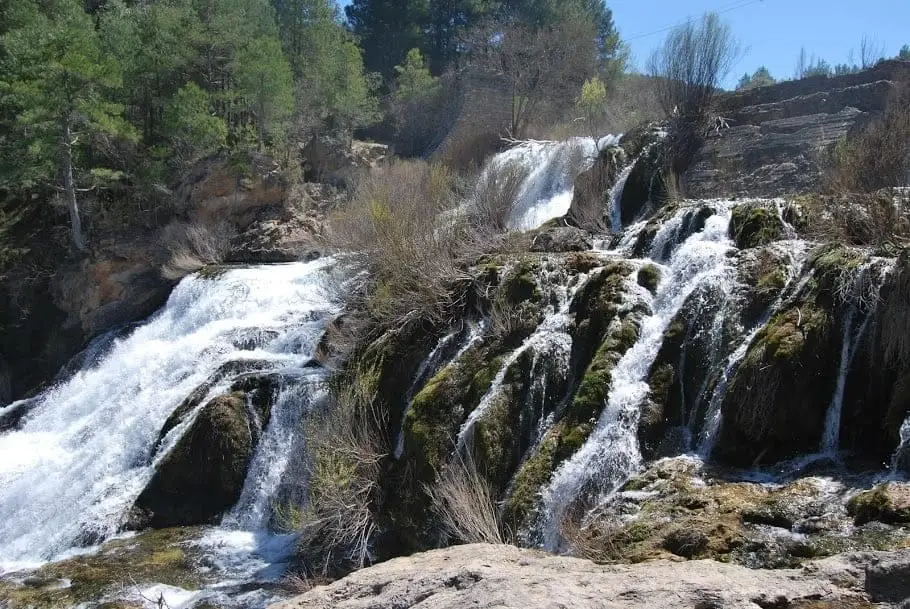
Salto de Poveda: The Largest Waterfall in Alto Tajo
Poveda de la Sierra, Taravilla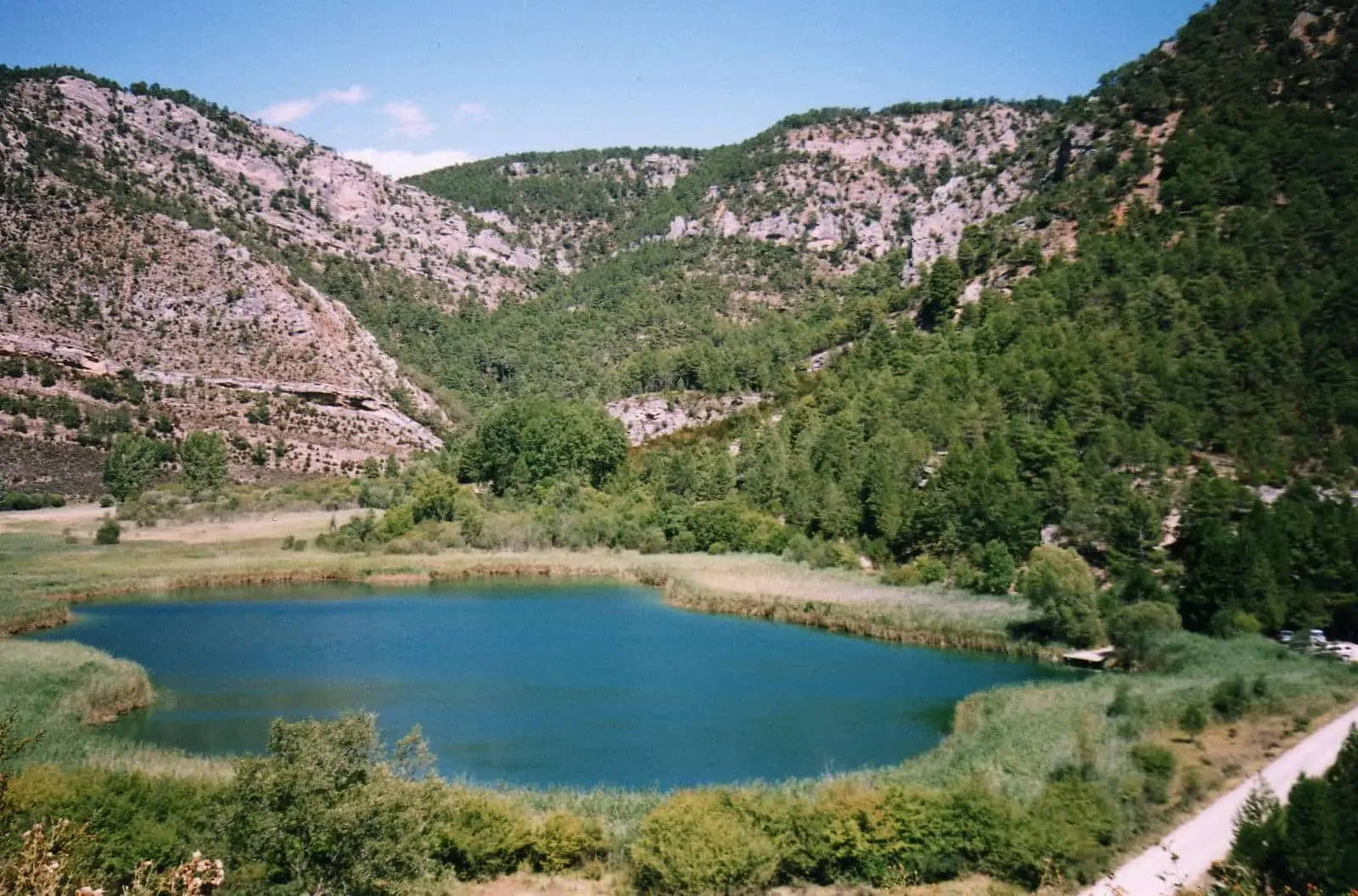
Laguna de Taravilla: an 11,000-year-old natural tufa dam
Taravilla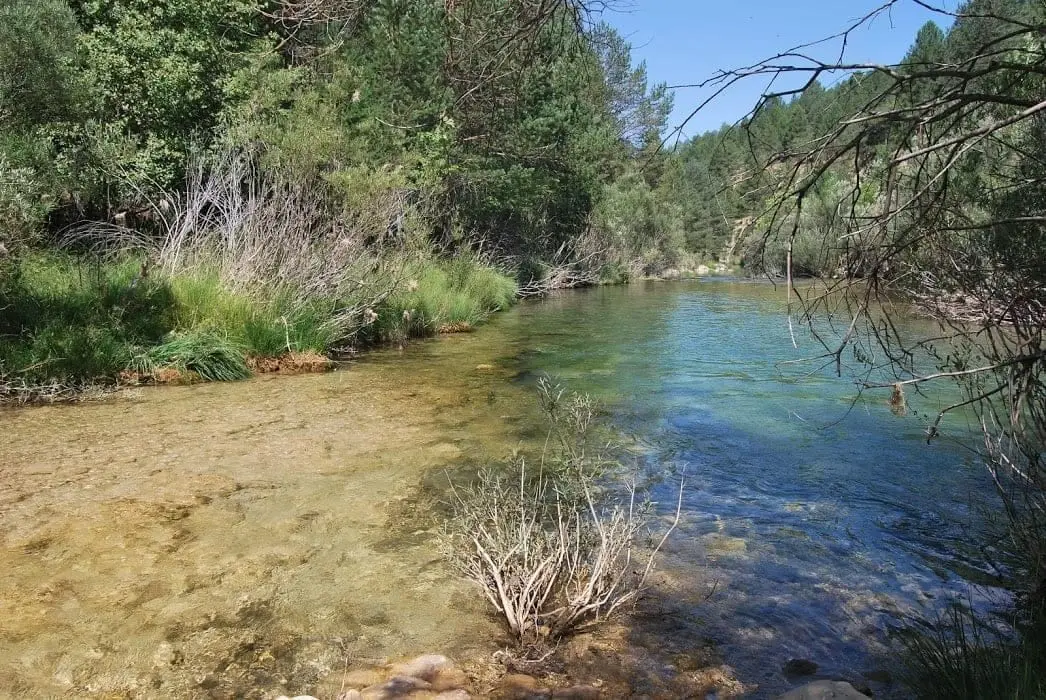
Las Juntas of the Tagus and Hoz Seca: where the Tajillo becomes the Tagus
Checa, Peralejos de las Truchas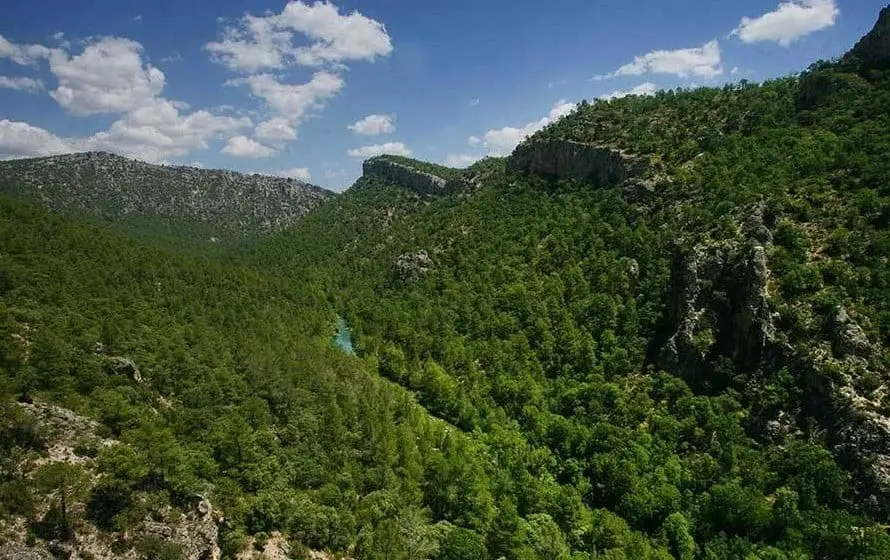
Hundido de Armallones: the rock collapse that dammed the Tagus
Armallones, OcentejoFrequently asked questions
What did a ganchero do?
They drove loose logs downriver without rafts, from headwater pine forests to downstream timber yards such as Aranjuez. Using an iron-tipped hook they prodded, rotated, and dislodged logs, and built temporary dams to navigate difficult shallows.
When did the gancheros disappear from the Tagus?
The drive of 1936, trapped by the outbreak of the Spanish Civil War, is considered the last great timber run to Aranjuez. Minor drives continued until the Entrepeñas reservoir, inaugurated in 1954, severed the river course. Road trucks replaced the rest.
Where can you discover the ganchero heritage today?
At the annual Fiesta Ganchera festival, which rotates each summer among Peralejos de las Truchas, Taravilla, Poveda de la Sierra, Zaorejas, and Peñalén, and at the Museum of Gancheros and Timber in Puente de Vadillos (Cuenca). Sampedro's novel remains the finest literary introduction.
Is the ganchero trade UNESCO World Heritage?
Yes. In December 2022 UNESCO inscribed timber rafting on the Representative List of the Intangible Cultural Heritage of Humanity, through a joint nomination by Poland, Austria, Czechia, Latvia, and Spain. Castilla-La Mancha had previously designated it an Asset of Cultural Interest in 2021.
Sources and readings
- Berlanga Santamaría, A.: La industria resinera en Guadalajara. Expansión y declive. Diputación de Guadalajara, 2023 (cap. II, maderadas del Tajo).
- Lindo Martínez, J. L.: Maderadas y gancheros. Castilla-La Mancha. JCCM, 2008.
- Sampedro, J. L.: El río que nos lleva (1961).
- Fichas de campo «Gancheros, agua y madera», El Observario (documentación interna de interpretación).
- Guía turística del Geoparque de la Comarca de Molina-Alto Tajo: Fiesta de los Gancheros.
- Entrevistas a Cipriano Valiente sobre las maderadas conquenses (Vestal Etnografía, YouTube).
Further reading on the history of this land. Full bibliography.
Next story: Before names, there were marks