Trade · 20th century, with earlier practices · Resin, hooks and pastoral shelters
Everyday plants: what the countryside gave and people knew how to use
Local magazines preserve specific uses of Alto Tajo’s vegetation. Peralveche residents recall cutting and distilling lavender, and gathering another lavender around Saint John’s Day to carpet the streets. A Checa vocabulary records cooked asphodel as pig feed. Juniper roofed shepherds’ huts, and pollarded oaks supplied firewood and leafy fodder. Each practice had a place, a date and people who knew how to carry it out.
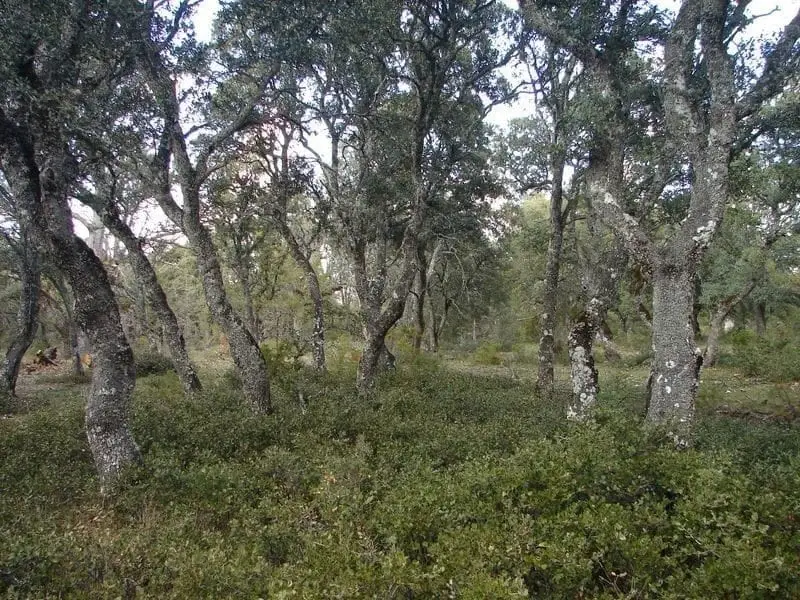
Photo: El Observario
One plant, several jobs
In the mountains, almost no plant served a single purpose. An oak supplied shade, leafy branches for goats, firewood and charcoal; a juniper roofed a shepherd’s hut; a lavender bush brought money in September. Each task had its date, because common woodland had rules: people could not gather everything whenever they liked.
Espliego: a woodland harvest
In Peralveche, Valentina Romero Pascual remembers the stills producing lavender oil. People had to rise early, cut, carry, weigh and deliver the plants. The oil brought families income; señor Andrés, a carpenter, prepared it. In the same issue of Abarca, Paquita Blanco Alcolea recalls accompanying her aunt María to cut wild lavender: it was not yet grown there for that purpose.
Miguel Pascual López adds a detail: residents set out early for patches they had found on waste ground and plateaux. His Peralveche memories also include cutting oaks for charcoal and firewood, and gathering pine cones and plants for small animals. A plant had several destinations, depending on the household, trade and season.
Cantueso for Saint John’s Day
Valentina Romero Pascual remembers girls and young women walking towards the road workers’ cottage on the way to Arbeteta to gather cantueso. Returning, they sang and used it to carpet Peralveche’s streets. They visited houses, collected food and shared a Saint John’s Day meal. The magazine preserves a line of their song: “We young women go to gather lavender.” It records a local celebration as well as an aromatic plant’s use. Source: Abarca 4, pp. 62–64.
Asphodel, from Checa to Valsalobre
A vocabulary published in Aguaspeña records gamón in Checa as Asphodelus albus, stating that its cooked leaves were fed to pigs. It calls the fruits gamonitas. The plant’s name therefore also preserves a household and farmyard task.
In Valsalobre, in Alto Tajo’s Cuenca area, residents interviewed by Vestal Etnografía recall lavender gathering being prohibited until an agreed date. It was cut in early September, weighed and distilled in a boiler beside the bridge. The oil provided important income for some households. Asphodel was also gathered in turns: stems and roots were cooked for pigs. Its calendar is described in A year in a mountain village.
Juniper became a roof
Stems, bark and trunks could become objects too. Masegosa’s vocabulary documents rye baskets, wooden troughs and tools for making hives. It continues in What could be made from a stalk, a log or a horn, through Masegosa’s words.
In Ablanque, Escalera and Olmeda de Cobeta, Spanish juniper supported and roofed the shepherds’ huts. Trunks and rafters formed the framework; branches formed the barda, deflecting rain. Sometimes a living juniper was left at the centre as a support. Building required recognising suitable timber, placing it and maintaining the roof. Pruned trees nearby also preserve pastoral use.
Oak, pine and gorse
In Olmeda de Cobeta’s common pasture pollarded Pyrenean oaks are still visible. Regular pruning supplied firewood and leafy fodder for livestock. The area’s ethnographic route also points out a black pine from which residents obtained resin to treat animal wounds.
In Villanueva de Alcorón, the lime kilns reveal another connection between plants and stone: feeding for days the furnace that turned limestone into lime. Fire exceeded 900 degrees, supplied with juniper and gorse branches for five to ten days, according to the trail panel. Lime went into mortar, whitewash and animal pens. What looks like hillside scrub could be fuel for a trade.
Words that preserve instructions
Vedar, ramón, barda and trasmochar are working words: an agreed date, livestock fodder, a roof and a method of pruning. In Checa, Aguaspeña records balea, the guilloma broom used to sweep after threshing. One word connects plant, tool and task. In Peralejos, accounts in A year in a mountain village preserve another workplace saying: “A man of many trades is sure to be poor.”
A night beside the charcoal clamp
In Peralveche, Miguel Pascual López, born in 1950 when the village had 430 residents, recalls in Abarca helping his father and uncle build a charcoal clamp: logs stacked in a cone and covered with plants, straw and earth. It was lit from below and watched so it slowly charred for a week rather than burning. One night he asked to stay on watch with them, sleeping outdoors in sacks filled with straw. He also remembers the bellmaker hammering sheet metal on an anvil so each flock sounded different and its shepherd could recognise it, and his grandfather Mauricio, the shearer, cutting decorations into the hair on mules’ rumps.
Other workplace sayings, from a Checa bell’s copper to the miller’s bad reputation, appear in What people said while they worked.
Words of the trade
- Espliego
- Aromatic lavender cut and distilled for essential oil; Peralveche residents recall the stills and sale of the harvest.
- Cantueso
- An aromatic lavender gathered by girls and young women in Peralveche around Saint John’s Day to carpet the streets.
- Gamón
- A popular name for Asphodelus plants. A Checa vocabulary records their cooked leaves as pig feed.
- Balea
- In a Checa vocabulary, a broom made from guilloma, used to sweep the threshing floor after threshing.
- Ramón
- Leafy branches cut to feed livestock when grazing was scarce.
- Barda
- The juniper-branch roof of a shepherd’s hut.
- Pollard
- A tree repeatedly pruned at a set height to obtain firewood and leafy fodder without felling the trunk.
- Vedar
- To temporarily prohibit a woodland use until the date agreed by the community.
Where to see it today
Dehesa of Olmeda de Cobeta: ancient pollarded Pyrenean oaks
Olmeda de Cobeta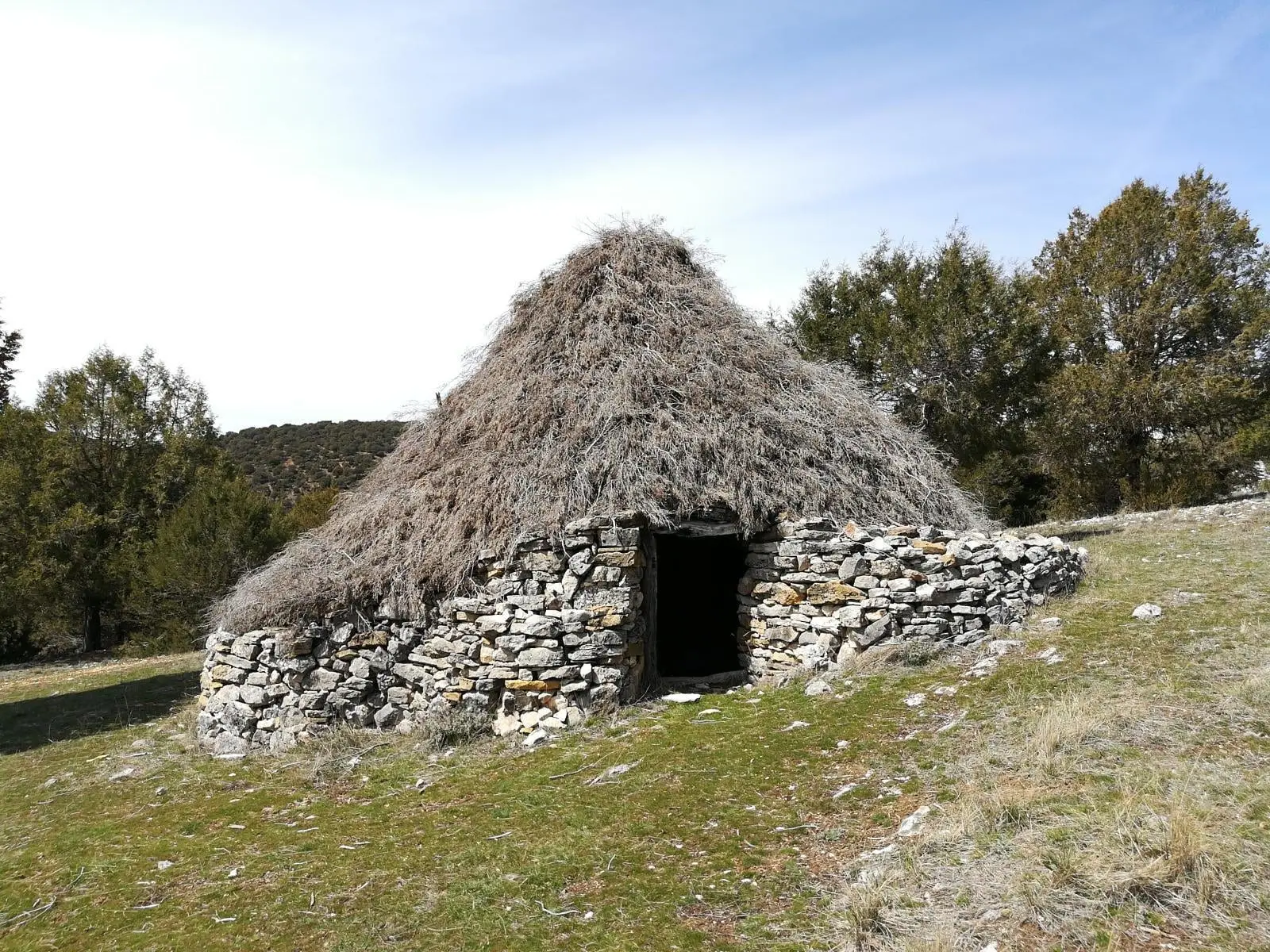
Juniper chozones of Ablanque: evolution of pastoral architecture
AblanqueEthnographic route 3: the chozones of Olmeda de Cobeta
4.75 km · 1.5 h · CircularTrail 7: the lime kilns of Villanueva de Alcorón
6.3 km · 2.5 h · Circular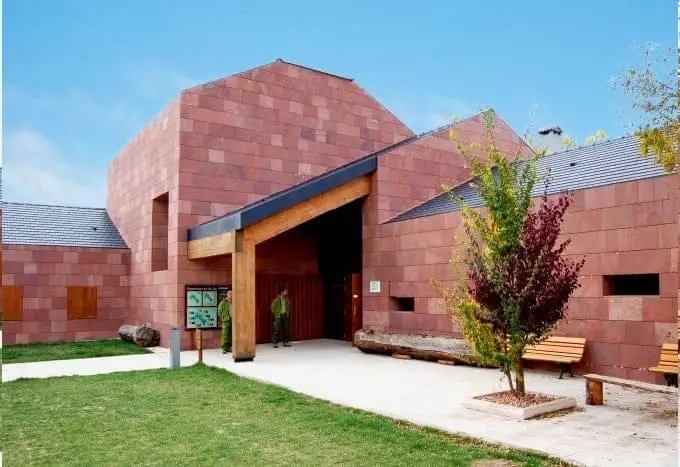
Sequero de Orea Visitor Centre
OreaFrequently asked questions
Which plants did Alto Tajo’s residents use?
Sources document distilled lavender and Saint John’s Day cantueso in Peralveche, and cooked asphodel leaves for pigs in Checa. Juniper roofed shepherds’ huts, while pollarded oaks provided firewood and leafy fodder. Each practice had its local context.
Can these uses be continued today?
These are historical uses. Many of these plants grow within Alto Tajo Natural Park, where gathering is regulated: consult the Park’s rules before collecting anything.
Sources and readings
- Valentina Romero Pascual, «Poema de la primavera en Peralveche», Abarca 4 (2022), pp. 62–63: calderas de espliego, cantueso y memoria de la celebración de San Juan.
- Paquita Blanco Alcolea, «Vida rural», Abarca 4 (2022), p. 64: recuerdo familiar de la siega del espliego silvestre.
- Miguel Pascual López, «Destellos del pasado», Abarca 6 (2024), pp. 65–66: espliego, caleras, carbón, leña y forrajes en Peralveche.
- «Palabras de uso común», Aguaspeña 5 (1998), pp. 13–17: vocabulario de Checa; la entrada «gamón» registra un uso para alimentar cerdos.
- Testimonios de vecinos de Valsalobre recogidos por Vestal Etnografía (fuente oral), contados en «Un año en un pueblo de la sierra».
- Parque Natural del Alto Tajo: rutas etnográficas de los chozones de Ablanque y Olmeda de Cobeta y sendero de las caleras de Villanueva de Alcorón.
- Abarca 4 (2022), pp. 62–64: Valentina Romero Pascual y Paquita Blanco Alcolea
- Abarca 6 (2024), pp. 64–66: Miguel Pascual López
- Aguaspeña 5 (1998), pp. 13–17: «Palabras de uso común»
- Junta de Castilla-La Mancha, información del Parque Natural del Alto Tajo
Further reading on the history of this land. Full bibliography.
Next story: What could be made from a stalk, a log or a horn