Episode · 16th century – today · Salt, iron and timber
Festivals and rites: soldiers, devils, brotherhoods and pilgrimages
In the Lordship of Molina the year was measured in festivals. At Carnival, soot-blackened Devils with ox horns appear in Luzón; in June, Hinojosa’s riders enact a Moorish and Christian battle; in July, the Carmen military brotherhood marches through Molina in 18th-century uniforms. At Pentecost villages bring crosses to Virgen de la Hoz sanctuary, where the Loa is performed.
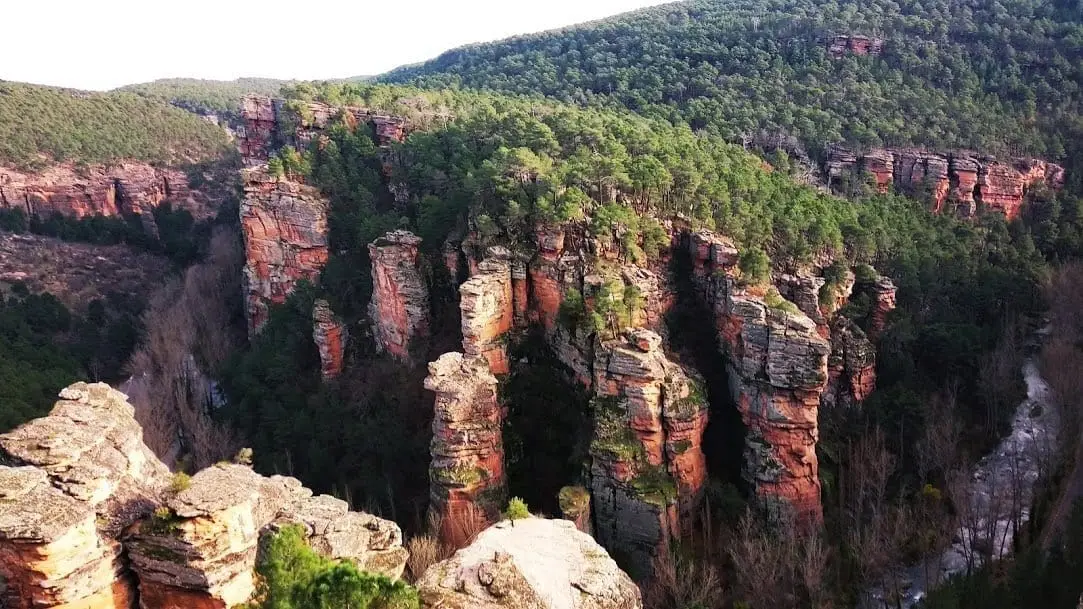
Photo: El Observario
A year measured in festivals
In the Señorío’s villages the calendar was marked by festivals: Carnival before Lent, Easter with its pine, May songs, spring pilgrimages and summer patron-saint fiestas. Many disappeared with emigration in the 1960s and 1970s. Others have returned, sometimes stronger than ever: villages use them to remain communities even when full for only a few days each year.
Carnival: Luzón’s Devils
On Carnival Saturday afternoon, in Luzón beside the Tajuña gorges, the Devils emerge. Dressed in black, with faces and arms covered in oil and soot, ox horns on their heads, large livestock bells at their waists and teeth carved from potato, they look fierce. They walk the streets ringing bells and blackening willing spectators. Beside them walk the mascaritas, women in traditional dress with faces covered by white cloth, remaining silent.
This is a winter masquerade, related to those across many Iberian mountain regions, its origins lost. Emigration ended it, and village youths revived it in the 1990s. Today it has Regional Tourist Interest status, attracting people from across the province. Luzón also has the old schools museum.
Easter and May: the pine and the songs
At Easter, young men in many mountain villages cut the tallest pine, brought it on carts and erected it in the square with a Judas effigy above: the Judas Pine. It needed guarding all night against neighbouring youths trying to bring it down. In May, mayos were sung to young women at their doors. Residents tell it in a year in a mountain village.
The apron worn backwards
In the May song preserved on Huertapelayo’s local website, spring comes along livestock tracks bringing wheat, oats and barley. The song then pauses before a house to request permission to serenade. The doorway belongs to the celebration: someone sings outside to someone within.
The lyrics end by naming the girl and the young man assigned as her mayo. Disagreement is anticipated: if she dislikes him, she can attend Mass next day with her apron backwards. Her answer moves from the doorway into a public gesture. Even that small clothing detail had its place in the song.
Pentecost: the Virgen de la Hoz Loa
Spring’s great gathering is at Virgen de la Hoz sanctuary, in Barranco de la Hoz, where the diocese dates devotion to the 12th century. The main festival is Pentecost Eve. Villages make a pilgrimage carrying parish crosses: Canales, Corduente, Cuevas Labradas, Lebrancón, Molina, Terraza, Torete and Ventosa. Some walk from Las Casillas along the gorge.
Then comes the Loa, a verse religious drama about good and evil, with village actors, dances, castanets, guitars and hand-embroidered costumes. Pilgrimages begin earlier: Corduente makes the sanctuary’s first yearly pilgrimage around Saint Mark’s Day. Around the same time Buenafuente del Sistal monastery celebrates a pilgrimage to Virgen de los Santos chapel, drawing pilgrims from Madrid, Guadalajara and Zaragoza.
June: Hinojosa’s soldadesca
The Señorío’s oldest war festival is a mock battle. In the 16th century Francisco Núñez already described spectacular Moorish and Christian battles in Molina’s square. Today the tradition survives in the soldadesca.
In Hinojosa, on the first Sunday of June, Our Lady of Sorrows’ day, Christian riders carry the image in procession when Moors attack and steal it. Pursuit and fighting with swords and lances follow, until a miracle paralyses the Moors, Christians recover the Virgin and the defeated convert. Roles are recited in verse, with an 18th-century text following a probably older pattern. Residents ride in period dress. It has Provincial Tourist Interest status. The village also makes a pilgrimage to its Romanesque Santa Catalina chapel.
In Codes, every 16 August the Saint Roch soldadesca is performed, also with Provincial Tourist Interest status.
July: Molina’s Carmen
In Molina de Aragón, from 7 to 17 July, a unique institution takes charge. The Military Order Brotherhood of Our Lady of Mount Carmel, founded on 15 May 1740, is religious but organised as an army, with ranks, companies and a colonel. Over 650 members march in uniforms recalling Charles III’s reign: ivory coats with crimson facings, red breeches and black helmets. Their colour earns them the nickname cangrejos, crayfish.
On 16 July the image travels through the streets escorted by the honour guard, military company, members and authorities, returning to its chapel in an afternoon procession. On 17 July, the Misa de Rueda honours deceased members, recalling the custom of standing in a circle. The festival has held Provincial Tourist Interest status since 1975 and Regional status since 1994, and seeks National recognition.
Molina also celebrates Cristo de las Victorias from late August to early September, and a June medieval fair recalling the Señorío, whose history is in the Lordship story.
Summer: the river and timber floaters
In summer celebration descends to the river. The Timber Floaters’ Festival, of Regional Tourist Interest since 2008, rotates annually among Peralejos de las Truchas, Taravilla, Poveda de la Sierra, Zaorejas and Peñalén. Men in traditional clothing again guide logs down the Tagus with hooks, as told in the timber floaters. In September Molina’s Saint Michael livestock fair again gathers local farmers, described in fairs and dealers.
What festivals celebrate
Most speak of a frontier and mountain country. The soldadesca recalls centuries between two kingdoms and two religions; the Carmen brotherhood a town of knights; the Devils a long winter driven away with noise; pilgrimages a region gathering at rural sanctuaries. Attending is the best way to see the Señorío full of people.
What the bells announced
Toni Ibáñez remembered Armallones’s death toll distinguishing men and women by its final strikes. She recalled that distinction gradually falling out of use. A rite changes as people lose the habit of recognising it.
When the village could be heard follows that learning. Festivals gather memory, but their calendar is only part of village life. The rest of the year has needs of its own, as A home to stay in describes.
The village that makes theatre
In Peñalén, Saturnino Sanz remembered rehearsals at Las Ollas for the 1953 Moorish and Christian performance: neighbours learning parts before taking them to the streets. Juan Bautista Rubio’s family kept the handwritten notebook. The performance ended; its words and participants’ memories survived.
In Labros, residents prepared a 2009 performance of La vida del Buscón, adapted by Andrés Berlanga, with village actors. The previous summer they had premiered Cervantes’s El retablo de las maravillas. Direction, scenery, costumes and production brought together different residents’ efforts.
A celebration can preserve an old work while creating new memories for participants. That cultural work belongs to local history alongside rites passed down for generations.
Vocabulary
- Soldadesca
- A festival of military and religious origin: residents with ranks such as captain or ensign escort an image, fire salutes and sometimes enact a Moorish and Christian battle.
- Loa
- A verse religious play honouring the Virgin or a saint, performed by residents on the feast day.
- Auto sacramental
- A one-act religious drama whose characters embody ideas such as good and evil.
- Masquerade
- A winter festival with costumed or soot-blackened characters such as devils, walking through the village with clanging bells.
- Mascaritas
- Women accompanying Luzón’s Devils silently, wearing traditional clothes and covering their faces with white cloth.
- Romería
- A festive pilgrimage to a rural chapel or sanctuary, often carrying several villages’ parish crosses.
- Misa de Rueda
- Molina’s 17 July Mass for deceased Carmen members, recalling the custom of standing in a circle.
- Cangrejos
- “Crayfish”: the nickname of Molina’s Carmen members, from their crimson uniforms.
Where to see it today
Sanctuary of the Virgen de la Hoz: the hermitage beneath red cliffs
Corduente, Ventosa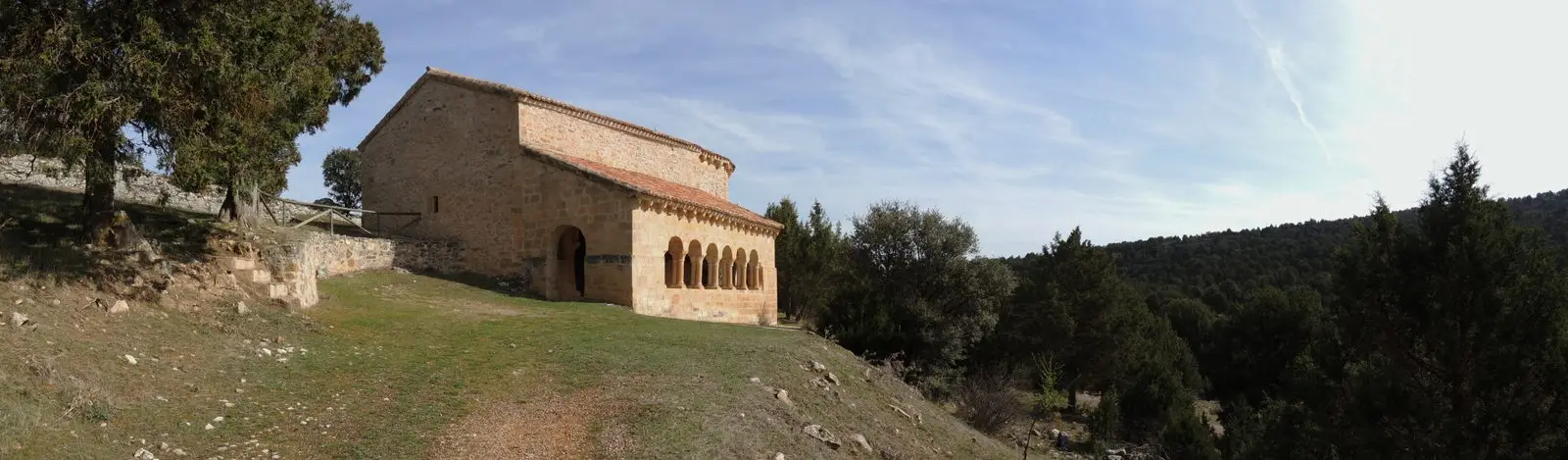
Hermitage of Santa Catalina of Hinojosa: Romanesque among junipers
HinojosaLuzón School Museum: the 1950s classroom
Luzón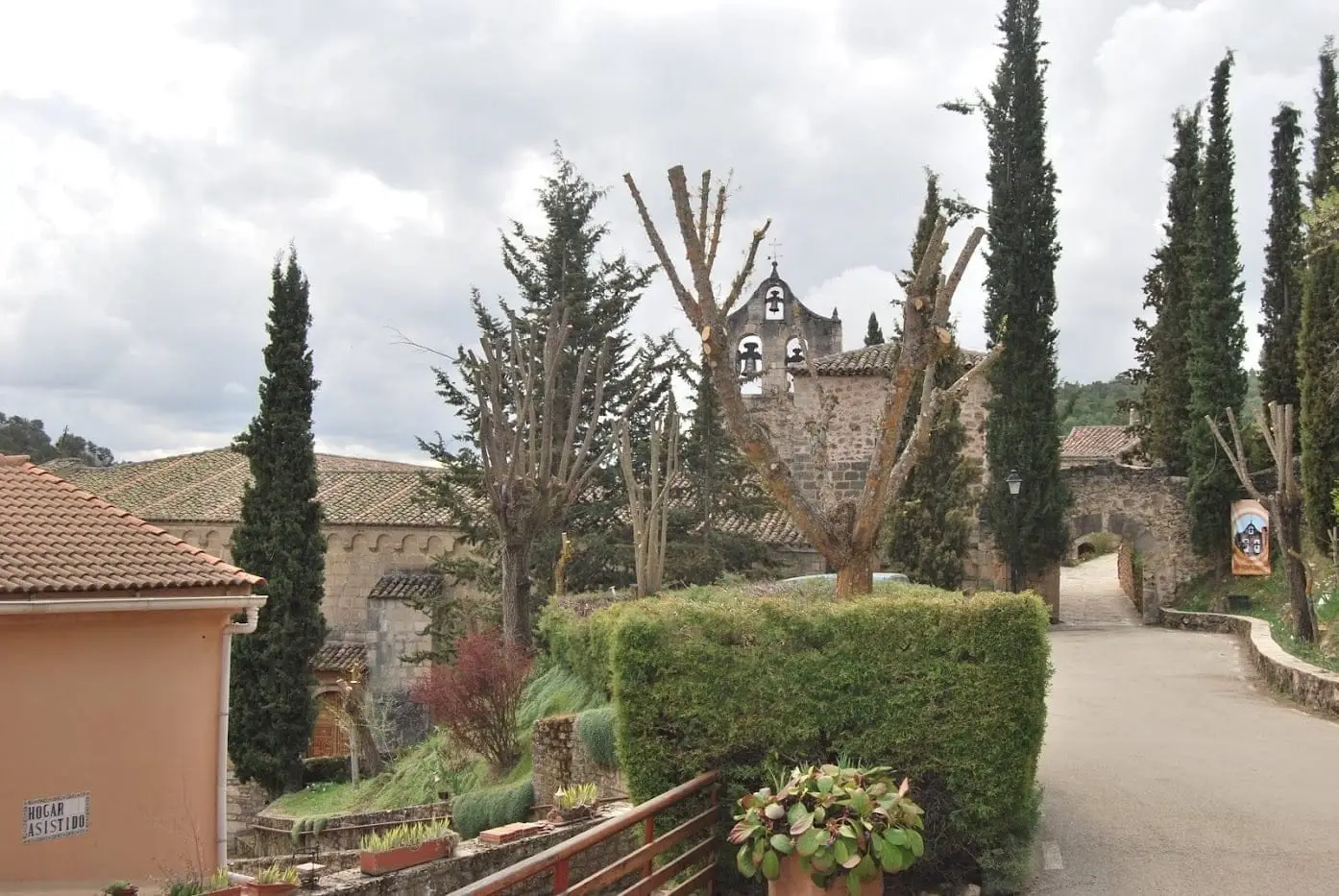
Monastery of Buenafuente del Sistal: Cistercian nuns since 1246
Buenafuente del SistalHermitage of the Virgen de Montesinos (Cobeta)
Cobeta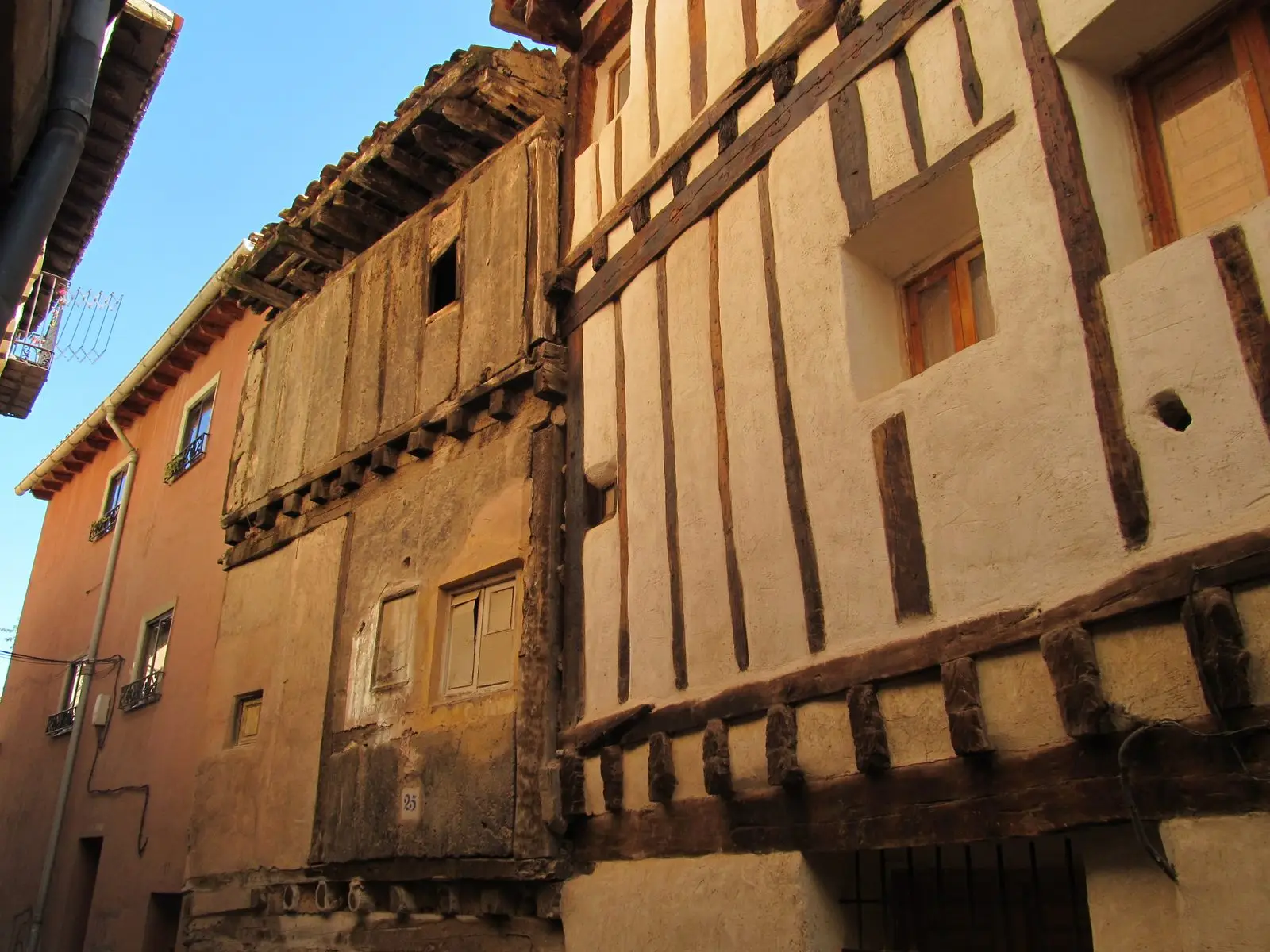
Historic quarter of Molina de Aragón: palaces, Jewish quarter, and Moorish quarter
Molina de AragónRoble de la Sexma: where the Sierra representatives were elected
AlcorochesFrequently asked questions
When do Luzón’s Devils appear?
On Carnival Saturday. They wear black, cover faces and arms with oil and soot, wear ox horns and waist bells, and have teeth carved from potato. Silent mascaritas accompany them. The festival has Regional Tourist Interest status.
What is Hinojosa’s soldadesca?
A festival on the first Sunday of June, Our Lady of Sorrows’ day. Residents on horseback in period dress enact the Moors stealing the Virgin’s image, the battle to recover it and the final conversion. The text is 18th-century, although the pattern is probably older.
What makes Molina de Aragón’s Carmen special?
The Military Order Brotherhood of Our Lady of Mount Carmel, founded in 1740, is religious but organised like an army. It has military ranks and over 650 members marching in uniforms of Charles III’s period. Its main feast is 16 July; it has held Regional Tourist Interest status since 1994.
Sources and readings
- Turismo de Castilla-La Mancha: «Diablos y Mascaritas de Luzón» y «Fiesta de Nuestra Señora del Carmen de Molina de Aragón».
- Antonio Herrera Casado, «La Soldadesca de Hinojosa» (1983) y «La Soldadesca de Hinojosa: una lucha entre moros y cristianos» (1994), en herreracasado.com.
- Diócesis de Sigüenza-Guadalajara: «Fiesta del Santuario de Nuestra Señora de la Hoz en las vísperas de Pentecostés» y «Pentecostés enmarca romerías y tradiciones en Buenafuente, Barranco de la Hoz y Atienza».
- infoCLM: «El Carmen más insólito de España se vive en Guadalajara» (2026).
- Henares al Día: «Los Diablos de Luzón, símbolos del Carnaval rural de Guadalajara».
- Juan José Estrada Martínez, web local de Huertapelayo: «Ronda de los Mayos» (26 de diciembre de 2017). Versión escrita del cantar.
- José Ramón López de los Mozos, «La Entrada de Moros y Cristianos de Peñalén en 1953». Revista de Folklore 418 (2016), pp. 43–44.
- Labros 28 (verano de 2009), «Estreno de La vida del Buscón», pp. 1–2.
- Toni Ibáñez Ibáñez, «Tocar las campanas». Abarca 4 (2022), pp. 12–13.
Further reading on the history of this land. Full bibliography.
Next story: White earth: kaolin in Alto Tajo